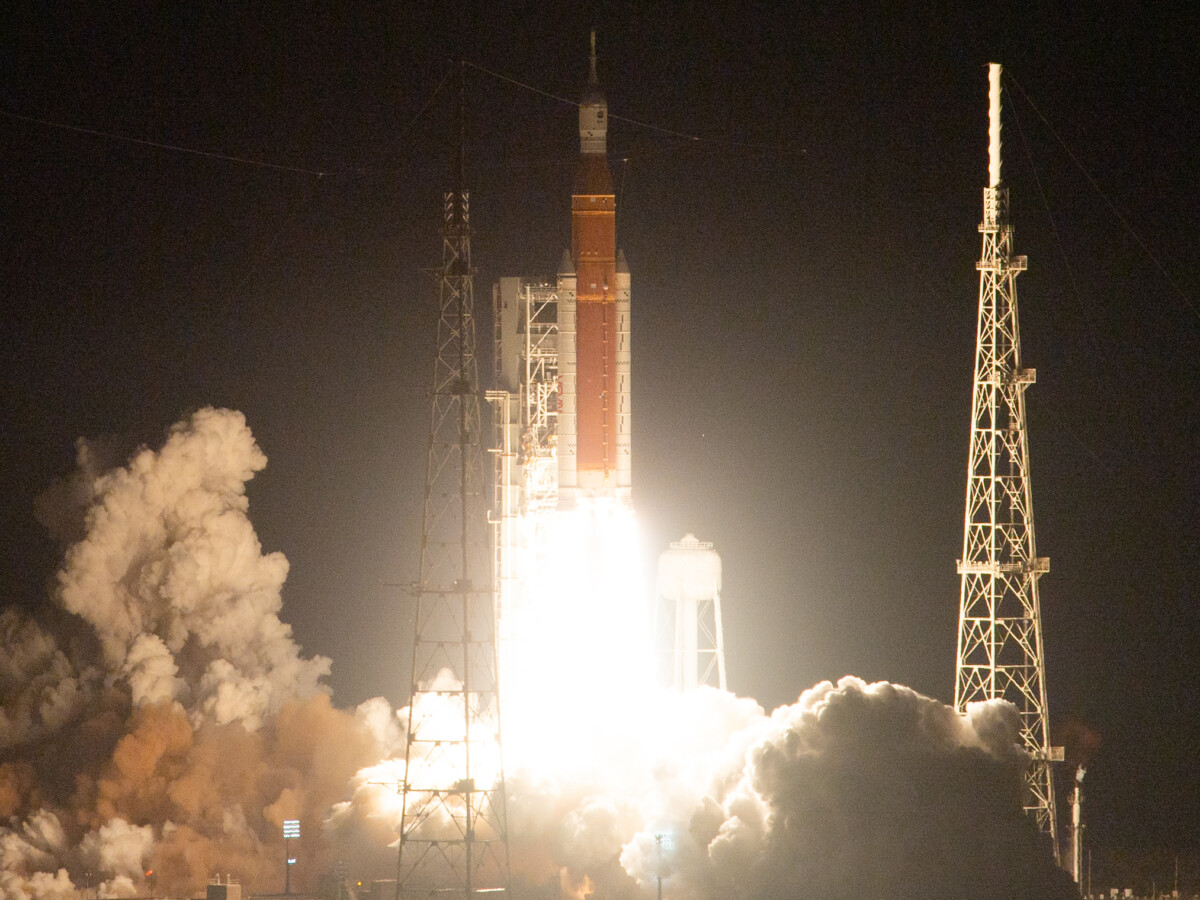
Humans Head Back to the Moon After Decades Away (Image Credits: Upload.wikimedia.org)
Kennedy Space Center, Florida – Tension mounts at NASA’s Kennedy Space Center as the Artemis 2 mission prepares for a potential launch on April 1. This flight represents the agency’s first crewed venture toward the moon since Apollo 17 departed more than 50 years ago. Engineers have positioned the massive Space Launch System rocket and Orion spacecraft on Launch Pad 39B, setting the stage for a 10-day lunar orbit that will test critical deep-space capabilities.[1][2]
Humans Head Back to the Moon After Decades Away
Astronauts last circled the moon in 1972, but Artemis 2 changes that narrative. The crew will skirt the lunar surface without landing, validating systems for future missions. This test flight pushes Orion farther from Earth than any crewed vehicle has flown since Apollo.[2]
Commander Reid Wiseman leads the team, with Pilot Victor Glover at the controls. Mission Specialists Christina Koch and Jeremy Hansen, the latter from the Canadian Space Agency, round out the quartet. Their journey demands precision, as they monitor spacecraft performance during the roughly 10-day outing. NASA selected this lineup years ago to blend experience with international partnership.[3][4]
The mission timeline unfolds methodically. Flight Day 1 covers launch and Earth orbit checks. By Day 6, the crew reaches closest lunar approach while hitting maximum distance from home. Each phase gathers data essential for Artemis 3, the planned moon landing.[5]
Launch Windows Locked In for Early April
Teams target no earlier than 6:24 p.m. EDT on April 1 for liftoff, with a two-hour window available that evening. Weather, technical readiness, and orbital mechanics dictate the exact moment. Backup slots extend through the week if delays arise.[1][6]
Here are the primary opportunities:
- April 1: Opens 6:24 p.m. EDT, closes around 8:24 p.m. EDT
- April 2: 7:22 p.m. EDT
- April 3: Evening slot starting 8:00 p.m. EDT
- Additional days through April 6 if needed
Officials released a detailed availability calendar, confirming viability across early April dates. The SLS core stage and solid rocket boosters stand fueled and ready, minimizing last-minute hurdles.[7]
Multiple Ways to Catch the Live Action
NASA plans extensive coverage, starting days before launch. Viewers worldwide can tune in via free platforms for pre-launch briefings, countdowns, and post-liftoff updates. The agency emphasizes accessibility for this milestone event.[8]
Key viewing options include:
- NASA+: Free streaming service with original programming and live feeds.
- NASA App: Real-time tracking of Orion’s path relative to Earth and the moon.
- YouTube: Official NASA channels offer 24/7 views from the pad and full broadcasts.
- Kennedy Space Center Cams: Continuous rocket footage beginning Thursday before launch.
Coverage kicks off with crew arrivals and weather briefings. The main broadcast features commentary from mission control. Post-launch, tools like the Artemis Real-time Orbit Viewer let users follow the trajectory interactively.[9][10]
Final Preparations Hit Key Milestones
The rocket reached the pad on March 20 after an overnight rollout. Crew members entered quarantine on March 18 to ensure health protocols. These steps cleared the path for countdown initiation, now ticking toward launch.[11][3]
Engineers conducted tanking tests and system checks. The countdown sequence includes polls at T-minus 49 hours, followed by fueling. No major issues have surfaced, boosting confidence in the schedule. NASA shared a detailed timeline, from team arrivals to booster ignition.[12]
Artemis 2 builds on uncrewed Artemis 1 success, refining operations for crewed deep space. Success here unlocks sustained lunar presence.
Key Takeaways
As Artemis 2 hurtles toward history, it reignites dreams of lunar exploration. This flight not only tests technology but inspires a new generation. What do you think about this return to the moon? Tell us in the comments.