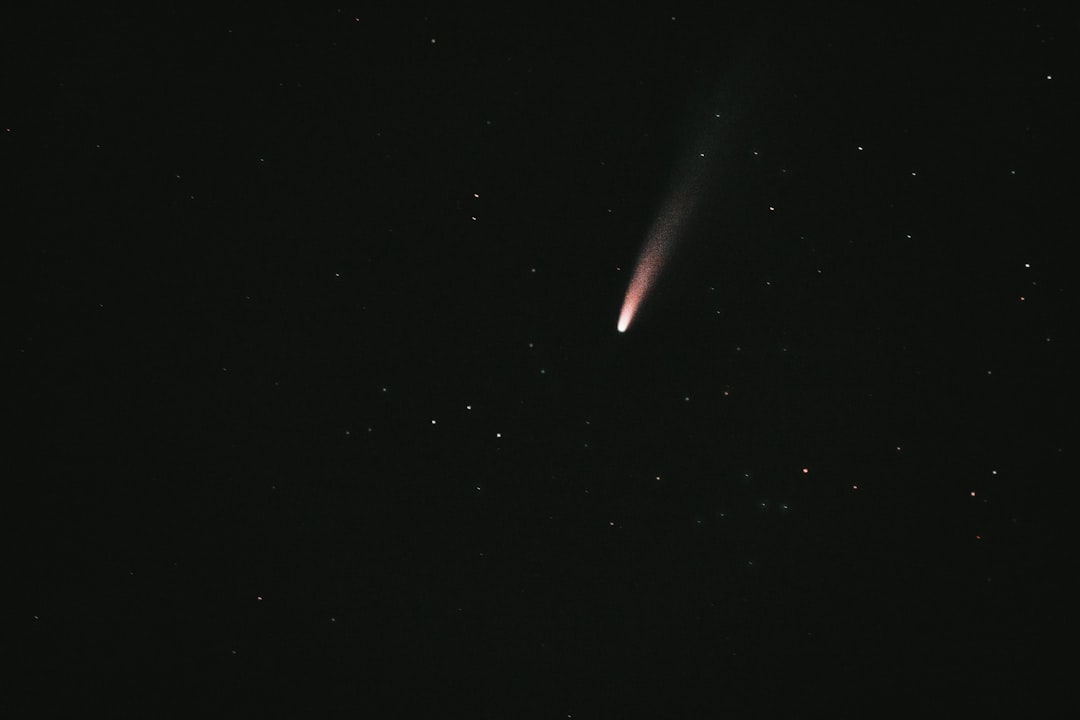
Stunning Sightings Light Up Multiple Regions (Image Credits: Unsplash)
Reports of brilliant fireballs streaked across skies from Europe to North America throughout March 2026, capturing attention from casual observers to astronomers. These vivid meteors, some producing sonic booms and even rare meteorite falls, prompted questions about an unusual uptick in activity. The American Meteor Society launched a detailed analysis, examining data back to 2011 to determine if a genuine increase occurred or if other factors played a role.[1][2]
Stunning Sightings Light Up Multiple Regions
Observers documented several standout events early in the month. On March 3, a fireball blazed over Vancouver in British Columbia, Canada, and extended into Washington state in the U.S., shattering the sound barrier and generating reports of a loud boom. Five days later, Western Europe witnessed another exceptionally bright display on March 8, followed by a similar occurrence on March 11.[1]
The pace quickened mid-month. A dramatic fireball over Ohio on March 17 rocked homes with its sonic boom and led to the recovery of a meteorite fragment. California saw two such events on March 19, while Michigan and Georgia reported sightings the next day. Texas residents near Houston captured one on March 21 that pierced a house roof, depositing a rock inside.[1]
These incidents formed part of a broader pattern. Witnesses shared dashcam footage and personal accounts, fueling online discussions. The events varied in trajectory but shared exceptional brightness, visible over wide areas.
AMS Data Reveals Record-Setting Quarter
The American Meteor Society tallied 2,046 fireball reports for the first quarter of 2026, marking the highest total since records began in 2011. This figure edged out previous peaks of 2,037 in 2022 and 1,947 in 2021. While the overall count appeared elevated, analysts noted a sharper rise in major events.[2]
Thirty-eight fireballs drew more than 50 witness reports each, well above the quarterly average of 18. Fourteen exceeded 100 reports, compared to a norm of seven. Nearly half of March’s events with at least 10 reports attracted 50 or more viewers, signaling a shift in scale rather than sheer volume.[1]
| Metric | Q1 2026 | Historical Average |
|---|---|---|
| Total Fireball Events | 2,046 | ~1,900-2,000 |
| Events >50 Reports | 38 | 18 |
| Events >100 Reports | 14 | 7 |
Remarkably, 30 large fireballs produced audible sonic booms – one roughly every three days. No threats of larger impacts emerged, as the meteoroids fell within typical sizes for atmospheric entries.
Searching for Explanations
Investigators considered multiple hypotheses. A new meteor shower seemed unlikely, as trajectories did not cluster around known radiant points like the upcoming Lyrids, set to peak on April 22. Seasonal patterns from February also failed to explain the trend.
Geographic or timing biases drew scrutiny but held no answers. Social media and AI tools emerged as potential amplifiers: witnesses increasingly used platforms like ChatGPT to locate reporting sites, boosting counts per event. However, this did not account for more sonic booms or confirmed meteorite drops.[1]
- Enhanced activity near the antisolar point.
- Unusual high-declination radiants, suggesting steep entry angles outside the solar system’s plane.
- Ruled-out factors: smartphone proliferation, artificial satellites, or extraterrestrial origins.
- Two rare achondrite meteorites (eucrites, possibly from asteroid Vesta) recovered in Ohio and Germany.
The AMS highlighted a possible shift in Earth’s near-space meteoroid environment. “Whether this reflects a genuine change in the near-Earth meteoroid environment, an amplification of reporting through AI and social media, or some combination of both, we cannot yet say definitively,” the organization stated. “What we can say is that the question deserves both public awareness and scientific attention.”[2]
Implications and Next Steps
These fireballs underscored the dynamic nature of our planet’s interaction with space debris. While harmless, the pattern invited closer monitoring. Researchers urged continued public reports via the AMS system to refine orbits and predictions.[1]
Key Takeaways:
- Q1 2026 set a fireball report record, driven by larger events.
- Sonic booms and meteorites added to the intrigue.
- AI and social media may inflate numbers, but physical evidence suggests more.
Sky events like these remind us of the cosmos’s proximity. Scientists will track developments through detailed logs at the AMS analysis page. What have you seen in the night sky lately? Share your thoughts in the comments.