The Far Side Is Not Forever Dark (Image Credits: Unsplash)
The moon remains one of the most mesmerizing objects in our night sky, fueling stories and beliefs across cultures for thousands of years. Scientific understanding has advanced dramatically, yet certain misconceptions endure among skywatchers and the public alike. This exploration uncovers five persistent myths, grounded in astronomy, and explains why they mislead.
The Far Side Is Not Forever Dark
A widespread notion holds that the moon harbors a permanently shadowed “dark side,” hidden from Earth’s view. This idea stems from the moon’s synchronous rotation, which keeps the same face toward us. In reality, that far side experiences full sunlight during its lunar day, mirroring the near side’s cycles.[1]
Libration, a subtle wobble in the moon’s orbit, further reveals about 59% of its surface over time. Observers catch glimpses of the eastern and western limbs shifting into view. This phenomenon ensures no part stays eternally unseen or unlit. The term “dark side” confuses orientation with illumination, a mix-up perpetuated in popular culture.
Shape and Color: Far From Perfect
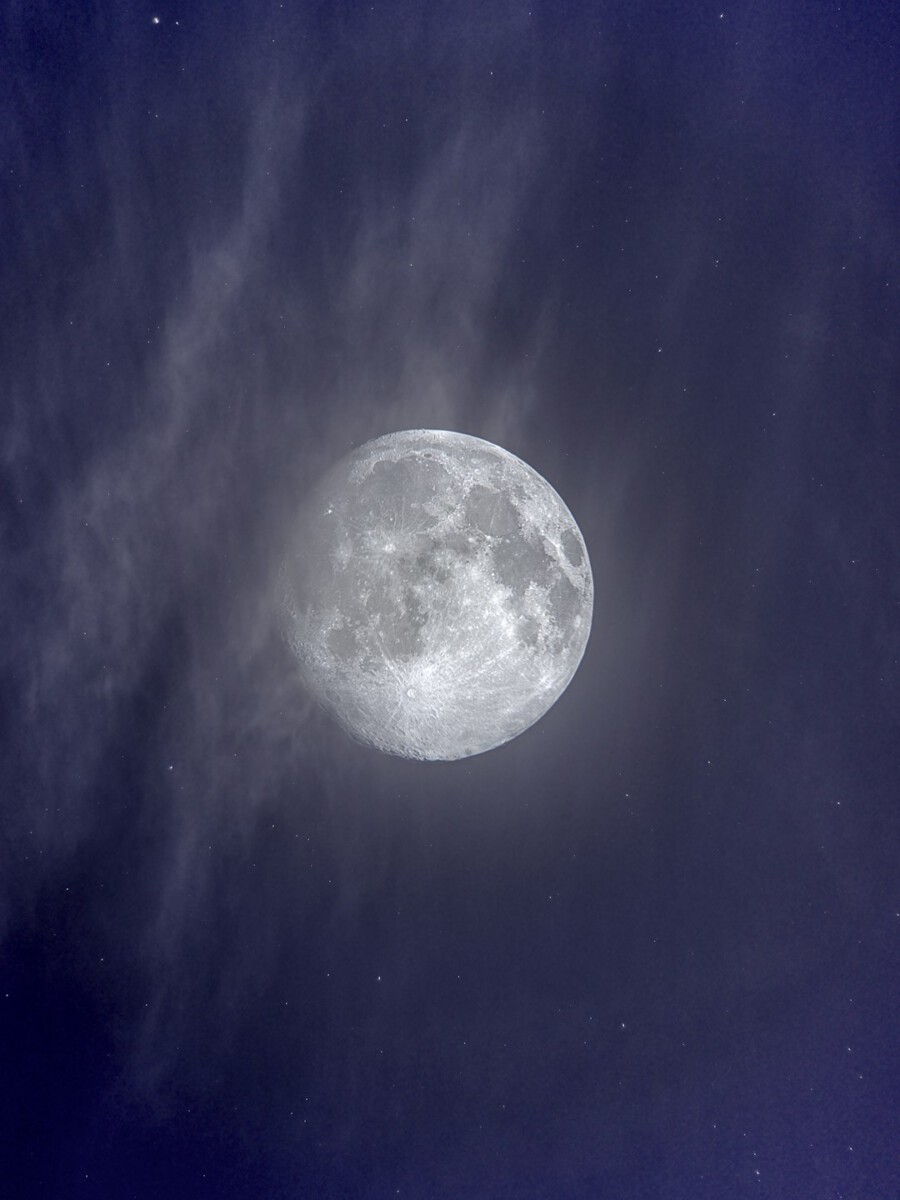
Many picture the moon as a flawless sphere, gleaming in pristine white. Its apparent roundness deceives the naked eye from afar. Actually, the moon qualifies as an oblate spheroid, slightly squashed at the poles with the Earth-facing side bulging outward, akin to a subtle egg shape.[1]
Color-wise, the moon reflects a dull gray tone rather than bright white. Sunlight bounced off its surface peaks in yellow-green wavelengths, varying slightly by phase and atmospheric conditions. Absolute brightness pales compared to a distant light bulb; its glow shines mainly against the black sky. These traits highlight the moon’s rocky, basalt-rich composition.
Gravity’s Real Pull and Tidal Myths
Footage from Apollo missions often sparks claims of zero gravity on the moon, as astronauts bounded in low leaps. The moon exerts about one-sixth of Earth’s gravitational force, sufficient to hold its structure and enable those iconic jumps. Without it, orbits and cosmic order would collapse.[1]
Another belief ties lunar phases to human “tides,” like mood swings or births. Ocean tides arise from the moon’s mass – roughly 1/80 of Earth’s – at a distance of 30 Earth diameters. On people, any tidal stretch measures a negligible 10-millionth of a meter, dwarfed by everyday jostles. Research finds no phase-linked spikes in hospital visits or behaviors.
Key Takeaways
- The moon’s far side sees sunlight; libration exposes 59% of its surface over time.
- Its shape is oblate, gray in hue – not spherical or white.
- Gravity exists at 1/6 Earth’s strength; human tidal effects are insignificant.
These myths persist because the moon’s allure blends science with wonder, but facts ground our gaze. Understanding them enhances appreciation of lunar realities. What moon myth surprises you most? Share your thoughts in the comments.Explore more at EarthSky.