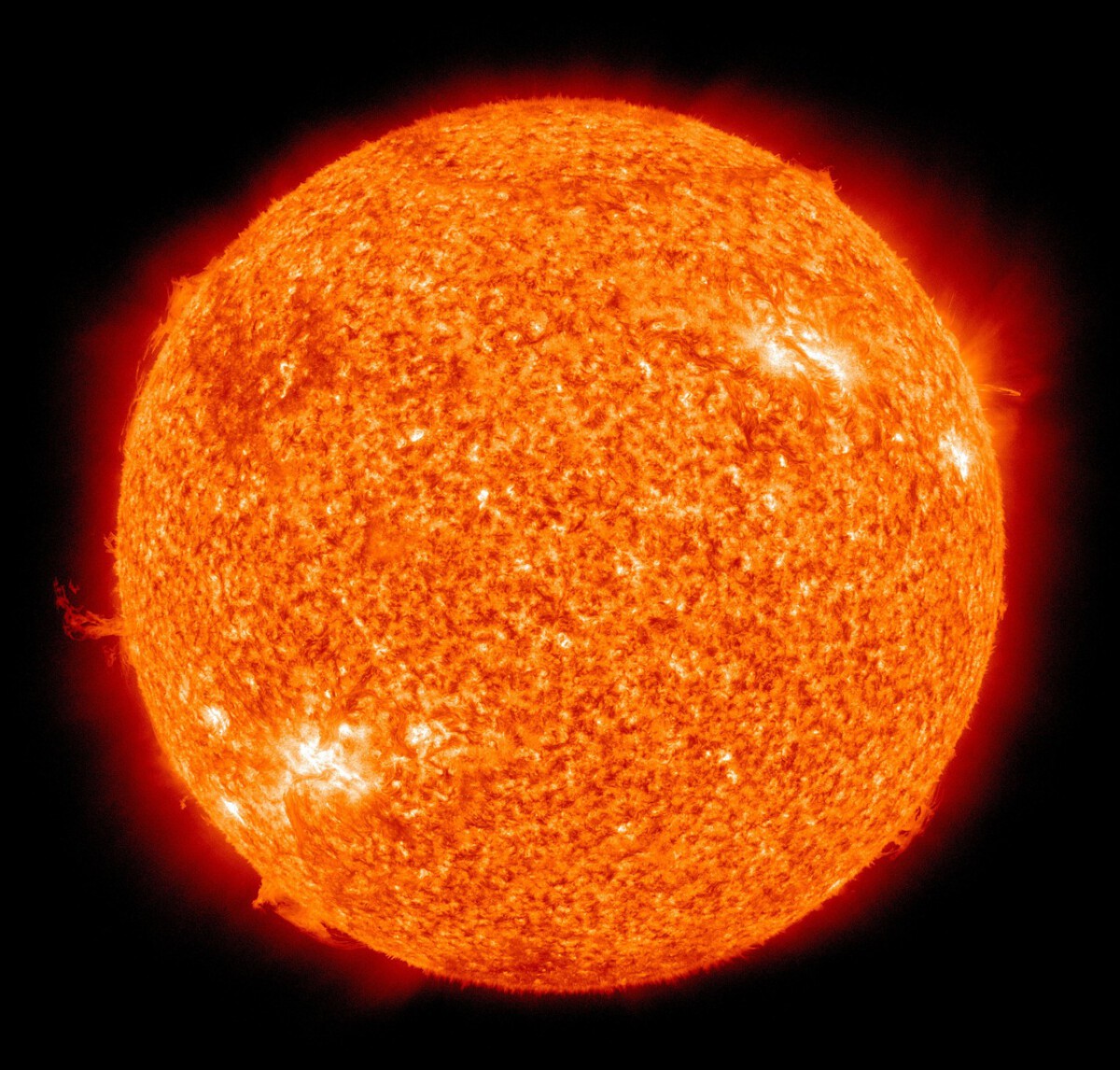
Mysterious Dips Crack Open Stellar Secrets (Image Credits: Pixabay)
Astronomers recently identified massive plasma structures encircling young M dwarf stars, transforming puzzling observations into powerful tools for studying stellar environments. These doughnut-shaped rings of cool plasma, trapped within the stars’ magnetic fields, cause detectable dips in starlight and reveal the dynamics of energetic particles nearby. Researchers now view them as natural space weather stations that could clarify whether planets orbiting these common stars support life.[1][2]
Mysterious Dips Crack Open Stellar Secrets
Repeated brightness fluctuations in rapidly rotating M dwarf stars long baffled observers, earning them the label of complex periodic variables. Scientists initially suspected starspots or orbiting debris, but detailed analysis revealed a more intriguing culprit. Luke Bouma of the Carnegie Institution for Science and Moira Jardine of the University of St Andrews created spectroscopic movies of one such star, TIC 141146667, to dissect the dimming events.
Their work showed that large clouds of relatively cool plasma passed in front of the star, blocking light periodically. This plasma, sculpted by the star’s powerful magnetic field, formed structured rings rather than random clouds. Bouma noted, “For a long time, no one knew quite what to make of these oddball little blips of dimming, but we were able to demonstrate that they can tell us something about the environment right above the star’s surface.”[3]
Decoding the Plasma Tori Phenomenon
These plasma tori resemble cosmic doughnuts, with dense clumps concentrated along the star’s equator due to rotational forces and magnetic confinement. The structures orbit within the magnetosphere, carried by stellar winds and field lines. As the star spins quickly in youth, the plasma rotates synchronously, producing predictable dimming patterns observable from Earth.
At least 10 percent of young M dwarfs likely host such features during their early, active phases. The rings provide direct proxies for space weather conditions, tracking particle density, flow speeds, and magnetic strengths near the stellar surface.[2] Key characteristics include:
- Cool plasma clouds trapped by magnetic fields, cooler than the star’s corona.
- Doughnut shape with opposing dense clumps causing dual dimming peaks per rotation.
- Origin linked to material ejected from the star, though external sources remain possible.
- Prevalent in rapidly spinning M dwarfs, fading as stars age and slow.
M Dwarfs: Prime Targets, Harsh Realms
M dwarf stars dominate the galaxy, outnumbering Sun-like stars and often harboring Earth-sized rocky planets in their habitable zones. Yet their youth brings intense flares, ultraviolet radiation, and particle blasts that threaten atmospheres and surface conditions. Space weather from these events – solar winds and coronal mass ejections – can strip planetary gases or ionize surfaces, complicating life prospects.
Traditional observations capture light easily but struggle with distant particles. Plasma tori bridge this gap, acting as test subjects for stellar outflows. Bouma explained, “Stars influence their planets… through particles – or space weather – like solar winds and magnetic storms, which are more challenging to study at great distances.” In our Solar System, such particles sometimes outweigh light in planetary impact, suggesting similar dynamics elsewhere.[1]
Pioneering Paths to Exoplanet Insights
The findings appeared in a 2025 paper in The Astrophysical Journal Letters, detailing the torus around a low-mass star.[2] Future studies aim to trace plasma sources and model particle trajectories toward orbiting worlds. Enhanced telescopes could map tori across more stars, refining habitability models.
This serendipitous find equips astronomers to gauge risks for thousands of M dwarf exoplanets detected by missions like TESS. Bouma emphasized, “We don’t know yet if any planets orbiting M dwarfs are hospitable to life, but I feel confident that space weather is going to be an important part of answering that question.”[3]
Plasma rings herald a shift in exoplanet science, from passive detection to active environmental profiling. They underscore how stellar neighborhoods shape worlds, urging refined searches for biosignatures amid cosmic storms.
Key Takeaways
- Plasma tori in 10% of young M dwarfs monitor space weather via light dips.
- These structures reveal particle impacts critical for planetary atmospheres.
- New tools could prioritize habitable candidates among M dwarf systems.
What do you think about these cosmic weather stations and their role in the search for life? Tell us in the comments.