Diverse Crew Breaks Historic Barriers (Image Credits: Pixabay)
Kennedy Space Center, Florida — NASA geared up for the Artemis II launch no earlier than April 1, 2026, marking the first crewed trip around the Moon in over half a century. The mission echoes the Apollo era’s boldness but charts a new course with cutting-edge technology and broader goals. While Apollo achieved historic landings amid Cold War urgency, Artemis II prioritizes safety, sustainability, and preparation for Mars.[1][2]
Diverse Crew Breaks Historic Barriers
The Artemis II team consists of four astronauts: Commander Reid Wiseman, Pilot Victor Glover, Mission Specialist Christina Koch from NASA, and Mission Specialist Jeremy Hansen from the Canadian Space Agency. This lineup includes the first woman, the first Black astronaut, and the first non-American on a lunar trajectory mission. Apollo crews, by contrast, featured three all-male, all-American astronauts on missions like Apollo 8.[3][2]
Such diversity mirrors modern society and fosters varied perspectives during high-stakes operations. The crew trained extensively for Orion systems, including manual piloting and proximity operations with the Interim Cryogenic Propulsion Stage. Their preparation ensures robust performance on a 10-day journey exceeding 685,000 miles.[4]
Orion Spacecraft Dwarfs Apollo’s Command Module
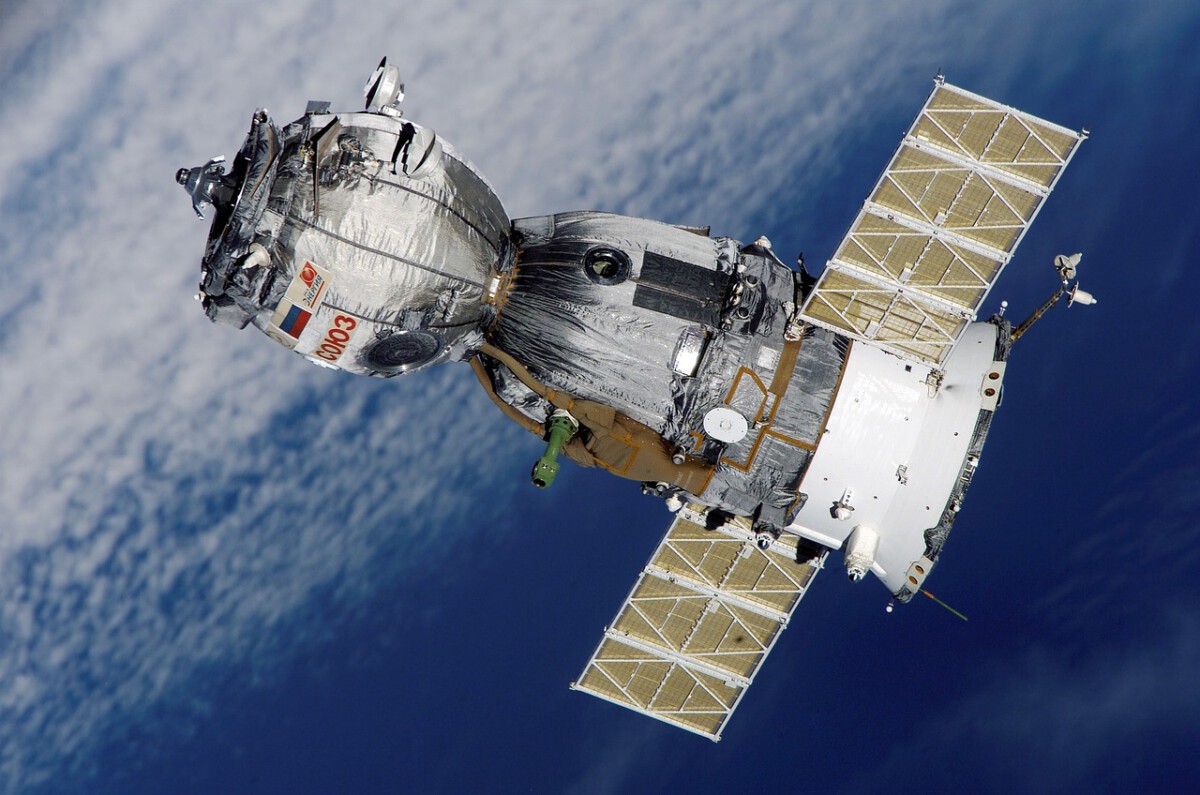
Orion offers 30 percent more habitable volume than Apollo’s Command Module, accommodating four crew members comfortably for up to 21 days. It features a glass cockpit with digital displays, advanced waste management including a toilet, exercise flywheels, and sleeping restraints. Apollo relied on fuel cells for power and basic bags for waste, with limited space and no dedicated fitness gear.[5]
Computing power in Orion surpasses Apollo’s by orders of magnitude: two redundant flight computers provide 128,000 times more memory and 20,000 times faster processing for real-time adjustments. Solar arrays generate renewable energy, unlike Apollo’s finite hydrogen-oxygen cells. Radiation-hardened electronics and a dedicated shelter protect against deep-space exposure, a concern minimized during Apollo’s solar minimum flights.[5][4]
SLS Rocket Delivers Unmatched Thrust
The Space Launch System stands 322 feet tall, shorter than Saturn V’s 363 feet but generates 8.8 million pounds of thrust through four RS-25 engines and two solid boosters. Human-rated with flight safety systems, SLS launches from Pad 39B after rigorous testing. Saturn V powered Apollo from nearby Pad 39A but lacked modern redundancies.[2]
| Feature | SLS (Artemis II) | Saturn V (Apollo) |
|---|---|---|
| Height | 322 ft | 363 ft |
| Thrust | 8.8M lbs | ~7.5M lbs |
| Engines | 4 RS-25 + 2 boosters | 5 F-1 |
This table highlights core specs, underscoring SLS’s edge in power despite a more compact design.[5][4]
Safer Path Pushes Boundaries Farther
Artemis II follows a free-return trajectory, slingshotting around the Moon in a figure-eight path using gravity assists, similar to Apollo 13 but without orbiting. The crew will venture up to 6,000 miles beyond the lunar far side, farther than any prior human mission. Apollo 8 orbited closely at about 60 miles for 10 revolutions over six days.[3][2]
- Outbounds: Earth orbits for system checks, translunar injection.
- Lunar flyby: Closest approach ~40,000 miles, full Moon views including poles.
- Return: Skip-entry reentry at 25,000 mph, Pacific splashdown.
Proximity demos and science like radiation studies prepare for landings at the lunar south pole.[4]
Enhanced Safety Redefines Risk Management
Launch Abort System enables escape at any phase, unlike Apollo’s limited options. Custom orange suits support six-day survival with hydration and nutrition. Parachutes use high-tech fabrics for reliability, and the heat shield withstands extreme reentry.[5][2]
Medical kits address 128 conditions, with real-time surgeon links. These features stem from lessons across shuttle and station programs, prioritizing crew survival over speed.[4]
Key Takeaways
- Artemis II tests deep-space viability for sustainable exploration.
- Diversity and tech advances build on Apollo’s foundation.
- Safety-first design paves way for Moon base and Mars.
Artemis II does not merely revisit Apollo’s triumphs; it launches a new era of inclusive, enduring lunar presence. As the crew circles the Moon, they carry humanity’s next giant leap. What differences excite you most about this mission? Share in the comments.