Venus and Jupiter Dominate the Evening Sky (Image Credits: Unsplash)
As the final days of March give way to April, the night sky presents a treasure trove of celestial sights for eager observers. Five planets stand out prominently, from the dazzling evening duo of Venus and Jupiter to the challenging morning trio of Mercury, Mars, and Saturn. The full Pink Moon graces the heavens on April 1, positioned near the bright star Spica, capping off a month rich in lunar encounters and other highlights.[1][2]
Venus and Jupiter Dominate the Evening Sky
Venus emerges as the brightest point after sunset, captivating viewers throughout late March and April. It hovers low above the western horizon, drawing closer to the Pleiades star cluster and the fiery star Aldebaran by early April. By month’s end, Venus climbs higher, lingering up to two hours past sunset.[1]
Jupiter commands attention higher overhead, shining steadily near the twin stars Castor and Pollux in Gemini. It remains visible for several hours after dark in late March, gradually setting earlier as April progresses. On April 22, a waxing crescent moon passes nearby, creating a striking trio in the western sky.[1]
Early Risers’ Rewards: Mercury, Mars, and Saturn Align
A planetary parade unfolds before dawn in mid-April, featuring Mercury, Mars, and Saturn low in the east. Mercury reaches peak visibility around April 3, its greatest elongation from the sun, though twilight poses a challenge in the Northern Hemisphere. Southern observers enjoy clearer views, especially on April 15 when a thin waning crescent moon crowns the trio about an hour before sunrise.[1][3]
Mars, with its reddish hue, climbs steadily alongside Mercury after early April. Saturn joins the morning lineup later in the month, emerging from the sun’s glare. By April 20, the three form a tight group near the horizon, best seen from southern latitudes roughly 60 minutes before dawn.[1]
The Pink Moon and Lunar Showstoppers
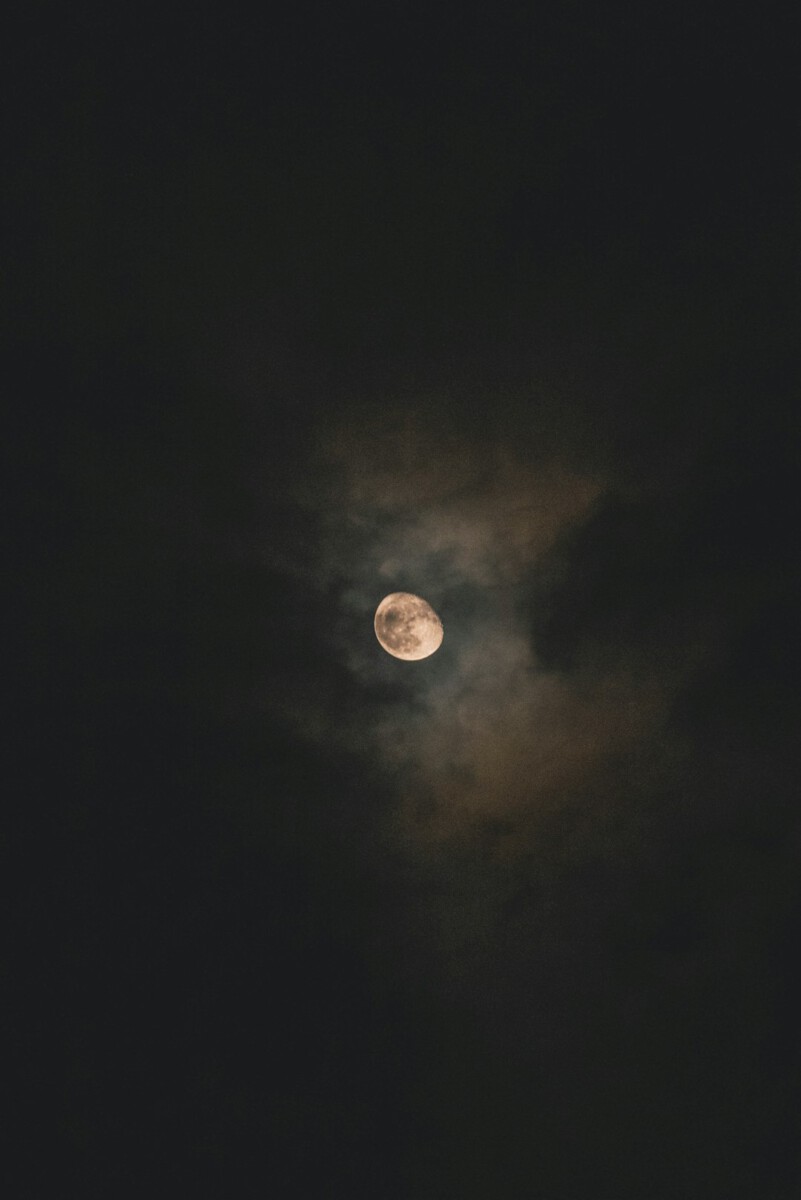
April opens with the full Pink Moon, reaching peak illumination overnight on April 1 at 10:12 p.m. EDT. This moon, named for spring wildflowers rather than its color, rises near sunset opposite the brilliant Spica in Virgo, remaining visible all night until dawn. Observers worldwide can witness it near the star on April 2 and again late in the month.[2][1]
The moon continues its dance through the zodiac, offering multiple photo opportunities. Here are key encounters:
- April 6-7 mornings: Waning gibbous near Antares in Scorpius before dawn.
- April 18-20 evenings: Waxing crescent low west, pairing with Venus, Pleiades, and Aldebaran.
- April 21-22 evenings: Near Jupiter, Castor, and Pollux after sunset.
- April 24-25 evenings: Waxing gibbous by Regulus in Leo.
These phases provide ideal moments for binoculars or a camera, especially under dark skies.[1]
Meteors, Comets, and Seasonal Wonders
The Lyrid meteor shower peaks on April 22-23, with its radiant rising northeast near Vega after midnight. Up to 20 meteors per hour may streak across moonless skies until dawn, rewarding patient watchers. Favorable conditions follow the new supermoon on April 17.[1][3]
A potential highlight arrives with Comet C/2026 A1 (MAPS), nearing perihelion on April 4-5. If it survives its solar approach, it could brighten noticeably around Easter. Zodiacal light, a subtle pyramid of glow, appears in western evening skies around the March equinox, visible from pristine locations.[1]
For the best experience, head to dark-sky sites away from city lights. Apps like Stellarium can tailor views to your location. Check EarthSky for updates.[1]
Key Takeaways
- Scan west after sunset for Venus and Jupiter; east before dawn for the morning planets.
- Catch the Pink Moon near Spica on April 1-2 for a memorable sight.
- Watch for Lyrids after midnight on April 22 under dark skies.
These events remind us of the sky’s endless drama, accessible to anyone with clear nights and curiosity. Grab your binoculars and step outside – what will you spot first? Share your sightings in the comments.