There was a time when the image of the American family was almost laughably predictable. Dad goes to work. Mom stays home. End of story. But something has been quietly shifting beneath the surface of that picture for decades, and by the mid-2020s, that shift has become impossible to ignore. More fathers than ever are trading briefcases for diaper bags, and more women are stepping into the role of primary earner. It sounds like a trend story. Honestly, it is one. But it is also something deeper than that. It is a full restructuring of who does what inside the American home, and the data behind it is genuinely fascinating.
So let’s dive in.
The Numbers That Started It All

Here is a fact that will stop you mid-scroll: roughly one in five stay-at-home parents in the United States today is a father. Dads now represent 18% of stay-at-home parents, up from just 11% in 1989, according to Pew Research Center analysis. That might not sound enormous, but when you compare it across generations, it is a genuinely significant cultural move. Think of it like a glacier; slow, steady, and suddenly you realize the entire landscape has changed.
In 2025, an estimated 2.1 to 2.3 million fathers in the United States are stay-at-home dads, representing about 7% of all fathers living with children under 18, up from 4% in 1989. The trajectory is clear. The number of stay-at-home fathers has nearly doubled over the past 30 years, with economic downturns fueling the trend. It is not a blip. It is a pattern.
Women Are Earning More and Changing Everything

The flip side of the stay-at-home dad story is, of course, the rise of the female breadwinner. And the numbers here are striking. A Center for American Progress analysis found that in 2023, 45% of mothers were the economic backbone of their families, bringing in the bulk of the earned income for their households. Nearly half. That is not a fringe statistic; that is a seismic shift.
A combined 45% of women now earn the same or more than their male spouses, almost triple the share that did so in 1972. Meanwhile, 55% of husbands still earn more than their wives, marking a sharp decline from 85% just half a century ago. The direction of travel here is unmistakable. In 2023, the share of employed women ages 25 to 54 reached a record high, and working women were the primary drivers of America’s strong labor market.
The Childcare Cost Equation That Changes Everything
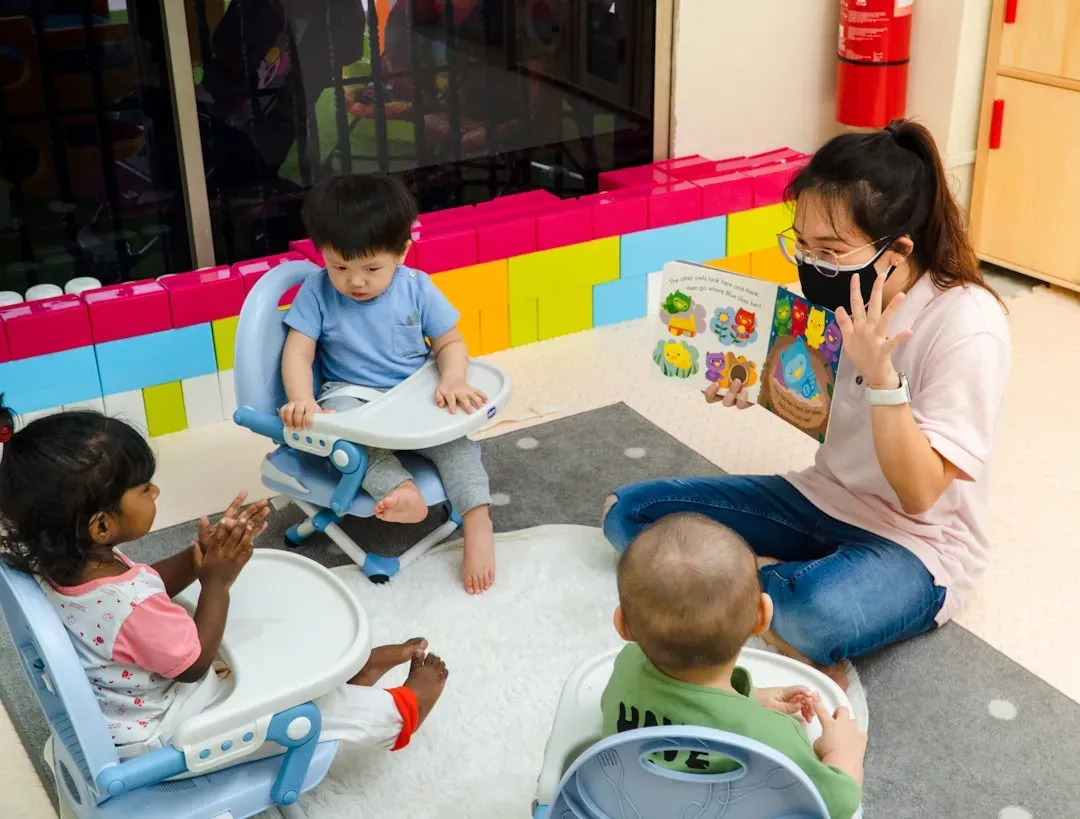
Let’s be real for a second: a lot of this is not purely philosophical. It is financial. Childcare in America has become so expensive that for many families, the math simply does not add up. The national average price of childcare jumped to $13,128 annually in 2024, up from $11,582 in 2023, a staggering difference of $1,546 in a single year. That is more than many car payments, student loans, and in some states, rent.
Respondents to Care.com’s 2024 Cost of Care Survey were spending, on average, 24% of their household income on childcare. Of those respondents, roughly three in five were spending 20% or more of their income on childcare. When you crunch those numbers, having one parent step back from paid work starts looking less like a lifestyle choice and more like pure economic strategy. With childcare expenses often out of reach for numerous families, it becomes economically viable for the lower-earning parent to stay home, and as more women pursue higher education and enter the workforce, it becomes more probable for fathers to step in as the lower-earning parent.
The Education Gap That Nobody Talks About Enough

Here is something I find genuinely underreported in mainstream coverage of this topic. The rise of female breadwinners is closely tied to a massive education reversal. Women have been the majority of college graduates in the U.S. every year since the 1980s. That advantage compounds over time into higher earning potential, career advancement, and ultimately, household financial leadership. It is not complicated; it is just math catching up with decades of educational progress.
One reason for the increase in women who are breadwinners is an increasing share of marriages where women are more educated than their husbands. Women now dominate college campuses, with almost two women students for every man attending college. Education is playing a decisive role in the rise of breadwinner wives, as in more marriages, women are now more educated than their husbands. It is a quiet revolution that started in classrooms and ended up rearranging who does the school run.
Remote Work Unlocked the Whole Thing

The pandemic gets a lot of blame for many social changes, but this one it arguably deserves credit for. The explosion of remote and hybrid work fundamentally changed who could be home and when. Flexible work models, including remote work, remained one of the top three motivations for seeking a new job in 2024, outranked only by more pay, more hours, and better career opportunities. Flexibility is not a perk anymore. It is a priority.
Remote work and flexible schedules have made labor market engagement more accessible for some workers, particularly caregivers, and regardless of gender, workers with children preferred remote work by several percentage points. That is important context. It is now easier for both mothers and fathers to work from home as employers offer more flexible arrangements, meaning men can work from home and balance that with childcare and household duties. The boundaries of “work” and “home” blurred, and many fathers stepped into that gap.
Why Dads Are Actually Choosing This Now
There is a meaningful distinction between being forced to stay home and choosing to. And that distinction is shifting. Thirty years ago, 56% of fathers stayed at home due to an illness or disability and merely 4% were doing so to look after their kids. The data today suggests dads are increasingly choosing parenting over breadwinning, instead of taking on the role by default after being injured or let go from their job during a recession. That is a profound cultural change hiding inside a dry statistic.
This represents a big shift from decades past, and the data suggests dads are increasingly choosing parenting over breadwinning rather than landing in the role by default. A big part of the current trend comes down to breaking free from outdated gender roles. Stay-at-home dads are challenging the idea that caregiving is a woman’s job and proving that love, patience, and empathy are not gendered traits. It sounds like a greeting card, but it is also backed by real survey data and behavioral shifts across millions of households.
The Social Stigma That Still Lingers
It would be dishonest to tell this story without mentioning the friction. Cultural change is rarely smooth. Research from Pew surveys found that 51% of Americans still believe children are better off with a stay-at-home mom, compared to only 8% who say the same about a stay-at-home dad. That gap is enormous. It tells you that while the household dynamics are changing in practice, the social approval for those changes is still uneven and frankly, a bit behind the curve.
Being a stay-at-home dad offers profound benefits, including stronger emotional bonds with children and greater involvement in daily development, but it also comes with challenges like societal stigma and financial strain. Research by child psychiatrist Kyle D. Pruett found that a father’s parenting style is beneficial for a child’s physical, cognitive, emotional, and behavioral development. The science on involved fatherhood is consistently positive. The cultural catch-up, though, is still very much in progress.
Where This Trend Is Headed
Projections for the near future are cautiously optimistic for those watching this trend. Projections for 2025 suggest modest growth to between 2.1 and 2.3 million stay-at-home dads, as remote work normalizes and societal acceptance continues to increase. It is not an overnight revolution, but the direction is consistent. The number of stay-at-home dads has steadily increased over the decades, driven by factors such as women’s rising workforce participation, flexible work options, and cultural acceptance.
Letting go of rigid gender roles in household work can actually strengthen financial stability. Allowing whichever parent has the higher income or better benefits to focus on work while the other prioritizes caregiving means a couple can maximize their savings, retirement contributions, and emergency fund. It is hard to argue with that logic. These numbers are part of a decades-long trend in which women are far more likely to be the family breadwinner than in earlier generations, and that trend shows no sign of reversing.
Conclusion

The American household is not what it was in 1985. Or 1995. Or even 2015. The data from Pew Research, the Bureau of Labor Statistics, Child Care Aware of America, and McKinsey all point in the same direction: family roles are being renegotiated, driven by economic pressure, educational shifts, rising female earnings, and post-pandemic flexibility in the workplace. It is not a niche lifestyle change. It is a structural evolution.
Honestly, the most surprising thing is not that this is happening. It is how long it took for the numbers to catch up with the conversations many families were already having privately. The “stay-at-home husband” is not a curiosity or a punchline anymore. He is a data point in a much larger story about how America is rethinking who works, who cares, and who does both at once.
What do you think: is the traditional breadwinner model on its way out for good? Tell us in the comments.