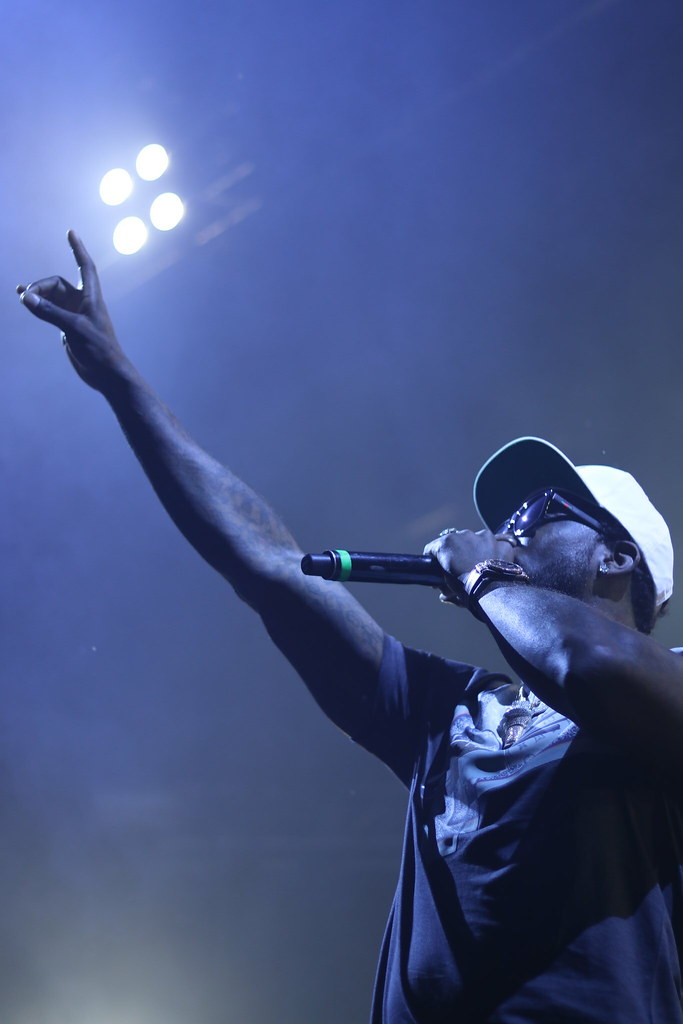
The Studio Ambush Unraveled (Image Credits: Flickr)
Dallas, Texas – Early this year, recording executive and rapper Gucci Mane encountered a shocking act of violence at a local music studio. The incident stemmed from a contract dispute with one of his label’s artists, Pooh Shiesty, who allegedly resorted to extreme measures to sever ties. Federal investigators have detailed the events in a criminal affidavit, charging multiple individuals with kidnapping and armed robbery.
The Studio Ambush Unraveled
Pooh Shiesty, whose legal name is Lontrell Williams Jr., had been under contract with Gucci Mane’s 1017 Records since 2020. Dissatisfied with the deal, Williams arranged a meeting with Gucci Mane, legally Radric Davis, under the pretense of renegotiation. He arrived with eight accomplices, including his father, Lontrell Williams Sr., and rapper Rodney Wright Jr., known as Big30.
Once inside the studio, Williams presented Davis with documents intended to release him from the contract. Davis refused to sign. Williams then drew a black AK-style pistol from his bag and aimed it at Davis, compelling him to comply while Wright recorded the moment on a cellphone.
Robbery and Restraint Escalate the Crime
After securing the signature, Williams seized Davis’s wedding ring, watch, earrings, and cash. The ordeal extended to two of Davis’s associates, who faced gunpoint robbery by the group. One victim, referred to as “M.M.” in the affidavit, endured choking from behind until nearly unconscious.
Wright blocked the studio lobby door, trapping the victims temporarily. The group eventually directed Davis and his associates out a side exit to their vehicle. Security footage, victim statements, and Williams’s ankle monitor provided key evidence leading to arrests.FBI agent Brittany Garcia outlined these details in the affidavit.
Severe Federal Charges Mount
All nine suspects, including Williams and his accomplices, now confront federal indictments for kidnapping and gunpoint robbery. Conviction carries a potential life sentence. The coordinated nature of the attack, involving firearms and restraint, elevated the case to federal jurisdiction.
Investigators traced the plot through digital records and surveillance. Williams’s prior monitoring device pinpointed his location during the crime, sealing the evidence chain. Prosecutors emphasized the premeditated intent to coerce a business agreement through violence.
Contract Law Trumps Coercion
The paperwork Davis signed under threat holds no legal weight. Agreements obtained via duress, especially with imminent violence, courts routinely void. Williams remains contractually bound to 1017 Records pending further legal action.
Davis might choose to terminate the deal independently, given the breach of trust. Label executives often weigh ongoing value against reputational risks. For now, any music revenue from Williams funnels through the label structure.
Rap Careers Weather Legal Storms
Gucci Mane himself emerged stronger after prison time from 2014 to 2016 on firearm charges. His post-release trajectory underscores resilience in hip-hop. Other artists have mirrored this path amid legal battles.
Consider these examples of commercial rebounds:
- Gucci Mane rebuilt his brand post-incarceration, expanding into executive roles.
- A$AP Rocky topped the Billboard 200 with Don’t Be Dumb in 2026, post-assault convictions, logging 35.4 million first-day Spotify streams.
- Many rappers leverage notoriety for streams, though outcomes vary.
Williams’s case draws parallels, but federal exposure complicates prospects. Media spotlight could boost listens, indirectly benefiting the label.
Key Takeaways
- Duress-signed contracts prove unenforceable, preserving original terms.
- Federal kidnapping and robbery charges threaten life imprisonment.
- Hip-hop history shows incarceration rarely derails top talent permanently.
This clash highlights tensions in rap’s business underbelly, where ambition collides with legal boundaries. As trials unfold, the industry watches whether Williams’s actions yield freedom or finality. What implications do you see for artist-label dynamics? Share your thoughts in the comments.