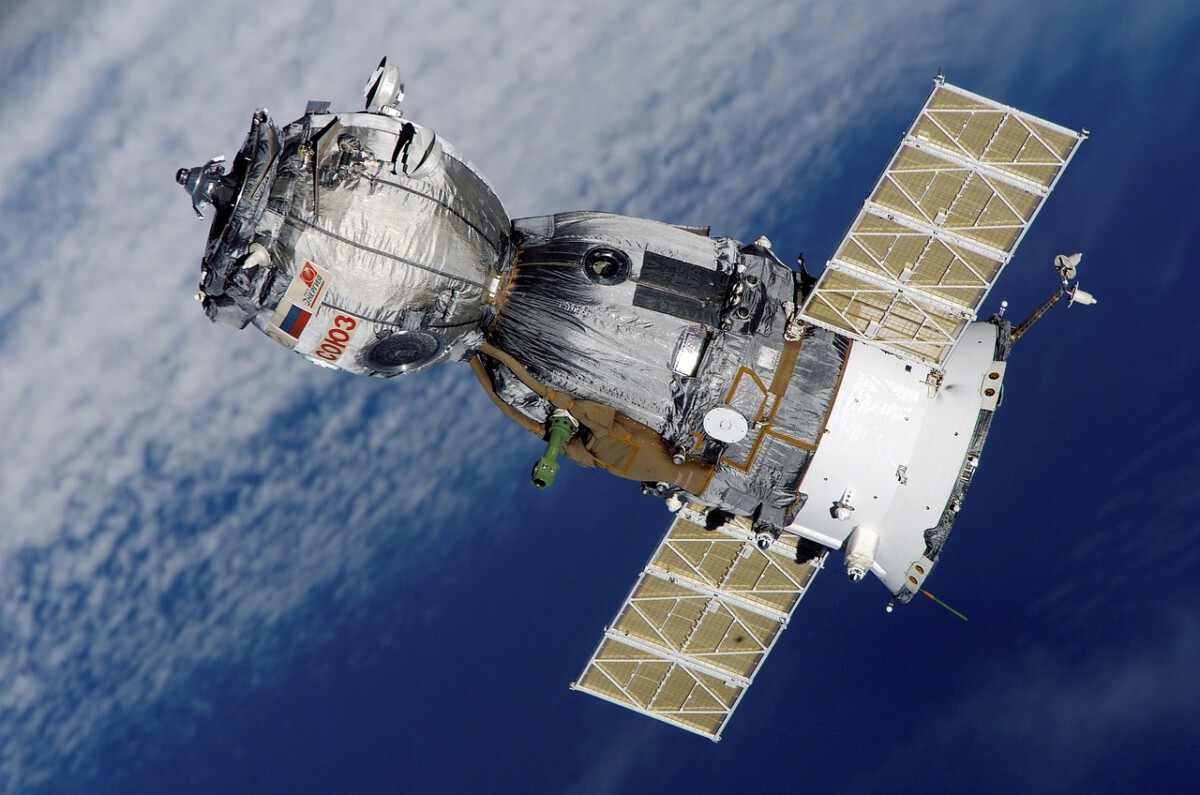
A New Era of Transparent Space Exploration (Image Credits: Pixabay)
Kennedy Space Center, Florida – NASA’s Artemis II mission marked humanity’s return to deep space with four astronauts aboard the Orion spacecraft, the first such crewed voyage since 1972.[1][2] Launched on April 1 from this coastal launch site, the team now pursues a 10-day path around the Moon to test systems for upcoming landings.[1] Public interest surges as a dedicated NASA website delivers real-time visibility into Orion’s position and trajectory, transforming complex spaceflight into an accessible spectacle.
A New Era of Transparent Space Exploration
Over five decades after the Apollo program’s finale, NASA equips everyday observers with unprecedented access to a live lunar mission. The Artemis Real-time Orbit Website stands as the centerpiece, rendering Orion’s journey alongside Earth and the Moon in a dynamic 3D map.[3] This tool not only plots current locations but also overlays the full planned route, allowing users to anticipate maneuvers ahead.
Engineers designed the platform to mimic intuitive navigation apps, ensuring broad usability without specialized knowledge. Mission controllers update it continuously, reflecting every adjustment in real time. Such openness fosters global engagement, bridging the gap between ground-based audiences and crews navigating vast distances.
Hands-On Tools for Immersive Tracking
Users dive into the experience through simple controls that rival consumer mapping software. Zoom functions bring distant objects into sharp focus, while drag gestures reorient the celestial perspective at will. A standout “Spacecraft View” deploys a virtual vantage point, simulating proximity to Orion itself.
Further enhancing realism, clickable icons access reconstructions from the spacecraft’s four solar array wing cameras. These digital previews complement actual live streams available via NASA’s YouTube channel, such as the ongoing mission broadcast.[4] Key interactive elements include:
- Real-time positioning of Earth, Moon, and Orion.
- Trajectory visualization for the entire 10-day flight.
- Customizable camera angles and orbital rotations.
- Live camera feed simulations from onboard arrays.
- Seamless panning and scaling across solar system scales.
These features convert raw telemetry into an engaging narrative, drawing viewers deeper into the mission’s rhythm.
Live Metrics Reveal the Mission’s Pulse
The website pulses with critical data, updating fluidly as Orion accelerates through space. Displays track mission elapsed time, current velocity – often exceeding 4,000 miles per hour – and precise separations from Earth and the Moon. For instance, early readouts showed distances shifting by roughly one mile per second amid rapid outbound progress.
Such metrics offer context for the spacecraft’s demanding environment. Velocities climb during key burns, while distances underscore the scale: from low Earth orbit to lunar proximity. This transparency demystifies the engineering feats powering Artemis II.
Milestones Ahead on the Lunar Loop
Orion already completed its translunar injection burn, escaping Earth orbit for the Moon-bound leg.[2] Crew members Reid Wiseman, Victor Glover, Christina Koch, and Jeremy Hansen prepare for a close flyby on April 6, capturing high-resolution images of the lunar far side – terrain unseen directly by human eyes.[1]
Post-flyby, the spacecraft loops back, targeting splashdown in the Pacific Ocean off California around April 10. This outbound-inbound path validates Orion’s capabilities for sustained deep space operations. NASA anticipates the crew’s observations will inform Artemis III’s surface touchdown.
Key Takeaways
- Artemis II revives crewed deep spaceflight after 54 years, orbiting the Moon without landing.
- The Real-time Orbit Website democratizes tracking with intuitive, data-rich visuals.
- Upcoming flyby on April 6 promises fresh lunar insights for future missions.
As Orion carves its path through the void, this tool ensures the public shares in the triumph. The mission’s success paves the way for humanity’s lunar return – what role will you play in cheering it on? Share your thoughts in the comments.