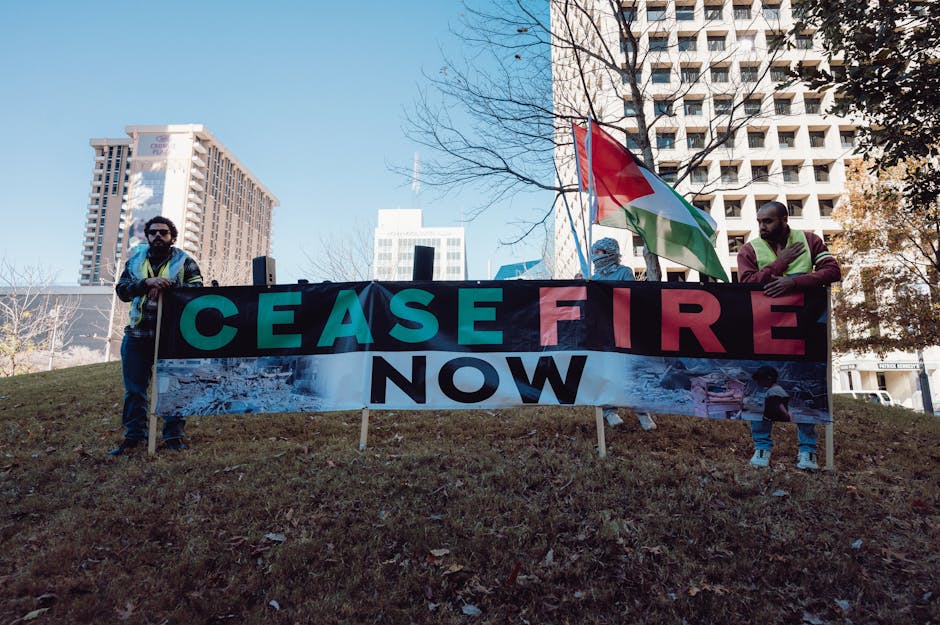
Conflicting Visions Undermine the Agreement (Image Credits: Pexels)
Iran, the United States, and Israel secured a two-week ceasefire through last-minute negotiations, staving off President Donald Trump’s threatened bombing campaign against Iran. The agreement came hours before potential escalation, yet new attacks surfaced almost immediately across the region. Vice President JD Vance labeled the pact fragile, reflecting deep divisions in how each side interprets its scope.
Conflicting Visions Undermine the Agreement
Disparities in the ceasefire terms emerged right away, casting doubt on the truce’s viability. Trump had praised a supposed 10-point Iranian proposal as workable before dismissing a Farsi version as fraudulent over uranium enrichment language. Iran pushed for U.S. troop withdrawals, sanctions relief, and access to frozen assets, while Trump signaled discussions on tariffs and sanctions.
Pakistan, a key mediator, anticipated permanent peace talks in Islamabad by Friday. Israel endorsed the U.S.-Iran halt but excluded operations against Hezbollah in Lebanon, where ground incursions continued and strikes targeted Beirut. Hezbollah officials indicated they would pause fire only if Israel reciprocated, leaving the northern front volatile.
Strait of Hormuz Fees Reshape Trade Routes
Iran’s wartime grip on the Strait of Hormuz delivered its strongest leverage, disrupting 20 percent of global oil and gas flows and pressuring world markets. The ceasefire reportedly permits Iran and Oman to impose transit fees, a shift from decades of free passage that could generate reconstruction funds for Tehran. A regional official involved in talks confirmed the arrangement, though Gulf states rebuilding from Iranian strikes on their oil infrastructure likely view it as unacceptable.
Iranian Foreign Minister Abbas Araghchi stated passage would fall under Iranian military oversight, raising safety concerns for commercial shipping. U.S. warships may linger nearby, per Trump, creating flashpoint risks. Markets reacted swiftly: oil prices fell and stocks rose on Wednesday following the news.
Nuclear and Missile Threats Linger Unresolved
Central war aims for the U.S. and Israel – inactivating Iran’s nuclear and missile capabilities – saw no clear resolution. Trump announced joint efforts to excavate enriched uranium buried by June strikes, noting it remained untouched, but Iran offered no confirmation. Tehran long maintained its program served peaceful ends, despite nearing weapons-grade purity at 60 percent.
Discrepancies appeared in Iran’s ceasefire documents: the Farsi text referenced enrichment acceptance, absent from English versions. A senior Israeli official credited infrastructure devastation for forcing the deal and said Washington pledged to pursue nuclear material removal and missile dismantlement. Pro-government crowds in Tehran burned U.S. and Israeli flags, chanting “Death to America, death to Israel, death to compromisers,” signaling domestic resistance.
Ongoing Attacks Challenge Truce’s First Hours
Bahrain, Israel, Kuwait, Saudi Arabia, and the United Arab Emirates warned of Iranian missiles shortly after the announcement, with fire briefly halting before resuming. An assault hit an oil refinery on Iran’s Lavan Island, a key export terminal; state media reported no casualties as crews contained the blaze. U.S. Central Command stayed silent on involvement, while UAE defenses intercepted missiles and Kuwait countered drone waves.
Casualties mounted heavily: more than 1,900 deaths in Iran by late March, over 1,500 in Lebanon with 1 million displaced, 11 Israeli soldiers lost, plus two dozen in Gulf states and the West Bank, 23 in Israel proper, and 13 U.S. service members.
| Region | Reported Deaths | Other Impacts |
|---|---|---|
| Iran | 1,900+ | No recent updates |
| Lebanon | 1,500+ | 1 million displaced |
| Israel | 23 soldiers/civilians | 11 soldiers in Lebanon ops |
| U.S. | 13 service members | N/A |
Key Takeaways
- The two-week truce buys time but leaves nuclear curbs, Strait fees, and Hezbollah fights ambiguous.
- Market relief drove oil down and stocks up, yet shipping safety remains in question.
- Fresh strikes signal hardliners on all sides may test the deal’s limits.
This eleventh-hour ceasefire provides a narrow opening for diplomacy amid economic strains and human costs, but its survival hinges on reconciling stark differences. Will the fragile pause hold, or unravel under pressure? Tell us in the comments.