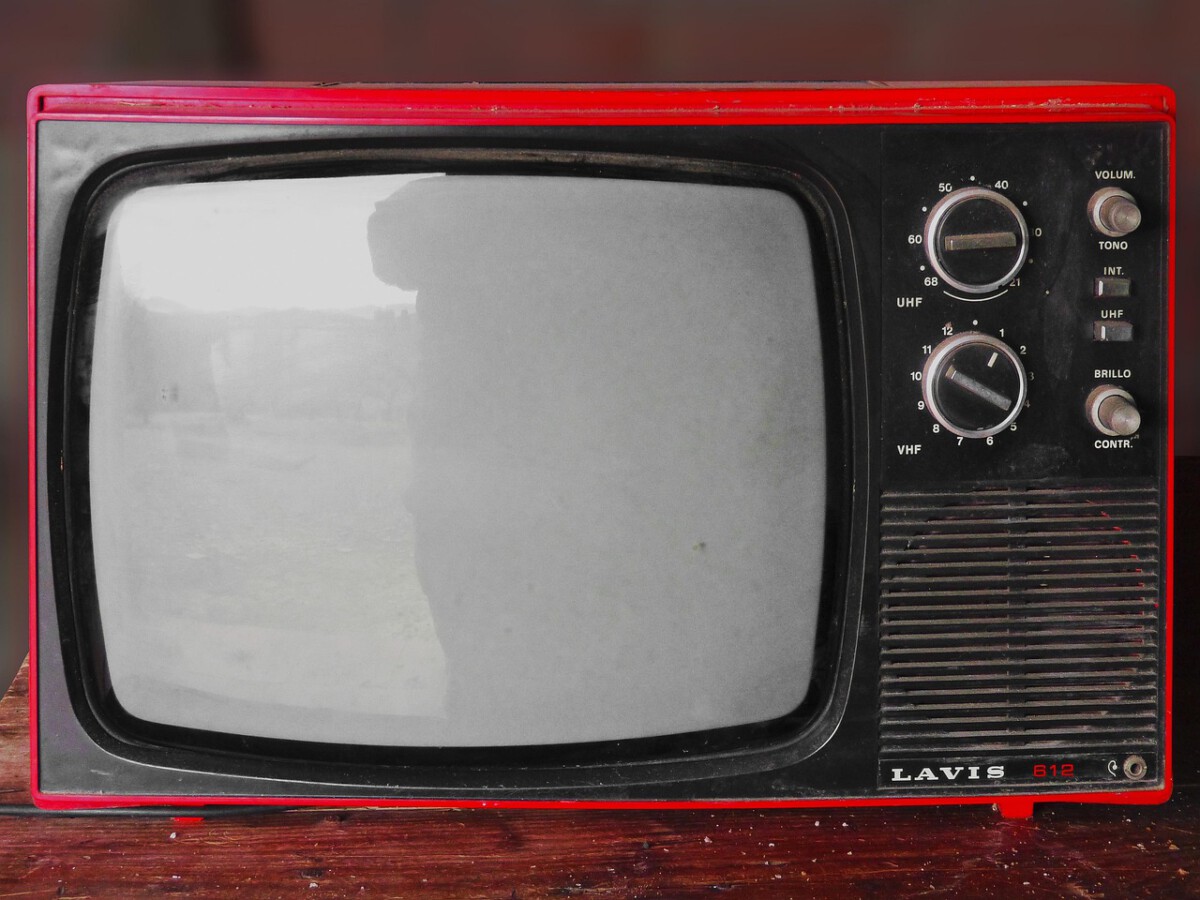
Baird’s Mechanical Marvel Emerges (Image Credits: Pixabay)
London – In the roaring 1920s, a Scottish inventor named John Logie Baird captured the world’s imagination with moving images transmitted wirelessly. His mechanical television system marked the dawn of a new era in entertainment and communication. Yet, despite initial excitement, Baird’s commercial sets ultimately faded into obscurity, offering timeless lessons for today’s artificial intelligence pioneers.[1][2]
Baird’s Mechanical Marvel Emerges
John Logie Baird first demonstrated a working television system in 1925, transmitting silhouette images of a ventriloquist’s dummy known as Stooky Bill.[1] By January 1926, he advanced to real human faces, showcasing winking and smiling expressions to scientists at London’s Royal Institution. The system relied on a Nipkow disk – a spinning wheel with holes that scanned images line by line – paired with selenium cells to convert light into electrical signals for radio transmission.[2]
Receiving sets reconstructed the images on small ground-glass screens, producing crude but revolutionary visuals. Baird’s persistence paid off with transatlantic broadcasts in 1928 and the BBC’s inaugural TV service using his technology the following year. This early success fueled hopes for mass adoption, positioning Baird as television’s frontrunner.
Commercial Launch Meets Mixed Reception
Baird’s company released the Televisor in 1928, the world’s first mass-produced TV sets, priced affordably at around £4 to £6 – equivalent to a few weeks’ wages for many.[1] About 1,000 units sold initially, attaching to existing radios with neon tubes and spinning disks for 30-line resolution on tiny 2-inch screens. Enthusiasts tuned into Baird’s broadcasts from London’s Long Acre studio, featuring vaudeville acts and newsreels.
Sales peaked modestly, with UK ownership reaching 12,000 to 15,000 sets by 1939 amid ongoing improvements to 240 lines.[1] However, picture quality remained flickering and ghostly, limiting appeal beyond hobbyists. The sets demanded dim rooms and precise synchronization, deterring widespread use.
Technical Barriers Exposed
The Televisor’s mechanical core proved its Achilles’ heel. Spinning disks capped resolution at low levels, producing visible scan lines and persistent flicker. Images struggled with light gradations, often appearing as shadowy outlines rather than sharp visuals.[2]
Selenium cells lacked sensitivity for bright or fast-moving scenes, while physical components prevented larger screens or longer broadcasts. Upgrades helped, but inherent limits stifled scalability. World War II further halted progress, dooming mechanical systems by 1939.[1]
Rivals Usher in the Electronic Era
Electronic television, pioneered by figures like Philo Farnsworth and Vladimir Zworykin, used cathode-ray tubes for scanning without moving parts. These systems delivered higher resolutions – up to 405 lines by 1936 – and clearer images over greater distances.[2]
In 1936, the BBC pitted Baird’s hybrid setup against EMI-Marconi’s electronic rival at Alexandra Palace. The electronic camp triumphed in quality and reliability, securing the BBC contract. A devastating fire at Baird’s Crystal Palace lab that November sealed mechanical TV’s fate, paving the way for electronic dominance by 1939.[2]
| Aspect | Mechanical (Baird Televisor) | Electronic (EMI/Marconi) |
|---|---|---|
| Resolution | 30-240 lines | 405 lines |
| Screen Size | 2-3 inches | Larger, scalable |
| Key Limits | Flicker, mechanical wear | Higher quality, reliable |
Echoes in AI Development
Today’s AI landscape mirrors early television’s trajectory. Generative models dazzle with demos, much like Baird’s winking faces, but grapple with hallucinations, scalability, and real-world reliability. Mechanical TV’s hype gave way to superior tech; current AI may yield to advanced architectures or quantum boosts.
Pioneers risk obsolescence without ecosystem support – content for TV, data infrastructure for AI. Baird broadcast despite flaws, building demand; AI firms invest in applications to sustain growth. History warns that first-mover advantage fades against relentless innovation.[2]
- Embrace iteration: Static tech stalls, as disks did.
- Build alliances: BBC’s tests favored collaborators.
- Prioritize user experience: Poor quality curbs adoption.
- Anticipate disruption: Electronic CRTs eclipsed mechanics.
- Foster infrastructure: Broadcasts amplified TV’s value.
Key Takeaways
- Early breakthroughs spark markets but rarely dominate long-term.
- Technical ceilings demand evolution, not complacency.
- Superior rivals often redefine industries overnight.
Baird’s legacy endures in every modern screen, proving vision outlives initial failures. As AI evolves, innovators must heed these patterns to avoid the Televisor’s shadow. What parallels do you see between early TV and AI? Share in the comments.