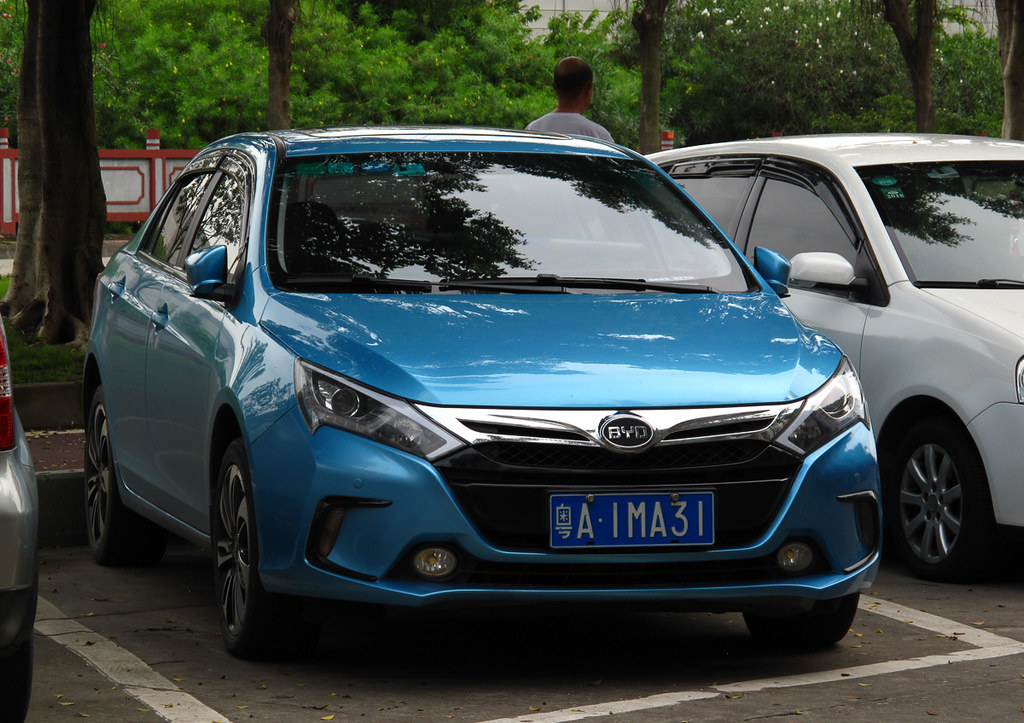
A Record-Breaking Surge in Overseas Shipments (Image Credits: Flickr)
Shenzhen, China – China’s electric vehicle giant BYD shattered records in 2025 by exporting more than 1 million new energy vehicles, a feat that underscored its rapid ascent on the global stage. This milestone capped a year of explosive growth, with overseas shipments surging over 150% from the previous period.[1][2] The achievement highlighted BYD’s knack for customizing vehicles to suit diverse markets while investing heavily in cutting-edge technology. As domestic competition intensifies, the company now turns its gaze toward North America, navigating tariffs through strategic local production plans.
A Record-Breaking Surge in Overseas Shipments
BYD delivered 1,046,083 new energy vehicles abroad in 2025, including both passenger and commercial models. This marked the first time the automaker crossed the 1 million threshold, fueled by demand across more than 110 countries and regions.[3] Exports represented a staggering 150.74% increase year-over-year, transforming BYD from a domestic powerhouse into a true global contender.
The company’s executives projected even bolder numbers for 2026, initially aiming for 1.3 million units before signaling confidence in hitting 1.5 million – a 15% overrun on earlier goals.[4][3] Strong early-year performance, despite a dip in total sales, reinforced this optimism. Overseas markets now serve as a vital buffer against softening demand at home.
Custom-Built EVs Conquer Diverse Markets
BYD’s secret to scaling exports lay in its relentless focus on localization. Over seven quarters, the firm poured more than $13 billion into research and development, crafting affordable, tech-laden vehicles tailored to regional tastes.[1] In China, over 1 million Seagull models – priced around $10,000 – hit the roads, proving mass affordability works.
Adaptations extended worldwide. Japan received the first non-Japanese kei car EV, an ultracompact design perfect for urban constraints. Europe got sleek sedans, with the premium Denza sub-brand set to launch soon. Breakthroughs like a battery offering a 621-mile range and five-minute charges positioned these EVs as viable gas alternatives.[1]
- Seagull: Budget hatchback dominating China.
- Qin L: Affordable sedan rivaling Tesla’s Model 3.
- YangWang U9: Supercar with pothole-jumping self-driving tech.
- Kei EV: Compact for Japan’s narrow streets.
- Denza models: Luxury options for Europe.
Logistics and Production Fuel the Expansion
BYD bolstered its export prowess with a dedicated shipping fleet. The completion of its eighth car carrier in under two years unlocked capacity for over 1 million vehicles annually, not just from China but future overseas plants.[5] Vessels like BYD Explorer No. 1 now ferry cars to Europe and beyond.
Localized manufacturing accelerated the push. Plants in Thailand, Uzbekistan, and Brazil already produce passenger vehicles. Hungary’s European factory nears completion. These facilities cut shipping times and costs while sidestepping import duties.[2]
| Region | Key Facilities | Status |
|---|---|---|
| Southeast Asia | Thailand | Operational |
| Latin America | Brazil | Operational |
| Europe | Hungary | Nearing production |
| Central Asia | Uzbekistan | Operational |
North America Beckons Despite Tariff Walls
North America emerged as a prime target, accounting for roughly one-third of 2025 exports alongside Europe and ASEAN – though volumes remain modest due to barriers.[3] U.S. tariffs exceeding 100% on Chinese EVs, coupled with connected-car restrictions, kept mass-market models out. Still, analysts predict entry is inevitable.
BYD pursued workarounds aggressively. It vied for a Nissan-Mercedes plant in Mexico’s Aguascalientes, eyeing 230,000-unit capacity to serve the region.[6] In Canada, tariff cuts to 6.1% opened doors for up to 70,000 affordable EVs yearly. The company studied a wholly owned factory there and eyed acquisitions of struggling legacy makers. A past Ontario bus plant offered lessons in local assembly.[7]
Experts like Laurie Harbour, CEO of Harbour Results, affirmed the momentum: “It’s not a question of if but when they become a penetrable force in the North American market.”[1] Sub-$20,000 models could democratize EV ownership across the continent.
Key Takeaways
- BYD exported 1.046 million NEVs in 2025, targeting 1.5 million in 2026.
- Localized designs and $13B R&D drive market fit worldwide.
- North America strategy hinges on Mexico and Canada factories to evade U.S. tariffs.
BYD’s journey from Shenzhen startup to export titan reveals a blueprint for global EV dominance: innovate relentlessly, adapt locally, and build strategically. As it breaches new frontiers like North America, the automaker promises to reshape competition and accelerate the shift to sustainable transport. What do you think about BYD’s next moves? Tell us in the comments.