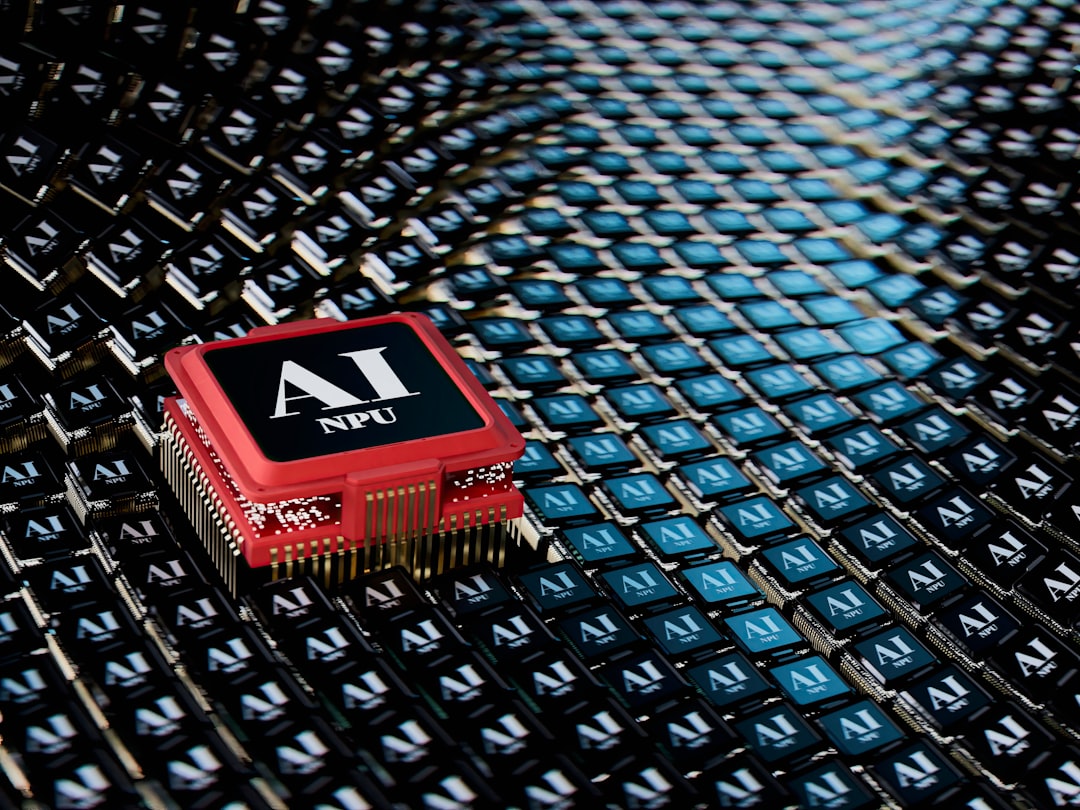
Over 500 Events Last Year: The Growing Momentum of World Quantum Day (Image Credits: Unsplash)
April 14, 2026, brings the fifth annual World Quantum Day, a worldwide effort by scientists to spotlight quantum science’s role in future technologies. This decentralized celebration draws in educators, entrepreneurs, and innovators hosting events from talks to exhibitions across dozens of countries. As quantum advancements accelerate, the day highlights opportunities that extend far beyond laboratories into daily life and business.
Over 500 Events Last Year: The Growing Momentum of World Quantum Day
Scientists launched World Quantum Day in 2022 as a grassroots movement without a central organizing body. Participants from various fields coordinated independently to share quantum knowledge through public activities. This approach fostered widespread engagement and rapid expansion.
The official website reported more than 530 events in over 318 cities across 83 countries for the 2025 observance. Such scale demonstrated quantum science’s appeal to diverse audiences. Organizers continue to invite broader participation, ensuring the initiative remains dynamic and inclusive.
April 14 Honors a Fundamental Constant of Physics
The choice of April 14 traces directly to Planck’s constant, a cornerstone of quantum theory introduced by Max Planck in 1900. This value quantifies energy packets known as quanta, essential to quantum interactions. Technologies like GPS, semiconductors, and touchscreens depend on it daily.
Written as 4.1356677×10⁻¹⁵, the constant’s leading digits approximate 4.14, aligning perfectly with the month’s date. The National Institute of Standards and Technology describes it as defining energy scale in quantum systems. This symbolic connection reinforces the day’s focus on foundational principles driving modern innovation.
From Classical Bits to Powerful Qubits: The Quantum Leap Explained
Conventional computers process information using bits that exist strictly as 0 or 1, following classical physics rules. Quantum computers, however, employ qubits enabled by quantum principles like superposition. A qubit can represent 0, 1, or both simultaneously, enabling parallel computations at unprecedented speeds.
Tasks that challenge today’s supercomputers for millions of years could yield to quantum systems in mere hours. This capability promises breakthroughs in drug discovery, secure communications, and advanced materials. Yet quantum progress also threatens current encryption methods protecting financial transactions and data privacy.
Quantum’s Business Edge: Opportunities and Challenges Ahead
Quantum technologies already influence sectors from healthcare to finance, with potential to redefine artificial intelligence and logistics. Companies investing early stand to gain competitive advantages through faster simulations and optimizations. Public awareness, as promoted on World Quantum Day, equips businesses to navigate this shift proactively.
Key applications include:
- Accelerated medical research for personalized treatments.
- Enhanced cybersecurity resistant to quantum threats.
- Optimized supply chains via complex modeling.
- Revolutionary advances in machine learning algorithms.
- New materials for sustainable energy solutions.
Still, the transition demands preparation, as existing systems face obsolescence risks. Firms must balance excitement with strategic planning.
Key Takeaways
- World Quantum Day drives global awareness of technologies reshaping industries.
- Planck’s constant links the date to quantum fundamentals powering daily devices.
- Qubits offer exponential speed gains but require new security measures.
World Quantum Day 2026 serves as a pivotal reminder that quantum science transitions from theory to tangible economic force. Its decentralized spirit ensures broad accessibility, urging businesses and individuals alike to engage. What implications do you see for your field? Share your thoughts in the comments.