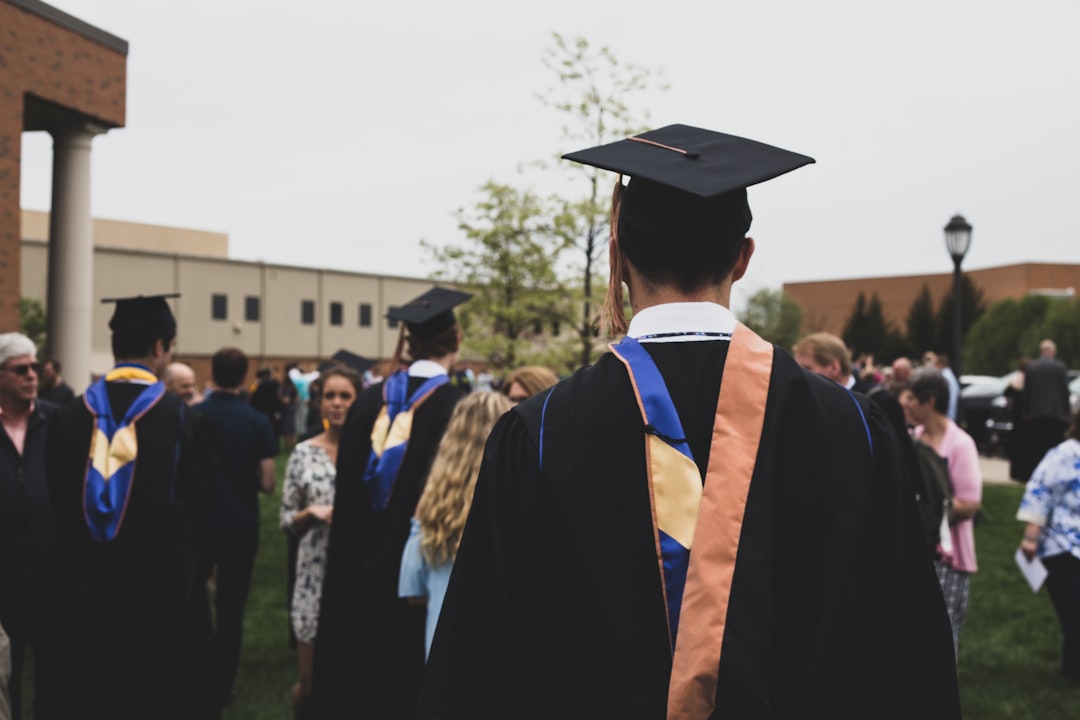
A Literature Graduate Leads AI Innovation (Image Credits: Unsplash)
Washington, D.C. – At the Semafor World Economy Summit this week, Anthropic cofounder Jack Clark challenged conventional wisdom on education in the age of artificial intelligence. The billionaire entrepreneur, who built one of the industry’s leading companies, revealed that his background in English literature equipped him with skills more vital than ever.[1][2] Clark argued that AI’s rise elevates the value of humanities training, shifting focus from technical rote work to human-centered reasoning and insight.
A Literature Graduate Leads AI Innovation
Jack Clark studied English literature with creative writing at the University of East Anglia in Norwich, England, earning his bachelor’s degree between 2006 and 2009.[3] Before co-founding Anthropic, a frontrunner in safe and reliable AI systems, he worked as a journalist, honing his ability to analyze complex narratives.
During the summit panel on building intelligent enterprises, Clark reflected on his unconventional path. “I’m a literature graduate and I don’t think you’d put that as a co-founder of a frontier AI company,” he said, “but what turned out to be useful is that I got to learn a lot about history and a lot about the kind of stories that we tell ourselves about the future. That’s turned out to be extremely relevant for AI in a way that I think people wouldn’t have predicted.”[2]
His remarks highlighted how exposure to historical patterns and speculative storytelling informs AI development, where anticipating societal impacts proves crucial.
Skills That AI Cannot Replicate
Clark emphasized that AI excels at routine tasks but falters in areas demanding nuance and creativity. He warned against pursuing “rote programming,” noting that tools now handle basic coding much like higher-level languages supplanted assembly in past decades.[4]
The true edge lies in synthesis: combining knowledge from diverse fields to generate novel ideas. Clark described this as “knowing the right questions to ask and having intuitions about what would be interesting if you collided different insights from many different disciplines.”[1] Liberal arts curricula foster exactly these abilities through analytical reading, debate, and interdisciplinary exploration.
- Critical thinking to dissect ambiguous problems
- Effective questioning to guide AI outputs
- Interdisciplinary synthesis for innovative applications
- Communication skills to bridge technical and human realms
- Ethical reasoning to navigate AI’s societal risks
Anthropic’s Humanities Talent Pipeline
Anthropic actively recruits from humanities backgrounds, underscoring Clark’s views. The company employs several philosophers, a field once dismissed as impractical. “When was the last time you heard that a philosophy degree was like a great job prospect? But it turns out that now it is,” Clark quipped.[3]
This approach extends to leadership. Anthropic President Daniela Amodei, another cofounder, majored in English literature at the University of California, Santa Cruz. She values humanities for building critical thinking and interpersonal skills that complement AI’s strengths.
At a time when entry-level tech roles face disruption from automation, firms like Anthropic prioritize traits such as kindness, clear communication, and adaptability – hallmarks of liberal arts education.[3]
Guidance for the Next Generation
Clark urged students to select majors promoting broad intellectual agility over narrow technical drills. He advocated programs emphasizing “synthesis across a whole variety of subjects and analytical thinking about that.”[4]
Philosophy, history, and literature top his implicit list, as they train minds to probe deeper truths amid technological flux. Past predictions of major obsolescence have faltered, he noted, suggesting AI amplifies rather than erases human-centric disciplines.
Key Takeaways:
- AI automates coding basics, freeing humans for high-level strategy.
- Humanities build questioning and synthesis skills essential for AI oversight.
- Anthropic’s hires prove philosophy and literature lead to top AI roles.
As AI reshapes economies, Clark’s message offers reassurance: the most enduring careers will reward those who master the art of inquiry. What majors do you think will define the AI workforce? Share your thoughts in the comments.