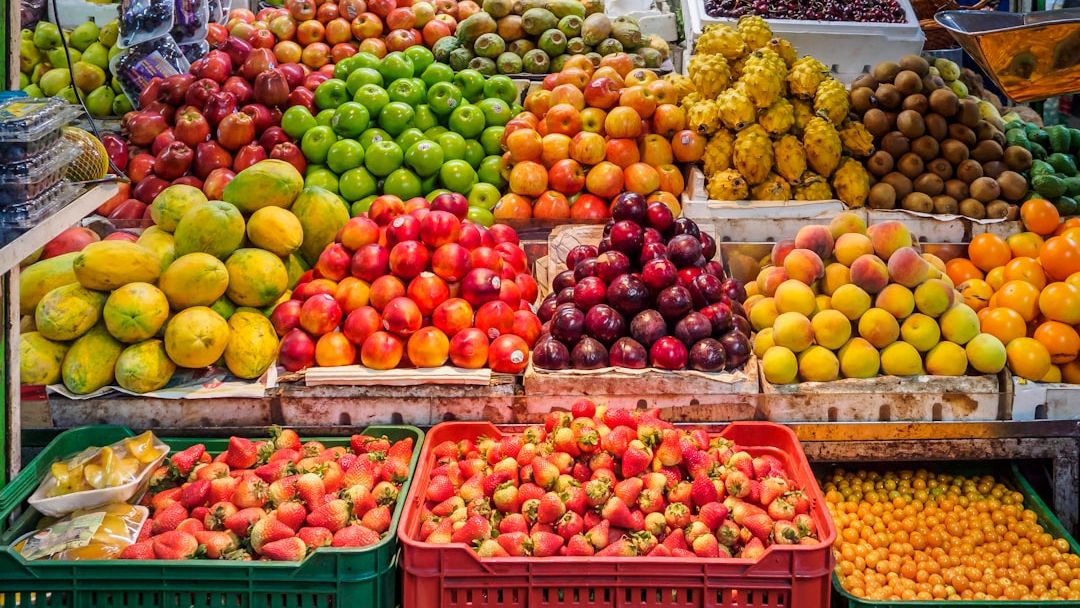
Horticulture’s Vital Role in J&K’s Economy (Image Credits: Unsplash)
Jammu and Kashmir’s apple orchards stretch across steep valleys, yielding crops that account for about 70 percent of India’s total apple production. These fruits sustain millions of livelihoods but grapple with outdated practices and heavy losses after harvest.[1][2] On April 8, 2026, NITI Aayog released a detailed roadmap addressing these issues head-on. The document proposes sweeping changes to position the union territory’s horticulture sector as a global powerhouse by 2047.[3]
Horticulture’s Vital Role in J&K’s Economy
The sector employs over 3.5 million people and contributes around 7 percent to the union territory’s gross state domestic product. Fruit cultivation area expanded from 1.31 lakh hectares in 1980 to 3.44 lakh hectares in 2022, pushing production from 5.6 lakh tonnes to 27.22 lakh tonnes over the same period.[1] Apples dominate, covering 50 percent of fruit area and generating 77 percent of output, while walnuts and almonds add significant dry fruit volume.[2]
Despite this growth, productivity gains lagged, rising at a compound annual growth rate of just 1.46 percent to 7.91 tonnes per hectare. Much of the increase stemmed from area expansion rather than yield improvements. Exports show promise but remain limited, with fresh fruit shipments peaking before recent declines.[1]
Persistent Challenges in Production and Trade
Aging orchards on traditional rootstocks limit yields, with apple productivity declining in recent years. Post-harvest losses hit hard: around 500,000 tonnes of apples worth Rs 1,500 crore vanish annually, alongside similar volumes in vegetables.[1] Poor storage, transportation, and handling exacerbate the problem, affecting 35-40 percent of perishables.
Market access remains a bottleneck. Contractors handle 67-82 percent of produce through conventional channels, leaving little room for direct sales or exports. India imports heavily – 519,652 tonnes of apples in 2024 – while J&K’s global footprint stays small for walnuts, almonds, and saffron. Climate vulnerabilities, pest outbreaks, and fragmented institutions compound these issues.[2][4]
Operation Golden Greens: The Core Framework
NITI Aayog’s flagship initiative, Operation Golden Greens, structures reforms across five sub-missions tailored to crop clusters. These target dry fruits like walnuts and almonds, fresh fruits including apples and cherries, vegetables, floriculture, and minor crops such as saffron.[1][3] Each builds on 12 common components, from research and skill development to infrastructure and market linkages, with region-specific priorities.
- Dry fruits sub-mission emphasizes post-harvest processing, GI branding, and value addition.
- Fresh fruits focus on doubling productivity through high-density plantations and expanded cold chains.
- Vegetables promote protected cultivation and seed improvements.
- Floriculture supports women-led nurseries and eco-tourism.
- Minor crops develop niche chains for tribal communities.
The mission unfolds in three phases. Phase 1 (2026-2030) lays foundations with baseline surveys, modern nurseries, and quick-impact infrastructure like 55,000 MT of new cold storage under existing schemes. Phase 2 (2030-2035) scales innovations and national linkages. Phase 3 (2035-2047) drives global integration and climate resilience.[2][4] This timeline allows adaptation to emerging technologies and priorities.
Practical steps include orchard rejuvenation, digital traceability, and high-density planting that fruits in 2-3 years versus 7-10 for older systems. Integration with schemes like the Holistic Agriculture Development Program allocates Rs 1,028 crore for storage and plantations.[1] Farmers, FPOs, cooperatives, and startups stand to gain most, with potential for higher incomes through exports and reduced losses.
Targeted Reforms for Farmer Empowerment and Infrastructure
The report stresses strengthening farmer collectivization via farmer producer organizations, self-help groups, and primary agricultural credit societies. These entities can secure better market access and bargaining power, moving away from middlemen dominance.[3] Investments in cold chains, storage, and transportation aim to slash losses and enable direct exports.
Modernization extends to quality planting materials, protected cultivation, and GI certifications for saffron and walnuts. Public-private partnerships will foster processing clusters and R&D collaborations with institutions like ICAR and SKUAST. These measures promise import substitution alongside export growth, benefiting 0.7 million farming families.[4]
Key Takeaways: J&K horticulture faces Rs 1,500 crore in apple losses yearly but holds export promise in apples, walnuts, saffron. Operation Golden Greens targets productivity doubles, infrastructure boosts, and phased rollout to 2047.
Implications for Stakeholders and the Road Ahead
Government bodies, from the horticulture departments in Jammu and Kashmir to national ministries, must coordinate implementation. Private sector involvement in processing and exports will create jobs in high-tech farming and value addition. Farmers gain resilient practices against climate change and market volatility.
The roadmap aligns with Viksit Bharat 2047, leveraging J&K’s agro-climatic edges for year-round production. As NITI Aayog’s Vice Chairman Suman Bery noted during the launch workshop, these steps foster cooperative federalism and sustainable growth.[3] Success hinges on swift action to turn potential into prosperity for orchard-dependent communities.
With targeted investments and collective effort, J&K’s fruits could soon command premium global prices, securing livelihoods for generations.