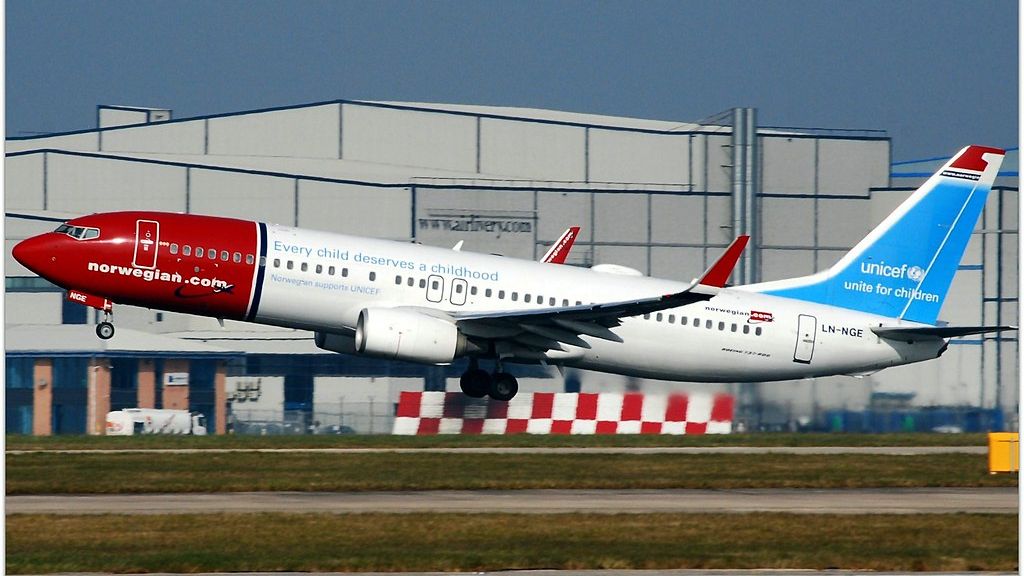
Stronger Financials Than Anticipated (Image Credits: Flickr)
Oslo, Norway – Norwegian Air Shuttle ASA reported a first-quarter operating loss of NOK 220 million on Tuesday, well ahead of analyst expectations for a NOK 954 million shortfall.[1][2] The budget carrier attributed the stronger performance to lower fuel costs, hedging gains and a record load factor, even as it navigates economic uncertainties. Shares in the company climbed more than 5% in early trading following the announcement.[1]
Stronger Financials Than Anticipated
The airline posted a net loss of NOK 362 million for the period, a notable improvement from NOK 757 million a year earlier and surpassing consensus estimates of NOK 950 million.[2] Earnings per share came in at NOK -0.34, beating forecasts of NOK -0.90.
Revenue reached NOK 6,904 million, up nearly 5% from NOK 6,582 million in the prior-year quarter and aligning closely with projections.[2] Passenger revenue per available seat kilometer rose 13%, while ancillary revenue per available seat kilometer increased 11%.[1] EBITDAR stood at NOK 904 million, a sharp rise from NOK 61 million last year and far exceeding the anticipated NOK 215 million.[2]
Record Operations and Passenger Growth
Norwegian transported 5.17 million passengers during the quarter, edging up from 5.06 million in the year-ago period.[2] The load factor hit a first-quarter record of 87.6%, improving 5.2 percentage points year over year.[1]
This operational strength reflected sustained demand, particularly for leisure routes to southern and southwestern Europe. The carrier maintained stable flight operations despite market challenges, supporting its competitive position in the European low-cost segment.
Cost Management Fuels the Turnaround
Key to the results was a NOK 408 million drop in the fuel bill, with unit fuel costs falling 19%.[1] Benefits stemmed from a stronger Norwegian krone, effective jet fuel hedging and lower EU emissions trading system costs. The company’s “Program X” cost-saving initiative remained on track to deliver more than NOK 1.25 billion in annual profit improvements by year-end, surpassing earlier targets.
“While we are pleased to see that overall demand remains encouraging, we are navigating a complex and unpredictable market with both economic and political uncertainty. Despite this, we delivered a positive development in the first quarter, with stable and reliable flight operations and good cost control,” said Geir Karlsen, CEO of Norwegian.[1]
Key Q1 Figures at a Glance:
- EBIT loss: NOK 220m (vs. est. NOK 954m)
- Net loss: NOK 362m (vs. est. NOK 950m)
- Revenue: NOK 6,904m (+4.9% YoY)
- Load factor: 87.6% (record high)
- Passengers: 5.17m (+2.2% YoY)
Guidance Holds Steady Amid Challenges
Norwegian reaffirmed its full-year outlook, including 3% capacity growth for the mainline fleet and low single-digit rises in ex-fuel unit costs.[1] The summer fleet will comprise 95 aircraft, with capacity expanding 5% across the second through fourth quarters. It has hedged 45% of jet fuel needs for the rest of 2026.
Forward bookings showed stable loads year over year, with higher yields on sold tickets. Management highlighted a favorable supply-demand balance in Europe, though jet fuel prices are projected to rise significantly for the full year.[2]
The results underscore Norwegian’s resilience in a volatile sector, setting a cautious yet optimistic tone for the year ahead.