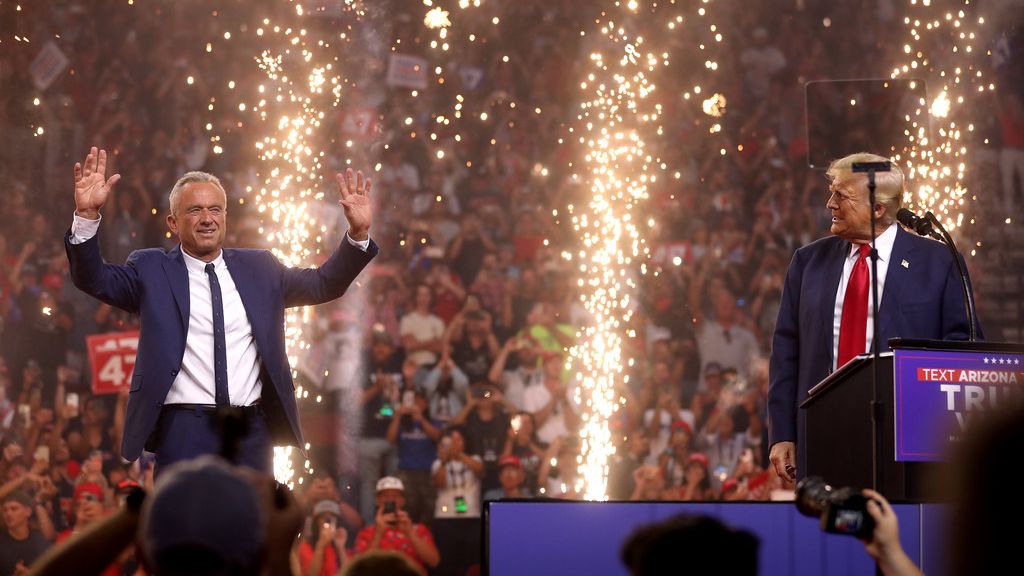
I Kept RFK Jr. Out of the West Wing. I Owe Him an Apology – Image for illustrative purposes only (Image credits: Flickr)
In a deeply personal confession published on her Substack, former White House health policy advisor Katy Talento disclosed that one of her first tasks in 2017 involved blocking Robert F. Kennedy Jr. from accessing the West Wing.[1] Talento, who served on President Trump’s Domestic Policy Council, acted to prevent Kennedy from advancing a promised vaccine safety commission. Today, with Kennedy installed as Health and Human Services Secretary, she expresses remorse for her role in derailing the effort.
A President’s Instinct Ignites a Clash
President Trump recounted a familiar anecdote during a 2017 Oval Office meeting with pharmaceutical CEOs. He described a former employee’s son as “perfect, beautiful, magnificent, flawless” before receiving a vaccine shot, after which the child was “just gone. Gone. Never the same.”[1] The story highlighted Trump’s longstanding skepticism toward vaccine safety, a view that aligned with commitments he made to Kennedy during the campaign.
Talento, a Harvard-trained infectious disease epidemiologist, viewed vaccines as the pinnacle of public health achievements. Her background included overseas work combating diseases like guinea worm and HIV/AIDS. Yet Trump’s repeated concerns prompted her to intervene decisively.
Early Doubts on Capitol Hill
Talento’s skepticism toward vaccine scrutiny traced back to 2002. As a staffer on a Senate committee overseeing the CDC, she fielded pleas from mothers linking their children’s autism regressions to vaccinations. These parents urged rigorous CDC studies into any potential connections.
Torn between her public health orthodoxy and respect for maternal observations, Talento consulted the CDC. Agency officials dismissed the concerns with references to debunked studies and cautions against confusing correlation with causation. She shelved the issue amid political pressures, deferring to House-side efforts by representatives like Dan Burton and Dave Weldon.
Engineering the Off-Site Showdown
By 2017, Talento had hardened her distrust of federal agencies but retained unwavering faith in vaccines. When Kennedy sought to activate Trump’s vaccine safety commission pledge, she orchestrated a workaround. She arranged a discreet meeting at the NIH campus in Bethesda, Maryland, excluding the White House spotlight.
Kennedy attended alongside Del Bigtree and attorney Aaron Siri from the Informed Consent Action Network. NIH leaders Francis Collins and Anthony Fauci promised extensive vaccine safety studies but failed to produce them on the spot. A subsequent FOIA lawsuit by ICAN led HHS to concede no such comprehensive studies existed.[1]
Cracks Emerge Amid Personal and National Crises
Talento contributed to notable White House successes, including efforts to expose hidden healthcare prices, curb drug costs, and address opioid addiction. Exhaustion and family demands, including caring for her dying sister, prompted her 2019 departure.
COVID-19 tested her convictions further. While initially supporting the administration’s response through media appearances, she grew uneasy with mandates like widespread masking, which she deemed epidemiologically flawed. These experiences fueled a profound reevaluation of public health dogmas she once defended.
Toward Accountability in a New Era
Years later, Talento grappled with the implications of her actions. Her Instagram preview hinted at a “2021 moment” of breaking point, alongside ignored autism advocates and the stifled commission. Now, with Kennedy leading HHS under a returning Trump administration, she publicly owns her past gatekeeping.
In her detailed Substack essay, Talento outlines steps taken to atone, framing her story as a cautionary tale on institutional blind spots in public health.[1] Her admission underscores evolving debates on vaccine transparency as Kennedy assumes a pivotal role.