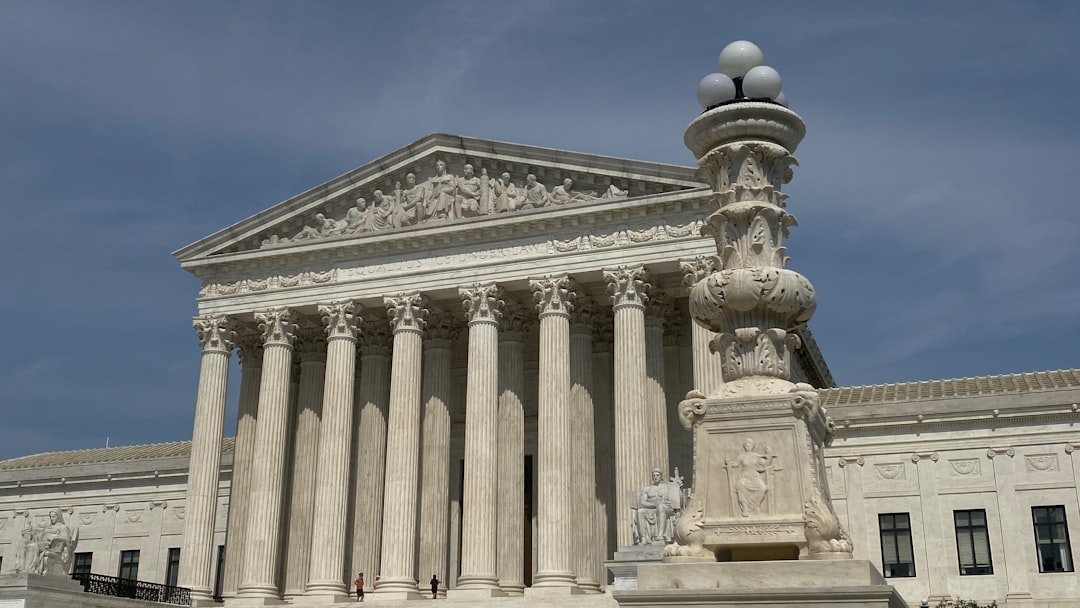
The Supreme Court Needs a Clock – Image for illustrative purposes only (Image credits: Unsplash)
The U.S. Supreme Court issued a 6-3 ruling last week that invalidated Louisiana’s congressional map for relying too heavily on race, even in pursuit of Voting Rights Act compliance.[1] This decision aligned with constitutional equal protection principles but arrived amid a compressed midterm election timeline, leaving states in disarray. Observers noted that the court’s discretion over release dates amplified the ruling’s effects beyond its legal merits.[1]
Ruling Strikes Down Race-Based Districting
The court held that Louisiana’s effort to create a second majority-Black congressional district crossed constitutional lines. Justices determined that race played an outsized role in the map’s design, tipping the balance away from traditional redistricting criteria like compactness and communities of interest. This outcome reflected years of tension between the Voting Rights Act and the Equal Protection Clause of the 14th Amendment.
The case reached the high court after two rounds of oral arguments, first in March 2025 and then again in October. Court watchers anticipated a conservative majority would lean against race-conscious maps, based on pointed questions during those sessions. Yet the opinion emerged only after months of internal deliberation, coinciding with active election preparations across the country.[1]
Election Chaos Follows the Delay
Louisiana faced immediate disruption. Absentee voting for congressional races had already begun when the ruling landed, prompting the governor to suspend those House elections entirely. The state now grapples with how to proceed amid legal uncertainty.
Other states reacted swiftly to the news. Mississippi’s governor issued an executive order for a special legislative session to redraw districts, set just 21 days after the decision. Florida, under Gov. Ron DeSantis, had preemptively scheduled a special session, positioning lawmakers to respond rapidly. These moves highlighted the ripple effects of the court’s pace on political machinery.[1]
Redistricting demands time for drafting legislation, securing approvals, and weathering potential challenges. Mid-decade adjustments, spurred partly by political pressures from the Trump administration, complicated matters further. An earlier ruling might have allowed more states to adapt before ballots finalized; the current timing limited that window.
The Power of Timing in Judicial Decisions
Supreme Court rulings often intersect with real-world deadlines, particularly in election-related disputes. While the substance of a decision draws headlines, its release date can steer legislative and electoral paths. Delays, whether from thorough debate or opinion drafting, create uncertainty that elected officials must navigate.
Critics argue this discretion invites questions about influence. A majority shapes the outcome, but dissenting or concurring opinions can extend the process. The court’s lifelong tenure and internal governance shield it from the electoral pressures facing Congress or the president, yet this insulation raises concerns about unchecked timing power.[1]
Key States Affected:
- Louisiana: Suspended congressional elections after absentee voting started.
- Mississippi: Special session ordered 21 days post-ruling.
- Florida: Special legislative session queued for quick redraw.
Lessons from Past High-Stakes Cases
The Dobbs decision overturning Roe v. Wade offered a stark example. A draft majority opinion leaked weeks early, sparking protests, security threats, and public outcry at justices’ homes. Despite the turmoil – including fears of potential violence altering the court’s composition – the timetable held firm until all opinions finalized.
Such episodes underscore how timing rests solely within the court’s control. No external body dictates the pace, distinguishing the judiciary from other branches. This autonomy preserves independence but exposes vulnerabilities when decisions collide with urgent political cycles.[1]
Toward Predictable Judicial Timelines
Reform proposals focus on internal guardrails rather than congressional overreach. Chief Justice John Roberts could implement rules tying opinion finalization to fixed periods after oral arguments or draft circulation. Extensions might apply in exceptional cases, balancing speed with depth.
Opponents worry about rushed analysis, yet prolonged waits carry their own risks – evident in the redistricting fallout. A structured approach would signal accountability without compromising core functions. As the court shapes national policy, standardizing its rhythm could bolster public trust in an era of polarized politics.
Recent events demonstrate that timing rivals substance in impact. The Supreme Court, long insulated from reform pressures, now confronts a moment to self-regulate. Whether through procedural tweaks or steadfast tradition, the path forward will define its role amid accelerating electoral demands.