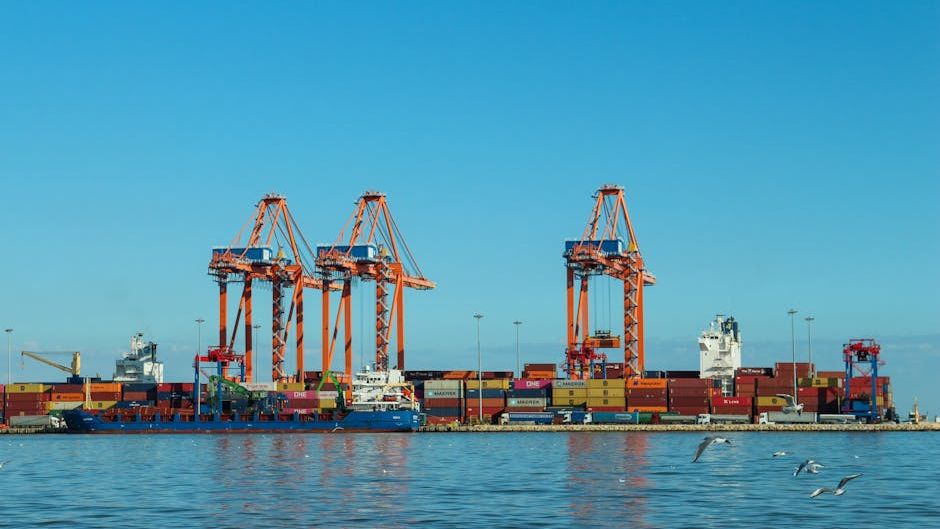
Adani Ports slips after early surge; April cargo volumes rise 15% YoY – Image for illustrative purposes only (Image credits: Pexels)
Mumbai – Adani Ports and Special Economic Zone started the trading session with momentum on Monday, touching a 52-week high before reversing course. The company revealed it managed 43.1 million metric tonnes of cargo last month, marking a 15 percent increase from the previous year.[1][2] That figure reflected steady demand at its terminals. Investors weighed the positive update against broader market pressures.
Operational Update Signals Steady Demand
APSEZ disclosed the monthly figures on Sunday, underscoring resilience in its core port activities. Total throughput reached 43.1 million metric tonnes, surpassing last April’s levels by a solid margin.[3] Executives highlighted consistent performance across major categories. The results arrived shortly after the firm’s fiscal year earnings, which showed overall cargo expansion.
Such volumes position the company on track for sustained activity into the new financial year. Domestic and international terminals contributed to the uptick. Market watchers noted the data as evidence of recovering trade flows.
Containers and Dry Cargo Lead the Charge
Two segments stood out in the report. Container handling climbed 17 percent year-on-year, while dry cargo matched that pace with identical growth.[1] These areas demonstrated broad-based strength, pointing to healthy appetite for both consumer goods and industrial materials. The dual expansion helped lift the overall average.
Containers often signal robust export-import cycles, particularly in manufacturing hubs. Dry bulk, encompassing minerals and grains, benefited from steady commodity movements. Together, they accounted for the bulk of the month’s progress and underscored diversified revenue streams.
Key Segment Performance
This breakdown reveals how targeted demand fueled the headline number. Analysts viewed the parity between segments as a positive sign of balance.
Logistics Rail Encounters Temporary Setback
Not every area advanced. The firm’s rail logistics volumes fell 16 percent to 48,490 twenty-foot equivalent units.[2] Company filings attributed the dip to seasonal factors or shifting client patterns. Still, ports remained the primary growth engine.
Rail operations complement terminal activities by easing inland transport. A one-month decline does not alter the longer-term expansion narrative. Management likely monitors this closely for adjustments in capacity or routes. The contrast highlighted ports’ dominance in the portfolio.
Shares Show Volatility Amid Positive Backdrop
On the National Stock Exchange, APSEZ opened at ₹1,749.80 and peaked at ₹1,757.40 before sliding. By midday, it traded at ₹1,731, down 0.67 percent from Friday’s close of ₹1,742.60.[1] Turnover reached 28.07 lakh shares, valued at ₹488 crore.
Sell-side orders outnumbered buys at 60.82 percent to 39.18 percent. The pullback occurred despite the upbeat volumes data. Broader indices faced headwinds from banking and IT sectors.
Bullish Trajectory Persists for Investors
Zooming out, the stock has delivered strong returns. It gained 25.34 percent over the past month and 28.18 percent in the last year, far exceeding the Nifty 50’s declines.[1] Year-to-date performance stood at 16.58 percent positive. Market capitalization hovered near ₹3.99 lakh crore, with a price-to-earnings multiple of 32.06.
Consistent cargo gains reinforce APSEZ’s position as a logistics leader. The April print suggests momentum carries forward, even as isolated segments adjust. Traders eye upcoming quarters for confirmation of this trend. In a competitive landscape, such operational heft provides a clear edge.