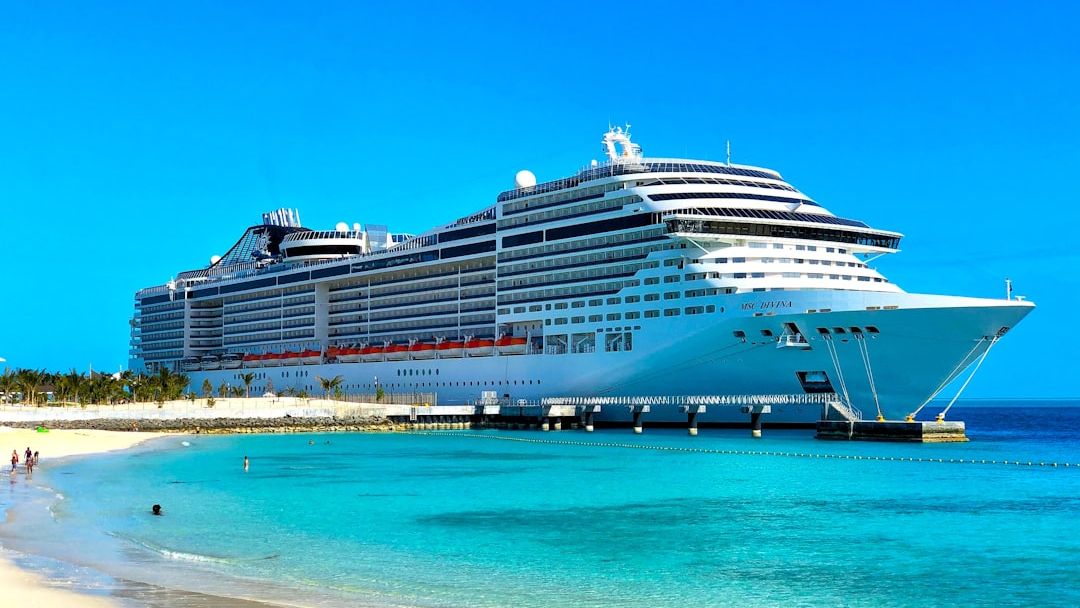
A cruise ship is waiting for help after 3 people died in a suspected hantavirus outbreak – Image for illustrative purposes only (Image credits: Unsplash)
Cape Verde — A Dutch-operated expedition vessel carrying nearly 150 passengers and crew remained anchored off the West African coast on Monday, barred from docking amid a suspected hantavirus outbreak that claimed three lives. The MV Hondius had been en route from Argentina toward Antarctica and remote South Atlantic islands when illness struck. Local authorities cited public health risks in refusing entry, leaving those aboard in limbo as international health experts coordinated a response.
Ship’s Route Turns to Tragedy
The MV Hondius departed Ushuaia in southern Argentina on April 1, bound for a multi-week polar adventure advertised by operator Oceanwide Expeditions as an “Atlantic Odyssey.” Argentine health officials reported no symptoms among passengers at departure, though hantavirus incubation can last up to eight weeks. The first fatality occurred onboard April 11: a 70-year-old Dutch man who suffered fever, headache, abdominal pain, and diarrhea. His body was offloaded nearly two weeks later at Saint Helena, a British territory 1,200 miles from Africa.
His 69-year-old wife, evacuated to South Africa, collapsed at Johannesburg airport and later died in hospital. Postmortem tests confirmed hantavirus in her blood, marking the second verified case, according to South Africa’s health minister. A third passenger, a German national, also perished, with his remains still aboard. The ship pressed on to Ascension Island, where a British man showing severe symptoms was airlifted to South Africa on April 27 and placed in critical care after testing positive.
Ill Crew and Mounting Pressure
Two crew members — one British and one Dutch — now require urgent care for respiratory distress, the operator reported. Among the 87 passengers remaining, nationalities include 17 Americans, 19 from the United Kingdom, and 13 Spaniards, alongside 61 crew. Cape Verde dispatched a medical team of two doctors, a nurse, and a lab specialist across three visits to assess conditions. A possible additional case emerged, involving mild fever symptoms still under evaluation.
Dr. Ann Lindstrand, a WHO official in Cape Verde, described the scenario to reporters as “very tricky” for local authorities balancing public protection with humanitarian needs. Plans advanced for evacuations via ambulance to nearby airports, though no one had disembarked by Monday. Oceanwide Expeditions indicated it might redirect to Spanish ports like Tenerife or Las Palmas if Cape Verde options falter.
- Total aboard: 87 passengers, 61 crew
- Confirmed cases: Two (Dutch woman, British man)
- Deaths: Three (Dutch man and wife, German passenger)
- Urgent needs: Two crew with respiratory issues
Hantavirus: Rare Threat from Rodents
Hantavirus spreads primarily through contact with infected rodents or their waste, though person-to-person transmission occurs rarely. The World Health Organization noted its scarcity but emphasized ongoing investigations into the outbreak’s origin on the Hondius. No specific treatment exists, yet early intervention improves survival odds. Symptoms often begin with flu-like signs before progressing to severe respiratory distress.
Juan Facundo Petrina, epidemiology director for Argentina’s Tierra del Fuego province, pointed out that while his region reported no prior cases, 28 hantavirus deaths occurred nationwide last year. Dr. Hans Henri P. Kluge, WHO’s Europe regional director, stressed in a statement that severe outcomes remain uncommon and transmission between people is not easy. “The risk to the wider public remains low,” he added. WHO continued laboratory and epidemiological probes while aiding medical support.
South African officials initiated contact tracing at Johannesburg airport, where the Dutch woman collapsed, but urged calm amid multicountry coordination. The Hondius awaited resolution, its itinerary disrupted as health priorities took precedence over exploration.