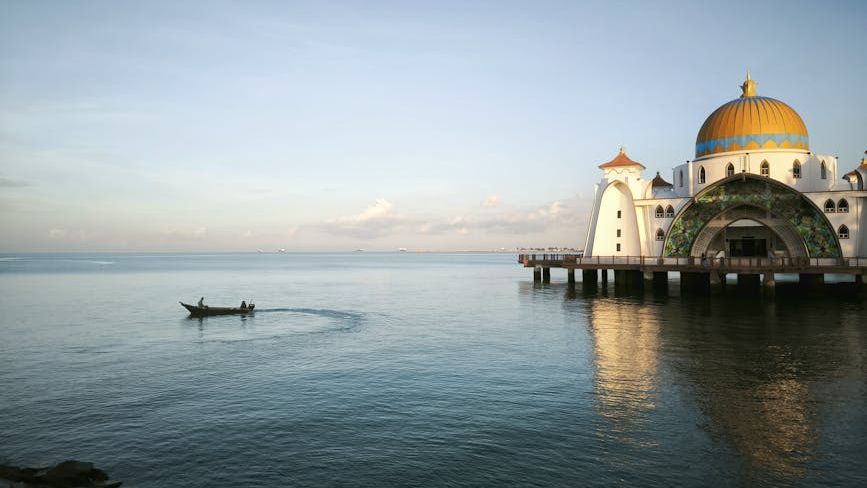
America gains a foothold in the world's most critical chokepoint – Image for illustrative purposes only (Image credits: Pexels)
The United States has signed an agreement that places it in a stronger position along the Strait of Malacca, the world’s most important natural waterway. The deal provides America with a new perch overlooking one of the planet’s busiest maritime passages. This step arrives as global trade routes face renewed scrutiny from major powers seeking greater influence over critical sea lanes.
Why the Strait Matters
The Strait of Malacca connects the Indian Ocean to the South China Sea and serves as a primary route for oil tankers, container ships, and bulk carriers moving between Asia, the Middle East, and Europe. Roughly one-quarter of all seaborne trade passes through its narrow waters each year. Any shift in access or oversight here carries immediate consequences for energy prices and supply chains worldwide.
Control or even partial presence near this chokepoint has long been viewed as a strategic asset. Nations that maintain a foothold can monitor traffic, coordinate with regional partners, and respond more quickly to disruptions. The latest agreement fits into that longstanding pattern without altering the fundamental geography of the waterway itself.
What the Agreement Changes
Under the new arrangement, the United States gains a defined operational presence that was not previously available. Officials have described the move as a way to enhance maritime awareness and support freedom of navigation. No large-scale military base is involved; instead, the focus appears to rest on shared facilities and coordinated patrols.
Regional governments have so far offered measured reactions. Some see the development as a natural extension of existing security cooperation, while others are watching closely for any ripple effects on local sovereignty. The pact itself remains limited in scope, leaving room for further talks on implementation details.
Looking Ahead
The agreement reflects a broader effort by the United States to maintain relevance in Southeast Asian waters at a time when other powers are also expanding their reach. It does not resolve every tension surrounding the strait, yet it adds one more layer of presence that could prove useful during future crises.
Whether the arrangement leads to deeper cooperation or simply maintains the status quo will depend on how the parties carry out its terms in the months ahead. For now, the United States has secured a modest but meaningful vantage point in one of the world’s most consequential maritime corridors.