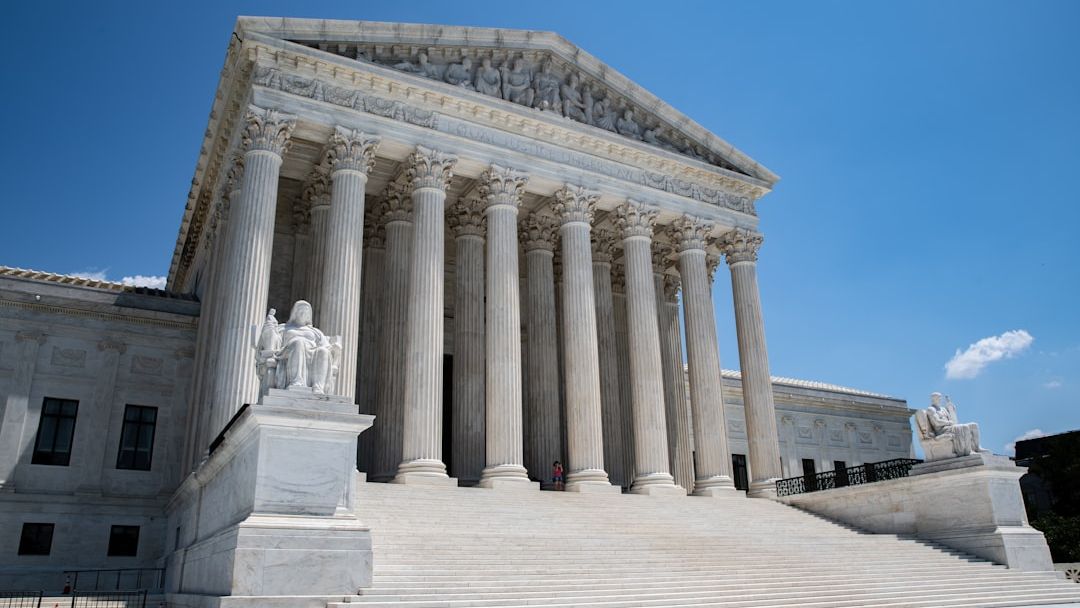
Justices Hint at Strains as Supreme Court Comes Under Scrutiny – Image for illustrative purposes only (Image credits: Unsplash)
The Supreme Court shapes decisions that reach into everyday American life, from voting rules to regulatory power. Its nine members have taken to the road in recent months to explain why the institution still matters. At the same time, their own written opinions and public comments have begun to reveal sharper differences than the court usually displays.
Traveling Justices Stress Institutional Role
Across multiple appearances, the justices have described the court as a steady check on other branches of government. They point to its history of resolving disputes that elected officials could not settle. Listeners hear repeated emphasis on the need for public confidence in the court’s independence.
These talks occur against a backdrop of intense national attention on the court’s makeup and recent rulings. Speakers avoid naming specific colleagues yet make clear that disagreement remains part of the job. The message stays consistent: the court’s legitimacy rests on its ability to decide cases according to law rather than politics.
Written Opinions Reveal Growing Friction
Recent filings show justices using unusually direct language toward one another. Footnotes and concurrences now contain pointed references that once stayed private. Observers note that such exchanges have become more frequent in the past year.
The pattern appears in both majority and dissenting opinions. Justices who once limited criticism to legal analysis now question colleagues’ reasoning in stronger terms. These exchanges stay within the bounds of judicial writing, yet they leave little doubt that personal and philosophical distances have widened.
Public Remarks Add to the Picture
During question-and-answer sessions after speeches, justices sometimes answer questions about the court’s internal climate. Their responses tend to be measured, but the choice of words often signals unease. One justice may stress the value of collegiality while another highlights the importance of vigorous debate.
Reporters covering these events record the moments when answers grow more guarded. The justices continue to defend the court’s overall record, yet they stop short of claiming perfect harmony. The contrast between the polished public defense and the sharper private exchanges has not gone unnoticed.
Practical Effects on Daily Operations
Strained relations can slow the process of reaching agreement on complex cases. Draft opinions now circulate with more suggested edits and counter-edits than in earlier terms. Law clerks and staff notice the extra rounds of review.
Despite the added friction, the court continues to issue rulings on schedule. Major cases still receive full consideration. The justices maintain that their disagreements remain focused on legal questions rather than personal animosity.
Looking Ahead
The coming months will test whether these visible strains affect the court’s ability to speak with one voice on divisive issues. Observers will watch both the tone of future opinions and the justices’ willingness to appear together at public events. How the court manages these internal pressures will shape public perception for years to come.