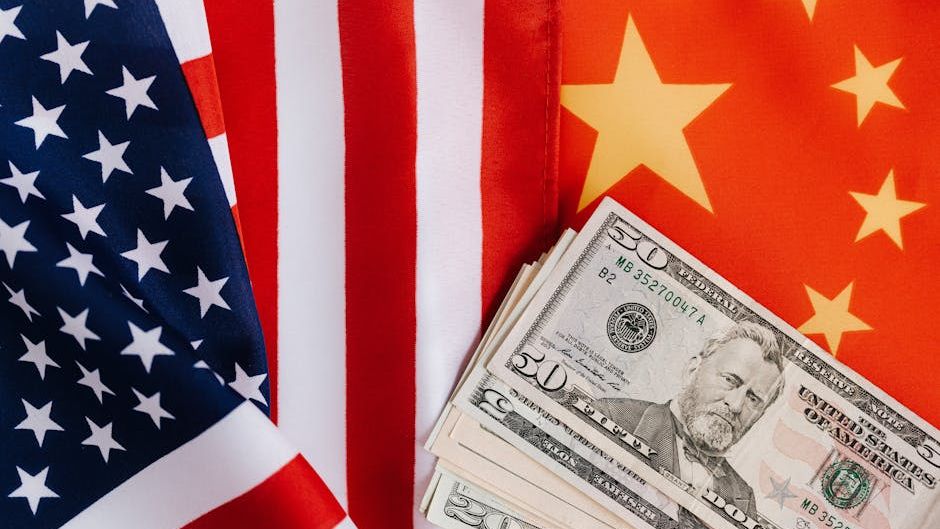
The Battle the U.S. Is Winning Against China – Image for illustrative purposes only (Image credits: Pexels)
American companies that design and produce advanced semiconductors have seen their market positions strengthen in recent months, even as Beijing accelerates efforts to build domestic alternatives. The practical result for suppliers in Taiwan, South Korea, and the United States is a steadier flow of orders from allies seeking to diversify away from Chinese manufacturing risks. At the same time, Chinese firms face longer waits for the most sophisticated equipment, pushing back their target dates for competitive high-end chip production by several years.
Policy Roots and Recent Steps
The current approach builds on export controls first tightened in 2022 and expanded under both the Biden and Trump administrations. These rules limit sales of extreme-ultraviolet lithography machines and certain advanced chip-making tools to Chinese entities. Officials have described the measures as necessary to protect national security and prevent military applications of cutting-edge technology. Implementation has occurred in phases. Initial restrictions targeted the most advanced nodes below 14 nanometers. Later updates added licensing requirements for equipment that could support 7-nanometer and smaller processes. By early 2026, enforcement extended to additional categories of manufacturing software and components, creating a more comprehensive barrier.
Effects on Chinese Development Plans
Chinese semiconductor projects have encountered repeated delays in acquiring the tools needed for mass production of leading-edge chips. State-backed initiatives that once projected commercial 5-nanometer output by 2025 now face revised schedules stretching into 2028 or later. Domestic alternatives remain several generations behind, forcing reliance on older processes for consumer electronics and automotive parts. The slowdown has ripple effects across supply chains. Smartphone and electric-vehicle makers inside China report higher costs for components that must now be sourced through more circuitous routes or produced at lower performance levels. Foreign investors have grown more cautious about committing capital to joint ventures that could run afoul of the tightened rules.
Who Feels the Changes Most Directly
– American and allied equipment makers have recorded stronger order backlogs from customers outside China.
– Taiwanese foundries continue to expand capacity in Arizona and Europe to serve global demand.
– Chinese technology firms must allocate larger research budgets toward workarounds that have so far yielded limited results.
– Workers in high-tech manufacturing hubs on both sides of the Pacific face shifting job markets as production footprints adjust.
Looking Ahead
The controls are not expected to disappear soon. Policymakers in Washington continue to review additional categories of technology for possible inclusion, while Beijing responds with its own subsidies and talent-recruitment programs. The outcome will shape not only corporate balance sheets but also the pace at which everyday devices incorporate the latest computing power. For consumers and businesses worldwide, the contest translates into slower price declines for premium electronics and a longer wait for certain advanced applications to reach scale.