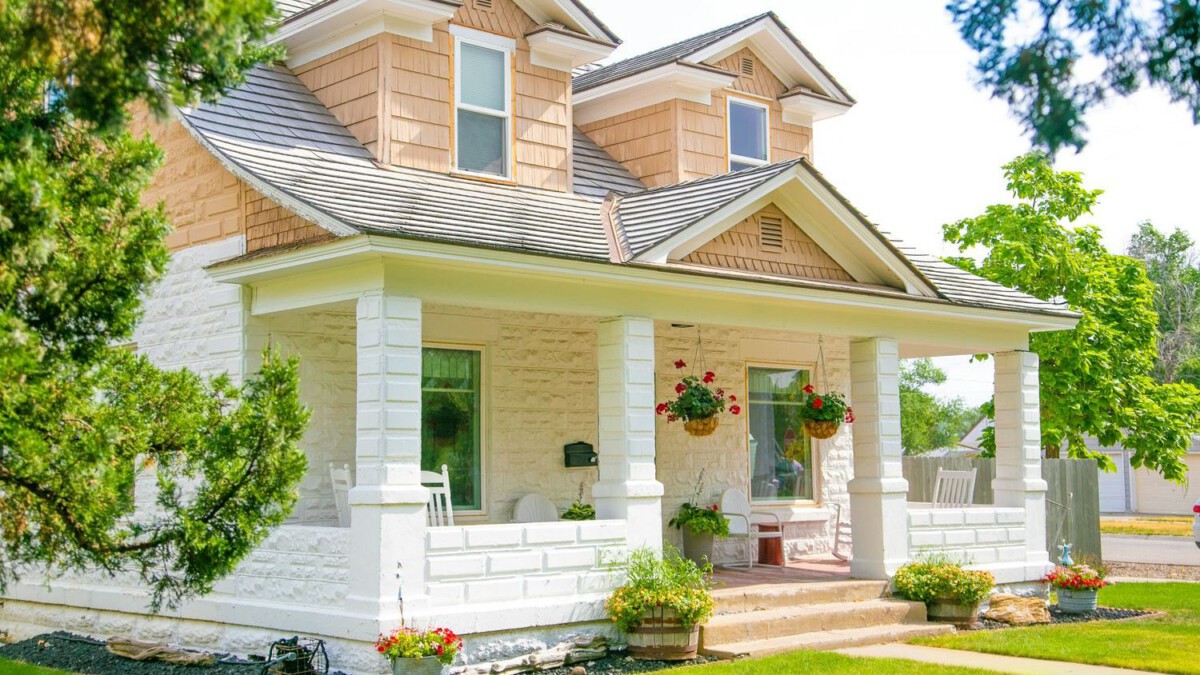
Little-Known Grants: USDA Offers Seniors Up to “0K for Home Repairs and 1% Loans up to $40K – Image for illustrative purposes only (Image credits: Unsplash)
Millions of older Americans live in homes that require urgent fixes for safety and habitability, yet many on fixed incomes struggle to cover the costs of new roofs, updated plumbing, or accessibility features. The U.S. Department of Agriculture operates a targeted program that addresses these needs for qualifying rural homeowners. Through its Section 504 Home Repair initiative, the agency provides grants and low-interest financing specifically designed to help seniors remain in their residences safely.
Core Benefits of the Section 504 Program
The program delivers two primary forms of support. Seniors aged 62 and older who meet income criteria can receive grants reaching $10,000 that require no repayment when used to address health and safety issues. Other eligible homeowners may obtain loans of up to $40,000 at a fixed 1 percent interest rate, with repayment periods extending as long as 20 years. In certain cases, applicants combine the two options for total assistance approaching $50,000.
These resources focus on essential work rather than cosmetic changes. Funds commonly cover roof replacements, furnace repairs, electrical upgrades, and plumbing corrections that prevent hazards such as mold or structural failure. The structure of the assistance reflects the program’s goal of supporting long-term home stability for low-income residents in designated areas.
Eligibility Rules and Geographic Reach
Participation hinges on several straightforward requirements. Applicants must own and occupy the property as their primary residence, with household income generally below 50 percent of the area median. The definition of eligible locations extends beyond remote farmland to include many small towns and suburban communities, as determined by official USDA maps.
For the grant portion, seniors must demonstrate an inability to repay a loan due to limited resources. Property taxes and insurance increases in recent years have pushed more retirees into qualifying ranges, even those relying primarily on Social Security or modest pensions. Local USDA Rural Development offices maintain current eligibility details for specific addresses.
Practical Applications and Financial Comparison
Repairs funded through the program directly reduce risks for aging residents. Common projects include installation of wheelchair ramps, widening of doorways, replacement of unsafe stairways, and upgrades to heating systems that eliminate carbon monoxide threats. These modifications support independent living while addressing deferred maintenance that often accumulates over decades.
| Feature | Grant Option | Loan Option |
|---|---|---|
| Maximum Amount | $10,000 | $40,000 |
| Interest Rate | None | 1% fixed |
| Repayment Required | No | Up to 20 years |
| Primary Use | Health and safety hazards | Broader essential repairs |
Key Points for Applicants
- Proof of ownership and income documentation are mandatory.
- Contractor estimates must accompany each application.
- Funds remain subject to annual availability and local demand.
Application Steps and Common Pitfalls
Prospective applicants begin by contacting their nearest USDA Rural Development office or reviewing eligibility tools on the agency’s official site. Required materials typically include income verification, repair bids, and evidence that conventional credit is unavailable. Processing times vary, and incomplete submissions frequently extend review periods into several months.
Officials emphasize that no application fees apply through legitimate channels. Homeowners have noted that direct outreach to local offices yields clearer guidance than third-party sites. This approach helps avoid delays and ensures submissions meet all documentation standards from the outset.
The Section 504 program continues to serve as a practical resource for seniors facing rising repair costs. By focusing on verified eligibility and official application routes, qualifying households can address critical home needs without incurring high-interest debt.