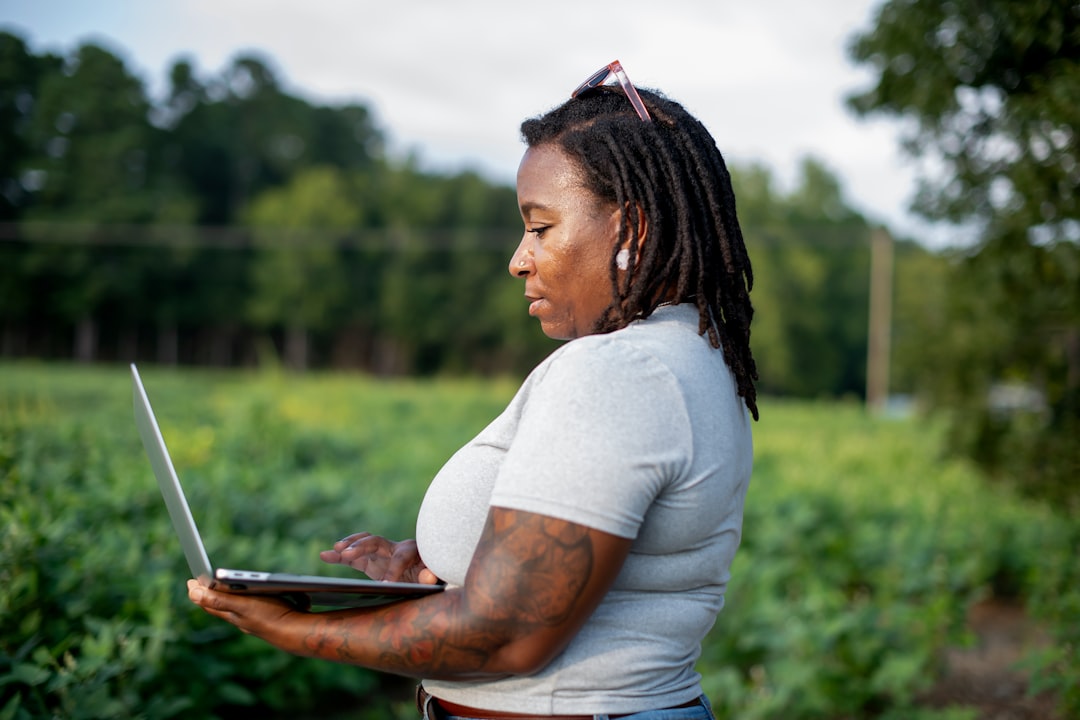
Enormous Data Volumes, Minimal Usable Insights (Image Credits: Unsplash)
The global agriculture sector generates vast amounts of data from fields, trials, and supply chains, yet it remains unable to fully harness this resource. A comprehensive report from the Council for Agricultural Science and Technology highlighted the data as fragmented, distributed, heterogeneous, and incompatible, a situation that has slowed AI adoption compared to sectors like healthcare and finance. Without standardized frameworks, farmers and companies struggle to integrate information across diverse systems.
Enormous Data Volumes, Minimal Usable Insights
Farmers produce detailed records on soil, weather, and crop performance, but these often stay locked in silos due to inconsistent formats and proprietary systems. Research trials appear in varied reporting styles, manufacturers apply unique product codes, and retailers log sales disconnected from field realities. This mismatch prevents the industry from turning raw information into actionable intelligence.
Ron Baruchi, CEO of Agmatix, captured the issue succinctly: “Agriculture doesn’t have a data problem – it has an intelligence problem.” The data exists in abundance, but lacks the infrastructure to interpret its meaning across contexts. A McKinsey analysis estimated that better data integration could unlock $500 billion in global GDP value, representing a 7 to 9% boost over baseline forecasts.
Why Off-the-Shelf AI Falls Short on Farms
General-purpose large language models promise quick advice for farmers, such as responses to field observations without expert consultations. However, farming’s nuances overwhelm these tools. Models trained on broad internet data grasp basics like nitrogen’s role in growth but falter on specifics tied to soil types, crop stages, or rotation histories.
Computer vision spots crop issues effectively, yet without integrating local weather or application records, recommendations lack precision. Farmers express distrust in these “black box” systems, where opaque predictions carry real risks – like incorrect fungicide timing leading to crop losses. The CAST report noted that 90% accuracy still means one in ten misguided decisions, a margin too high for high-stakes operations.
Domain-Specific AI: A Tailored Solution Emerges
Companies now prioritize agriculture-focused AI over generic platforms. Cropin, supported by Google, developed a crop knowledge graph covering 500 crops in 103 countries and launched a specialized micro-language model. Agmatix employed pre-trained ontologies and neuro-symbolic architecture, embedding agronomic expertise from field trials into its core before processing farm data.
This setup achieves semantic interoperability, structuring over 1.5 billion trial data points to bridge disparate sources meaningfully. Agronomists predefined relationships, such as fertilizer-soil interactions across growth phases, ensuring the AI begins with foundational knowledge. Such vertical approaches echo successes in defense data handling, adapted here for farming complexities.
Success Stories Amid Adoption Challenges
Practical deployments demonstrate progress. BASF partnered with Agmatix on soybean cyst nematode detection, helping growers cut fungicide expenses by 15 to 20% without compromising control. The platform also supports U.S. row-crop disease modeling and policy simulations for a national agriculture ministry.
On sustainability, Agmatix’s RegenIQ evaluates regenerative practices, segmenting Brazil’s coffee regions into climate-specific clusters. Cropin collaborated with Walmart in March 2025 for yield forecasting and health monitoring in U.S. and South American produce. Still, barriers persist: high costs, rural connectivity gaps, training shortages, and data ownership concerns, as outlined in the CAST report.
Large farms show 81% interest in AI, versus 36% for smaller ones, per Mordor Intelligence projections of market growth from $2.55 billion in 2025 to over $7 billion by 2030. Public R&D funding in the U.S. has dropped a third since 2002, per USDA figures, spurring private innovation. McKinsey surveys reveal farmers prioritize clear ROI, simple setups, and reliable performance after past disappointments.
Baruchi emphasized farmers’ realities: “They balance biological systems, financial risk and environmental volatility every single season.” Linking inputs to outcomes remains key to proving value. Food companies’ decarbonization pledges and climate pressures add urgency.
Key Takeaways
- Agriculture’s data silos block AI potential, but domain-specific tools like knowledge graphs offer interoperability.
- Vertical AI outperforms generics by embedding agronomic rules, reducing errors in recommendations.
- Adoption hinges on ROI proof and ease-of-use, with large-scale wins emerging despite barriers for smaller farms.
Agriculture must build data infrastructure suited to its unique demands to feed a growing world sustainably. The shift to specialized intelligence promises transformation, but success depends on bridging adoption gaps for all farm sizes. What steps do you see accelerating AI in farming? Share your thoughts in the comments.