

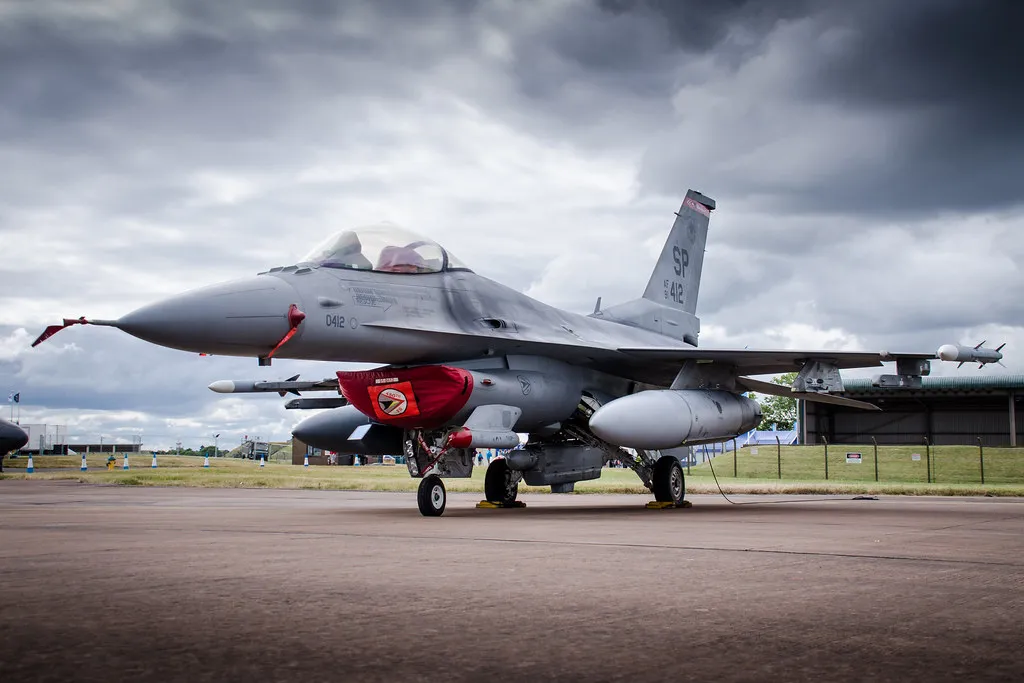
Anthropic Stands Firm Against Pentagon’s Weapons Push (Image Credits: Flickr)
The artificial intelligence sector grappled with escalating conflicts last week, from ethical boundaries in defense contracts to political solutions for surging energy needs and rampant fraud in recruitment processes.
Anthropic Stands Firm Against Pentagon’s Weapons Push
A $200 million Pentagon contract positioned Anthropic at the center of a heated dispute over AI’s role in warfare. The agreement explicitly barred the military from deploying Claude models in autonomous weapons systems or for surveilling U.S. citizens. Defense Secretary Pete Hegseth challenged those restrictions, asserting that the models should serve all lawful purposes.
Hegseth met with Anthropic CEO Dario Amodei on a Tuesday morning and issued an ultimatum: comply by Friday afternoon or face consequences. Those included invoking the Defense Production Act to mandate unrestricted access and labeling Anthropic’s technology a supply chain risk, which would deter government contractors from using it. Amodei rejected the demands outright, emphasizing that human oversight remains essential to protect constitutional rights – a safeguard absent in fully automated decisions.
While Anthropic’s position drew praise for upholding principles, battlefield realities loomed large. Advances in electronic warfare, hypersonic missiles, and drone swarms demand split-second responses that may sideline human operators. Pentagon discussions have shifted from keeping humans “in the loop” to accelerating the “kill chain,” potentially favoring rivals less bound by such safeguards, like xAI.
Trump’s Data Center Pledge Borrows from Senator Kelly’s Playbook
During his State of the Union address, President Donald Trump highlighted the power strains from AI data centers, announcing a “Ratepayer Protection Pledge.” He declared that major tech firms must shoulder their own electricity requirements to shield consumers from higher bills. The pledge, though voluntary, addressed voter concerns over grid upgrades needed for hundreds of new facilities.
The rhetoric closely mirrored Arizona Senator Mark Kelly’s earlier “AI for America” initiative. Kelly proposed an industry-funded “AI Horizon Fund” to finance grid enhancements and worker training. His plan required data center operators to secure land for on-site renewables, cover cooling infrastructure, and pay for grid connections if excess power went unused. Details appear in Kelly’s policy document.
Real-world examples underscored the challenges. xAI deployed methane-fueled turbines at its Colossus supercomputer site in Memphis, detailed on Wikipedia, turning it into a major local polluter as reported by environmental groups.
Tech Hiring Fraud Explodes with AI Assistance
Fraud in technical assessments for software engineers more than doubled in 2025, reaching 35% of proctored tests, according to CodeSignal’s analysis of millions of evaluations. Entry-level positions saw the sharpest rise, with rates climbing from 15% to 40% year-over-year. CodeSignal CEO Tigran Sloyan attributed much of the surge to Gen Z’s routine AI use, blurring lines between aid and dishonesty.
Detection revealed clear patterns among flagged cases:
- 35% involved frequent off-screen glances, hinting at external consultations.
- 23% displayed unnaturally smooth typing, with complex code materializing without edits.
- 15% matched leaked or plagiarized solutions.
Geographic disparities emerged, with Asia-Pacific at 48% fraud attempts versus 27% in North America. Unproctored tests amplified risks, showing score inflation over four times higher than monitored ones. CodeSignal’s tools, including a “Suspicion Score” and anti-leak designs, combined AI, human checks, and monitoring to combat proxy takers, unauthorized AI, and identity issues.
Key Takeaways
- Anthropic’s resistance highlights AI ethics versus military urgency in fast-evolving warfare.
- Self-funded data centers gain bipartisan traction amid pollution and cost concerns.
- Hiring fraud at 40% for juniors demands stronger proctoring to ensure talent pipelines.
These clashes signal AI’s deepening entanglement with security, infrastructure, and labor markets, where innovation races ahead of safeguards. How will these pressures reshape the industry? Share your views in the comments.