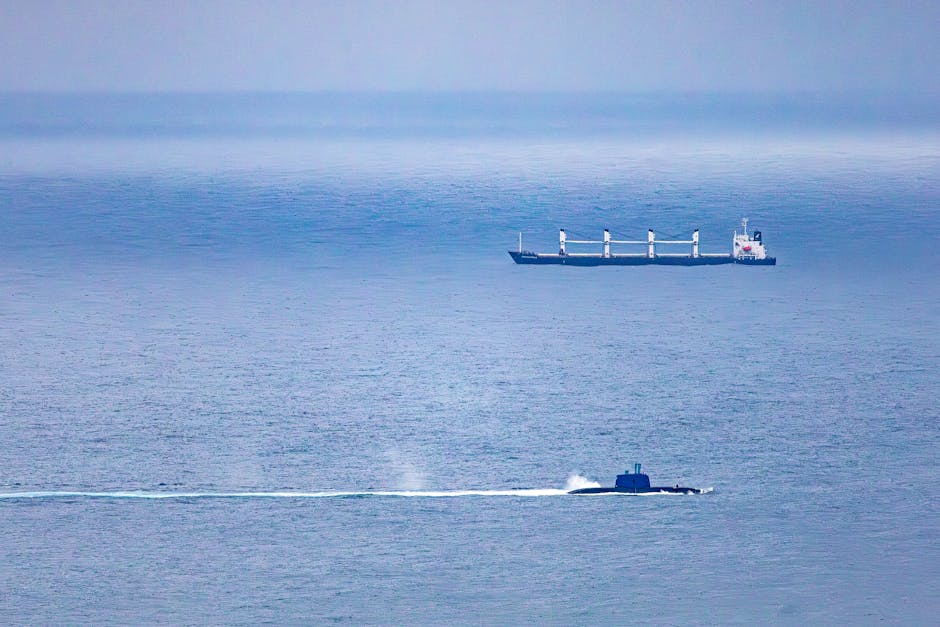
A Bold Response to Manufacturing Shortfalls (Image Credits: Pexels)
Cherokee, Alabama – The U.S. Navy unveiled a cutting-edge facility designed to accelerate submarine production through artificial intelligence and robotics. This $2.4 billion investment targets chronic delays in building critical components for the Virginia-class attack submarines and Columbia-class ballistic missile submarines. Officials aim to bridge a massive labor gap that has hampered the nation’s maritime defenses amid rising global tensions.
A Bold Response to Manufacturing Shortfalls
The Navy identified skilled labor shortages as the primary choke point in submarine construction, prompting this public-private initiative. John C. Phelan, secretary of the Navy, described the plant as the first of three facilities to tackle the most pressing issues in the maritime industrial base. The project addresses a deficit of 70 million man-hours specifically in the submarine program.
Chris Power, founder and CEO of Hadrian – the firm leading the effort – traced the problem to decades of offshoring manufacturing jobs during the 1980s and 1990s. Fewer skilled workers remain available for hire today. The facility promises to automate 80% to 90% of the most complex tasks, empowering remaining staff with advanced tools.
Supercharging Workers with AI and Robotics
Hadrian’s approach integrates AI and robotics to handle repetitive, high-volume production of parts and large subassemblies. Production begins later this year, with full ramp-up expected within 18 to 24 months. Power emphasized that these technologies grant the American workforce “superpowers” to boost productivity dramatically.
The factory shifts focus from manual labor to oversight roles, allowing humans to concentrate on intricate work. Inland locations like Cherokee offer access to more stable labor pools compared to traditional coastal shipyards. This model supports modular construction, where components ship to final assembly sites.
Persistent Hurdles in Repairs and Sustainment
While new-build automation advances, repair and maintenance demands pose ongoing challenges. Power noted that such tasks will stay largely manual due to their nuanced nature. The USS Gerald R. Ford, for instance, requires extensive fixes in Crete following a laundry fire, with repairs projected to last a year or more. Details on the incident highlight vulnerabilities in fleet readiness.
Cynthia Cook, a senior fellow at the Center for Strategic and International Studies, stressed the unique skills needed for repairs. “When a ship comes in for maintenance, you really need a lot of folks who have tacit knowledge about ships,” she said. New construction expertise differs sharply from sustainment know-how, requiring preserved training pipelines.
Expert Views on Automation’s Double Edge
Christophe Combemale, an assistant research professor at Carnegie Mellon University, warned that automation could exacerbate labor issues without proper workforce development. Demands for new skills might sideline existing workers if training lags. Visibility into manufacturing education remains limited at the federal level.
Yet Combemale saw potential benefits. Automation can codify implicit knowledge, extending its lifespan across generations. The key lies in strategic planning to avoid eroding expertise. Here are core elements of the approach:
- Targeted automation for high-volume, repeatable tasks.
- Preservation of human roles in complex repairs.
- Inland factories to tap broader labor markets.
- AI integration to amplify worker capabilities.
- Phased rollout starting with component production.
Key Takeaways
- The $2.4 billion facility marks the Navy’s first step in a trio of automated plants. Navy press release
- Labor deficits stem from historical offshoring, now addressed via 80-90% automation.
- Repairs demand irreplaceable tacit skills, limiting full robotic takeover.
Geopolitical pressures ensure sustained demand for robust naval capabilities, testing whether AI fortifies or fractures the industrial base. Success here could redefine U.S. shipbuilding for decades. What steps should policymakers take next to secure this edge? Share your thoughts in the comments.