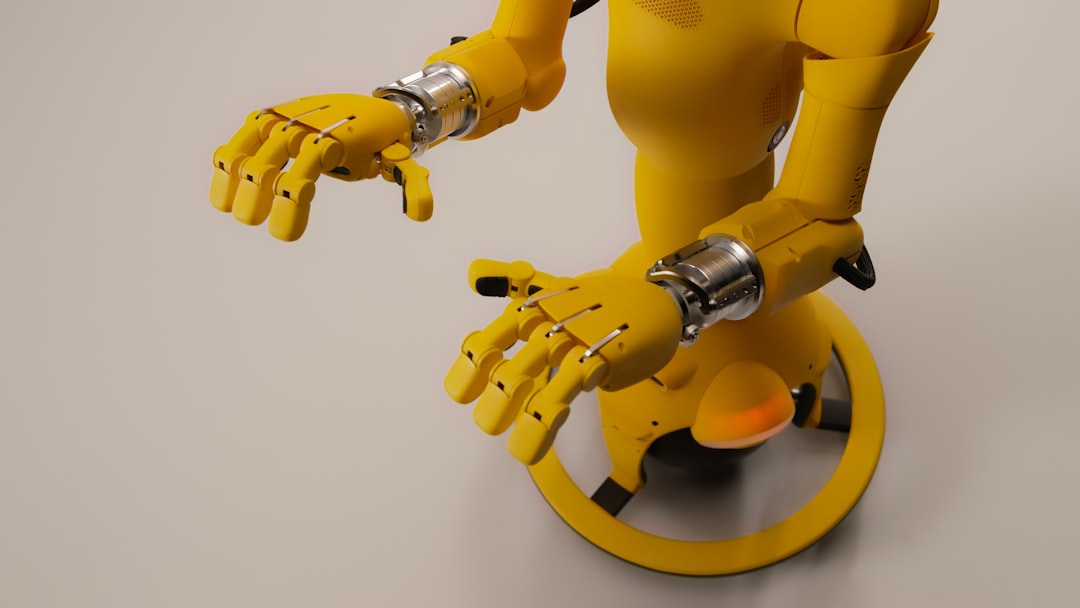
Rivr’s Breakthrough in Mobile Robotics (Image Credits: Unsplash)
Zurich, Switzerland – Amazon completed its acquisition of Rivr, a robotics startup renowned for developing autonomous four-legged robots capable of climbing stairs and handling last-mile deliveries. The deal, confirmed earlier this week, builds on prior investments from Amazon’s Industrial Innovation Fund and Bezos Expeditions.[1][2] This strategic purchase signals the e-commerce giant’s determination to extend warehouse automation into the challenging final stretch of package transport, potentially transforming how goods reach customers’ doors.
Rivr’s Breakthrough in Mobile Robotics
Rivr emerged as a spinout from ETH Zurich’s Robotics Systems Lab in 2023, with co-founder and CEO Marko Bjelonic at the helm.[3] The company raised $22 million in a seed round in 2024, led by Bezos Expeditions, achieving a valuation of around $110 million by August of that year.[4] Its core innovation lies in wheeled-legged robots, often likened to a “dog on roller skates,” which combine four legs with wheels for superior navigation over urban obstacles like stairs and uneven terrain.[1]
These machines employ physical AI, blending reinforcement learning in simulations with real-world data collection to enhance autonomy and reliability.[5] Rivr launched its second-generation model, RIVR TWO, and conducted a pilot program in Austin with delivery firm Veho, aiming to deploy up to 100 units by 2026.[1] Bjelonic highlighted the acquisition’s potential, stating it would “accelerate our vision of building General Physical AI through doorstep delivery, bringing robotics and AI closer to real-world deployment at scale.”[3]
Amazon’s Established Robotics Footprint
Amazon entered the robotics arena over a decade ago with the $775 million purchase of Kiva Systems in 2012, which evolved into Amazon Robotics.[2] That investment paid off handsomely; by last October, the company had deployed more than 1 million robots across its fulfillment centers.[4] These systems handle picking, packing, and sorting, automating roughly 75% of warehouse operations in the long term.
Now, attention shifts outward. While warehouses hum with efficiency, the “last mile” remains labor-intensive, relying on thousands of third-party delivery contractors. Rivr’s technology targets this gap, assisting drivers rather than replacing them.[2] Amazon’s $1 billion Industrial Innovation Fund, started in 2022, had already backed Rivr, paving the way for full integration.
Enhancing Safety and Speed in Deliveries
The acquisition promises tangible benefits for delivery associates and customers alike. Rivr’s robots aim to carry packages from vans to doorsteps, navigating stairs that often slow human workers.[2] Amazon plans to collaborate with delivery service partners for field tests, collecting insights to refine and scale the tech.
In a notice to partners, Amazon explained: “We’ve recently acquired RIVR, a company focused on technology that can help with doorstep delivery… We believe this technology, when working alongside your delivery associates, has the potential to further improve safety outcomes and the overall customer experience, particularly in the last steps of the delivery process.”[2] A spokesperson added that the move “reflects our commitment to a continued investment in research” for better delivery experiences.[4]
- Reduced physical strain on drivers by handling heavy loads over obstacles.
- Faster package handoffs, potentially cutting delivery times in dense urban areas.
- Real-time data from deployments to train AI for broader adaptability.
- Enhanced safety through collaborative human-robot operations.
- Scalable testing via Amazon’s vast network of contractors.
Challenges and Road Ahead
Though promising, widespread adoption faces hurdles. Urban environments demand robust AI to handle variables like weather, traffic, and regulations. Rivr’s full-stack approach – from hardware to software – positions it well, but real-world scaling requires extensive validation.[5]
Amazon described itself as in the “early stages” of this journey, emphasizing iterative feedback from partners.[2] Success here could propel Amazon ahead in the last-mile race, where competitors explore similar autonomous solutions.
Key Takeaways
- Rivr’s legged robots excel at stair-climbing for true doorstep service.
- Amazon leverages prior investments to fast-track integration.
- Focus remains on augmenting human drivers for safety and efficiency.
As Amazon folds Rivr’s innovations into its logistics empire, the vision of robots routinely scaling your front steps draws nearer. This acquisition not only bolsters operational efficiency but also hints at a future where deliveries feel seamless and secure. What changes would you welcome in package drop-offs? Share your thoughts in the comments.