

There is something almost poetic about a lighthouse. It stands alone at the edge of the continent, battered by wind and salt, quietly doing its job for a century or more. These towers guided sailors through fog and storms long before GPS existed. Yet today, many of them face a very different kind of threat – erosion, neglect, and the slow grind of time.
Here is the surprising part: technology is now riding to the rescue. From laser scanners to virtual reality headsets, America’s coastal heritage is getting a serious upgrade. The story of how digital innovation is breathing new life into these iconic structures is one that stretches from Cape Canaveral to the shores of New England. Let’s dive in.
1. The Lighthouse as a Living Archive
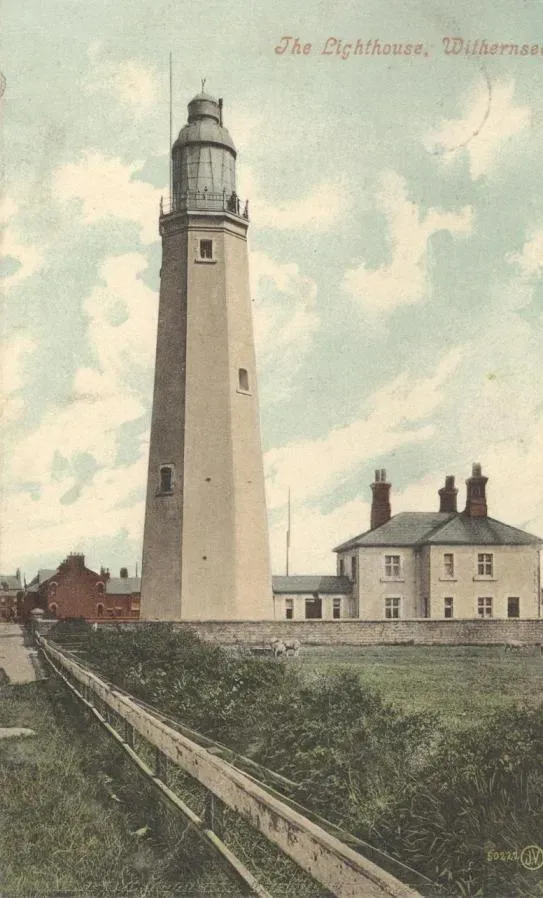
America’s lighthouses aren’t just picturesque coastal landmarks – they are genuine historical documents, written in iron, brick, and mortar. Each one carries stories of keepers, shipwrecks, wars, and storms. Honestly, it’s hard to think of another type of structure that captures the spirit of American maritime life so completely.
The United States Lighthouse Society is a nonprofit historical and educational organization dedicated to saving and sharing the rich maritime legacy of American lighthouses and supporting lighthouse preservation throughout the nation. Their work has brought growing public attention to these structures as irreplaceable cultural resources, not just quaint photo opportunities.
The problem, of course, is that preserving physical buildings is expensive and slow. That’s exactly where the digital revolution steps in, offering tools that previous generations of preservationists could only dream about.
2. 3D Scanning Brings Lighthouses Into the Digital Age
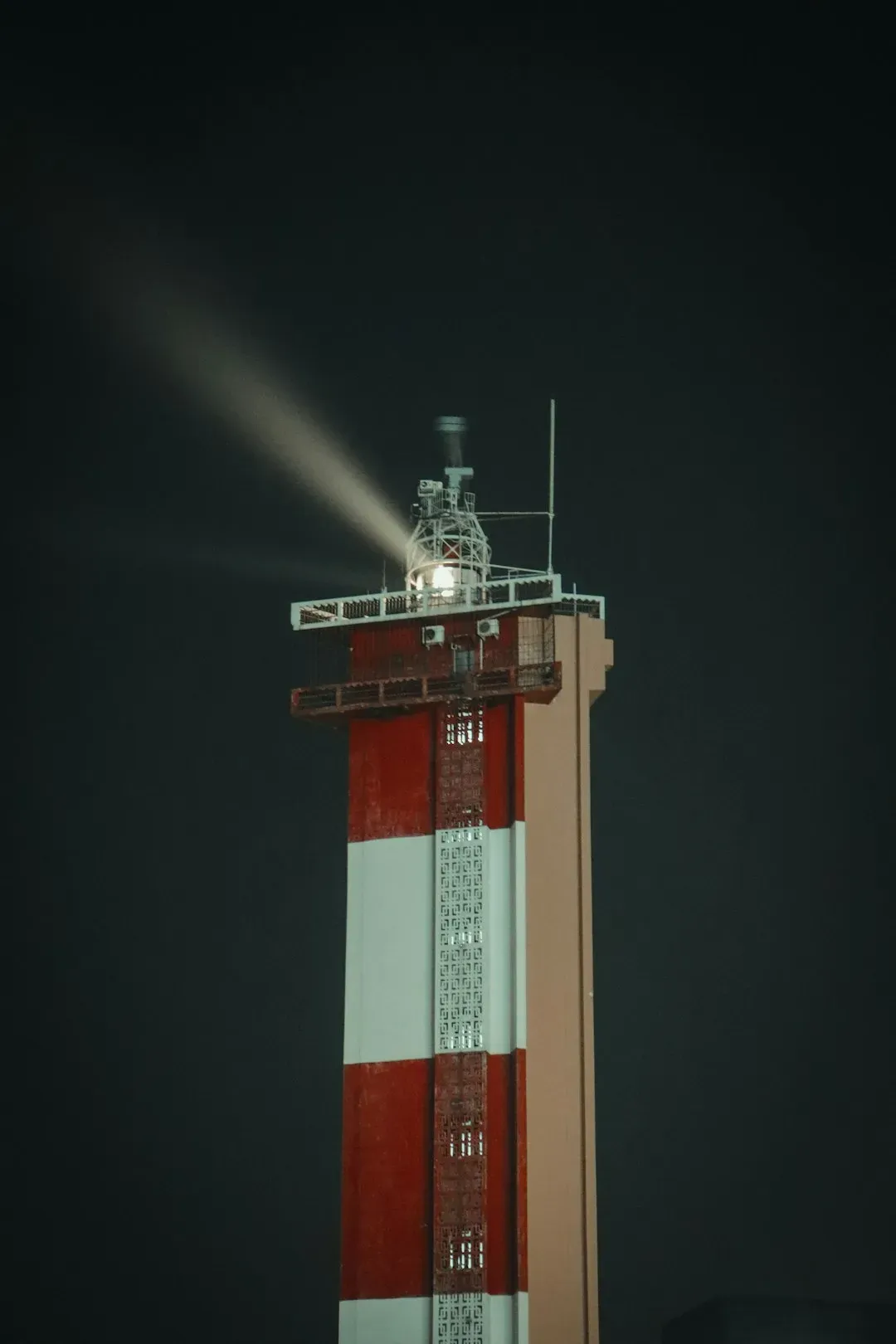
Walk up to a historic lighthouse today and you might find a team of surveyors pointing strange-looking devices at every wall and window. These are laser scanners, and they are transforming how we document aging structures. Think of it like taking the most obsessively detailed photograph imaginable, but in three dimensions.
The University of South Florida’s Center for Digital Heritage and Geospatial Information conducted a 3D heritage preservation and documentation survey of the Cape Canaveral Light Station, which included interior structural work, CAD and BIM modeling, condition assessment, and the development of a virtual tour. That’s not just documentation – that’s a full digital resurrection of a structure built in 1868.
Separate 3D laser scanning, photogrammetry, and as-built modeling projects for historic preservation have also been completed at the El Morro Lighthouse in San Juan, Puerto Rico. Projects like these are setting the standard for how America treats its coastal built heritage going forward.
3. The Federal Transfer Program Empowering Local Stewards
Before a lighthouse can get , someone actually has to own and care for it. That’s where federal policy plays a surprisingly active role. Since the National Historic Lighthouse Preservation Act was passed in 2000, allowing the government to transfer lighthouse ownership, more than 150 lighthouses have gone to new owners, including 81 that have been handed to government agencies and nonprofits, and 70 that have been sold to the public.
As a way to preserve the historic beacons and to relieve taxpayers of the maintenance costs, the GSA offers up lighthouses to the public every May, and during 2023’s “lighthouse season,” the GSA offloaded a record number of properties. Many of these new stewards are small nonprofits and local historical societies eager to apply modern preservation tools.
Six lighthouses were transferred at no cost to federal, state, or local governments, nonprofits, educational organizations, or other groups, if they committed to upkeep of the properties and to making them publicly available for educational, recreational, or cultural purposes. That’s a meaningful policy lever for protecting heritage sites while letting communities take ownership of their history.
4. Building Information Modeling Reshapes Restoration Planning
Here’s the thing about restoring a 150-year-old lighthouse – you rarely have accurate original blueprints. Walls are thicker in some places than others. Stairways spiral in ways that defy standard measurements. That makes planning repairs genuinely complicated.
Preservation professionals now convert point clouds from laser scans into Historic Building Information Models, allowing architects to plan retrofits around irregular, centuries-old geometry with millimeter precision. It’s a bit like giving a surgeon an MRI before an operation – suddenly you know exactly what you are working with before you make the first incision.
Teams can transform 3D laser scan data into comprehensive BIM models, enabling precise planning and preservation of historic buildings while supporting modern interventions. For lighthouse stewards working with tight budgets, this kind of precision planning can mean the difference between a successful restoration and a costly surprise mid-project.
5. Digital Twins as Insurance Against Disaster
What happens if a lighthouse burns, floods, or collapses before anyone gets around to restoring it? Historically, that meant the loss was permanent. Today, the idea of a “digital twin” changes that equation entirely.
A cultural heritage digital twin is more than just a model – it is a living database of the site, and by integrating the 3D model with IoT sensors monitoring temperature, humidity, or structural movement, conservators can monitor the health of a building in real time. That’s a remarkable leap beyond a simple photograph or hand-drawn floor plan.
A cultural heritage digital twin also acts as an immutable backup, meaning that if a fire or disaster occurs – similar to what happened at Notre Dame – you have the blueprints needed to rebuild. For America’s most remote and exposed coastal towers, that kind of safety net is not just reassuring. It is essential.
6. NOAA’s Coastal Mapping and the Erosion Threat
No conversation about lighthouse preservation is complete without confronting the single most urgent threat these structures face: the sea itself. Erosion has always nibbled at the edges of lighthouse sites. Climate change is accelerating the process dramatically.
The Digital Coast geospatial portal, maintained by NOAA’s Office for Coastal Management, provides federated digital data to study and update changes in shorelines and 3D morphology of beaches and dunes. This is how researchers and managers track how quickly the ground beneath historic sites is shifting or disappearing altogether.
Sea level rise is one of the biggest risks for coastal communities today and far into the future, flooding is occurring more frequently and with greater severity, and sea level rise not only causes more flooding but also impacts the habitat of coastal communities. Historic lighthouses sitting on eroding bluffs or barrier islands face real and growing jeopardy from these trends.
7. Grants and Funding Are Fueling the Digital Push

Technology is only transformative if communities can actually afford to use it. Thankfully, a growing network of federal funding programs is making digital preservation more financially accessible for lighthouse groups with modest budgets.
Digital documentation is often a prerequisite for securing historic preservation grants – such as the Save America’s Treasures program – turning scanning costs into funded assets. In other words, investing in a digital record can actually unlock more money for physical restoration. That’s a clever incentive structure.
The National Endowment for the Humanities funds projects that use digital technology to make humanities resources, including historic sites, accessible to the public. When you combine NEH support with state-level preservation grants and the NHLPA transfer program, a real ecosystem for lighthouse survival is starting to take shape.
8. Virtual Tours and Digital Storytelling Boost Public Engagement
Preservation isn’t just about saving stone and steel. It’s about keeping stories alive. The U.S. Lighthouse Society understood this early, leaning into digital storytelling, virtual tours, and online archives as tools to connect a new generation with lighthouse history. And the results have been genuinely impressive.
The Cape Canaveral Light Station survey included interior structural work, CAD and BIM modeling, condition assessment, and the development of a virtual tour, including complete views from the lighthouse interior and of the lighthouse museum. Anyone with a browser can now walk inside a structure that most people will never visit in person.
Digital documentation fosters engagement with heritage sites through virtual tours and interactive experiences, and this matters enormously for lighthouses located on remote islands, active military installations, or shorelines too fragile to support heavy foot traffic. Virtual access is not a consolation prize. In many cases, it is the only realistic option.
9. Augmented and Virtual Reality Bring History to Life for Visitors

I think the most exciting development in lighthouse tourism right now is the rise of immersive technology. We’ve moved far beyond a simple website or a PDF brochure. The question now is whether visitors can actually feel what it was like to stand watch in a 19th-century lighthouse during a nor’easter.
The growing attention toward immersive technologies such as augmented reality, virtual reality, mixed reality, and extended reality is revolutionizing cultural heritage education and tourism, with such technologies offering immersive and interactive experiences that transform the user’s exploration of museums, cultural heritage sites, educational content, and historical landmarks.
Research findings highlight the importance of user experience in determining the success of VR applications, demonstrating that immersive environments significantly enhance user satisfaction, engagement, and memory retention. For lighthouse sites working to attract younger visitors and justify their operating costs, that kind of engagement boost is exactly what the tide ordered.
10. What Comes Next: A Digitally Secured Future for Coastal Heritage
It’s hard to say for sure what the next decade will look like for America’s lighthouses, but the trajectory is genuinely encouraging. The combination of federal programs, advanced scanning technology, immersive digital experiences, and coastal monitoring tools is creating a preservation framework stronger than anything that has existed before.
Digital methods open new ways to document, study, and share cultural heritage that would otherwise remain hidden or at risk, and when applied thoughtfully, digital methods can help cultural heritage move beyond the limits of physical survival and enter a new era of digital preservation for future generations. That framing fits America’s lighthouses perfectly – structures that have already survived so much and deserve every tool available to carry them forward.
The sea is rising, the storms are growing fiercer, and many of these towers are more vulnerable than ever. Still, for the first time in history, we have the tools to capture every detail, every dimension, and every story – permanently and precisely. The light may one day go dark, but the lighthouse, in digital form, never has to disappear.
What do you think – should more federal funding go toward digitally preserving America’s coastal heritage before it’s too late? Share your thoughts in the comments.