A Risky Weather Call Echoing History (Image Credits: Upload.wikimedia.org)
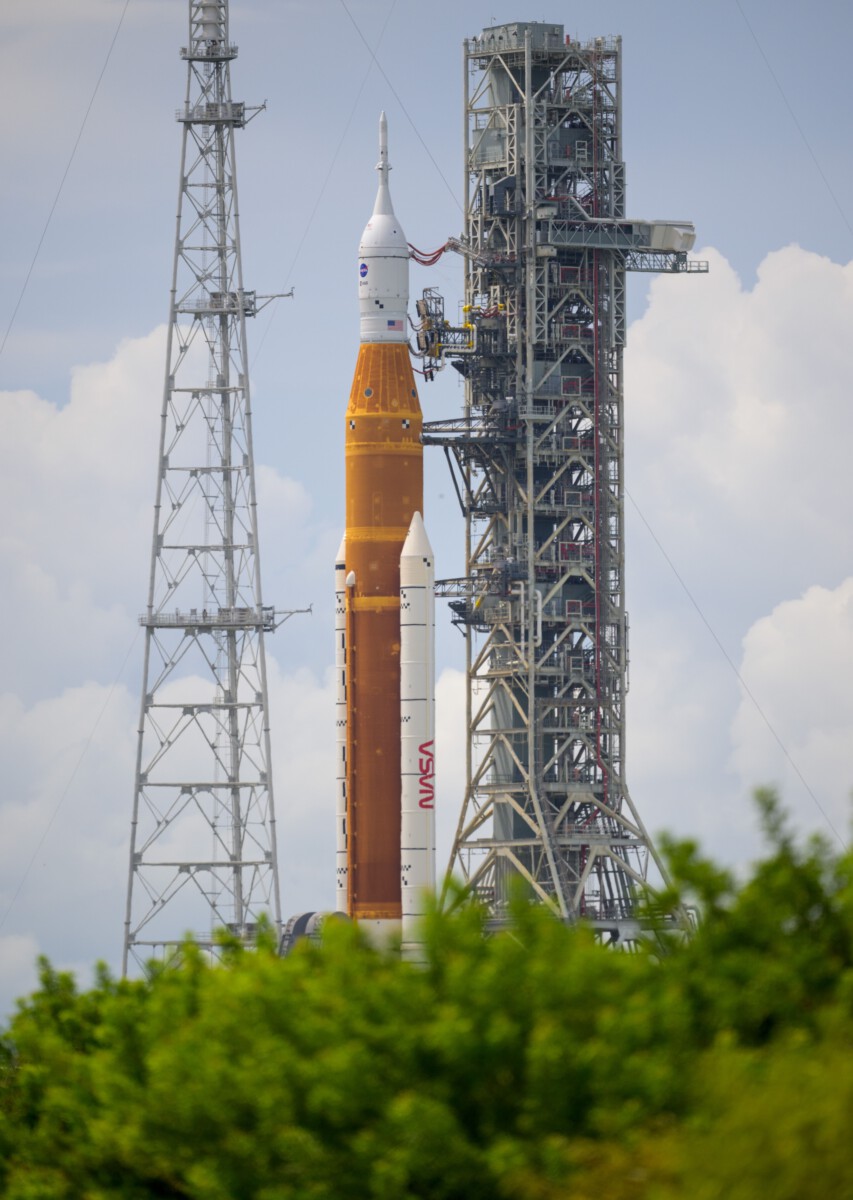
Kennedy Space Center, Florida – NASA pushed back a key fueling test for its Artemis 2 moon rocket as forecasts warned of subfreezing temperatures sweeping the Space Coast.[1]
A Risky Weather Call Echoing History
Officials scrubbed the wet dress rehearsal scheduled to kick off late on January 29, opting instead to wait out the cold snap. The test called for a 49-hour simulated countdown starting around 8 p.m. EST, but frigid conditions threatened to compromise safety.[1]
The decision arrived just one day after the 40th anniversary of the Challenger shuttle disaster, where subfreezing weather affected solid rocket boosters and led to tragedy. NASA takes such risks seriously with the SLS rocket’s similar booster technology. Teams noted that preparations at the pad stayed on track, yet the weather violated launch criteria. “Teams and preparations at the launch pad remain ready for the wet dress rehearsal,” the agency stated. “However, adjusting the timeline for the test will position NASA for success during the rehearsal, as the expected weather this weekend would violate launch conditions.”[1]
Understanding the Wet Dress Rehearsal
This two-day procedure mimics a full launch countdown down to 30 seconds before ignition. Technicians load cryogenic fuels into the SLS’s core and upper stages, totaling over 700,000 gallons.[2][1]
The rocket powers up, and teams practice holds, recycles, and terminal counts starting at T-minus 10 minutes. Such drills ensure readiness for real contingencies. The SLS rolled to Launch Complex 39B from the Vehicle Assembly Building on January 17.[1]
- Power on the massive SLS rocket.
- Load liquid hydrogen and oxygen into tanks.
- Run clock to T-minus 33 seconds, then reset for practice holds.
- Simulate T-minus 30 seconds cutoff before ignition.
- Test ground systems, umbilicals, and infrastructure.
Lessons from Artemis 1 Shape Expectations
Artemis 1 faced setbacks during its 2022 wet dress rehearsals. Hydrogen leaks and umbilical problems forced three rollbacks to the assembly building for fixes.[1]
The uncrewed mission launched successfully six months later. NASA addressed those issues for Artemis 2, expressing confidence despite the weather hiccup. A smooth test now proves essential for the February window.[3]
Crew Quarantine Continues Amid Schedule Shift
The four Artemis 2 astronauts remain in quarantine, undeterred by the delay. Reid Wiseman commands the flight, with Victor Glover as pilot, Christina Koch and Jeremy Hansen as mission specialists.[1]
Orion will carry them on a 10-day loop around the moon, validating the spacecraft for crewed deep-space travel. Success paves the way for Artemis 3’s lunar landing in 2028. The original launch window spanned February 6 to 11, but range constraints may limit options. The postponement shifts liftoff to no earlier than February 8.[1]
Key Takeaways
- Cold weather poses risks to cryogenic systems and boosters, prompting the prudent delay.
- Wet dress rehearsal is the final hurdle before human moonflight in over 50 years.
- Artemis 2 qualifies Orion, setting stage for landings on the lunar surface.
While weather remains unpredictable, NASA’s cautious approach prioritizes safety and mission success. This delay underscores the challenges of launching humans beyond low Earth orbit. How will the rescheduled test unfold, and what does it mean for America’s return to the moon? Share your thoughts in the comments.