Festive Departure Ignites Excitement in Houston (Image Credits: Flickr)
Kennedy Space Center, Florida – Astronauts from NASA and the Canadian Space Agency gathered on March 27, 2026, for a ceremonial photo before a media event marking their arrival at this coastal launch site. The primary crew for the Artemis II mission, along with backups, traveled from Houston that morning amid celebrations by space center staff. This milestone step signals the final countdown toward the first crewed lunar flight in more than 50 years.[1][2]
Festive Departure Ignites Excitement in Houston
Employees from NASA’s Johnson Space Center assembled outside Ellington Airport for a heartfelt sendoff. The astronauts waved from their vehicles before boarding T-38 jets bound for Florida. Steve Koerner, deputy director at the Johnson Space Center, captured the communal spirit.
“We do feel like it’s us, and the crew would be the first to tell you that,” Koerner said. “This is a huge team, great to be able to all be a part of this.”[2] The group had entered quarantine on March 18 to safeguard their health ahead of launch. Their journey covered the roughly 800 miles to Merritt Island in about two hours, landing around 2:15 p.m. ET.
Group Photo and Media Remarks at the Launch Site
Upon touchdown at the Kennedy Space Center’s Launch and Landing Facility, the full team posed together. From left to right stood NASA astronaut Andre Douglas, Victor Glover, Christina Koch, Canadian Space Agency astronaut Jenni Gibbons, NASA astronaut Reid Wiseman, and Canadian Space Agency astronaut Jeremy Hansen. Douglas and Gibbons serve as backups, ready to step in if needed.[3]
The primary crew then addressed reporters. Commander Wiseman revealed “Rise,” their zero gravity indicator – a plush mascot designed by second-grader Lucas Ye from Mountain View, California. Inspired by Apollo 8’s Earthrise image, it emerged victorious from over 2,600 contest entries worldwide. The crew narrowed 25 finalists to five before selecting it. Wiseman declared “Rise” during the remarks, signaling their spaceward intent.[1]
Meet the Astronauts Poised for Lunar Orbit
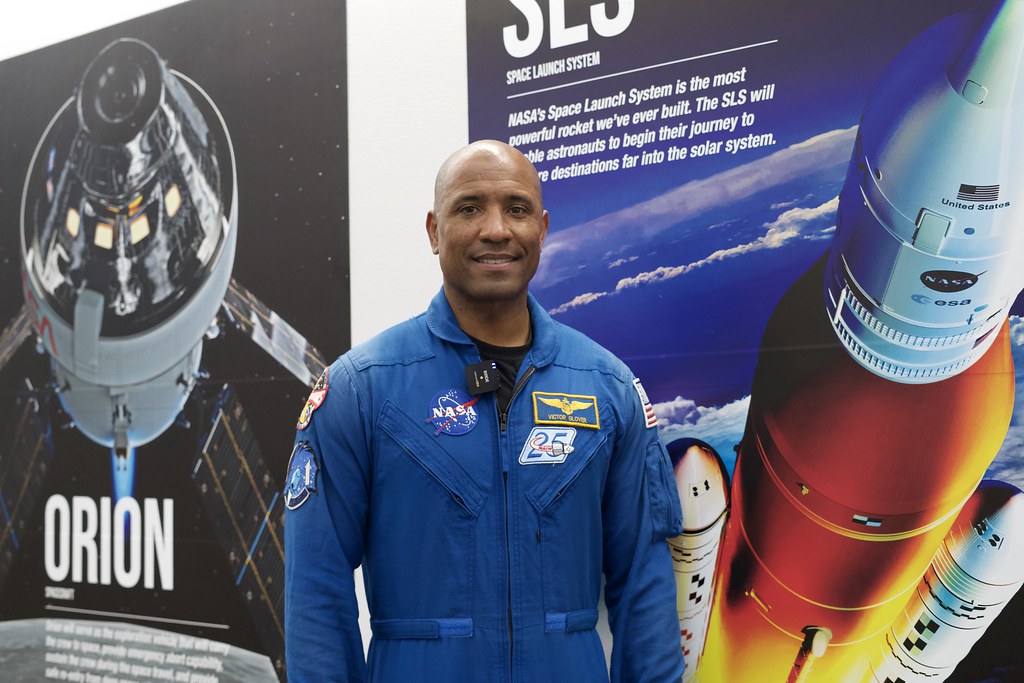
The Artemis II team blends veteran experience with international partnership. Reid Wiseman commands as a former Navy test pilot. Victor Glover pilots, drawing on his naval aviator background. Christina Koch, an engineer holding the record for the longest spaceflight by a woman at 328 days, serves as mission specialist. Jeremy Hansen, a former Canadian Air Force fighter pilot, joins as the other specialist.[4]
Backups Andre Douglas from NASA and Jenni Gibbons from CSA ensure mission continuity. The lineup reflects NASA’s Artemis program’s emphasis on diverse expertise. Training spanned three years, culminating in this pre-launch phase.
- Commander: Reid Wiseman (NASA)
- Pilot: Victor Glover (NASA)
- Mission Specialist 1: Christina Koch (NASA)
- Mission Specialist 2: Jeremy Hansen (CSA)
- Backups: Andre Douglas (NASA), Jenni Gibbons (CSA)
Mission Stakes and Path to the Moon
Artemis II will send the crew on a 10-day free-return trajectory around the Moon aboard the Space Launch System rocket and Orion spacecraft. Unlike Apollo missions, it avoids lunar orbit or landing, focusing instead on validating systems for future flights. Koch will surpass the furthest distance from Earth traveled by a woman, set during Polaris Dawn in 2024.
The path mirrors Apollo 13’s after its service module failure, ensuring safe return. Launch preparations continue at Launch Complex 39B, with rocket fueling, spacecraft checks, and ground systems alignment. The crew now undergoes medical evaluations, timeline reviews, and family time while in quarantine.[4]
| Role | Astronaut | Agency |
|---|---|---|
| Commander | Reid Wiseman | NASA |
| Pilot | Victor Glover | NASA |
| Mission Specialist | Christina Koch | NASA |
| Mission Specialist | Jeremy Hansen | CSA |
Readiness Reflections from the Crew
Wiseman addressed potential hurdles candidly. “The rocket is ready. We are ready. NASA is ready,” he stated. Yet he noted human factors in loading propellant could prompt delays – perhaps 24 or 48 hours, or into May. “April 1st is not a guarantee,” Wiseman added.[4]
Koch framed the effort as a relay. “We’re in a relay race. We’re not successful until the next missions are successful,” she said. This mindset fuels their drive toward Artemis III and beyond, including a 2028 lunar landing.[4] Officials like NASA Administrator Jared Isaacman and CSA President Lisa Campbell greeted them, underscoring global stakes.
Key Takeaways
- Artemis II targets a 10-day lunar flyby no earlier than April 1, 2026, testing SLS and Orion.
- International crew highlights U.S.-Canada partnership, with backups ensuring reliability.
- “Rise” mascot symbolizes inspiration from Apollo era to Artemis future.
The sendoff photo and remarks crystallized a pivotal moment: humanity’s return to deep space beckons. As countdown clocks tick, the Artemis II team embodies precision and perseverance. What do you think about this crew’s lunar adventure? Tell us in the comments.