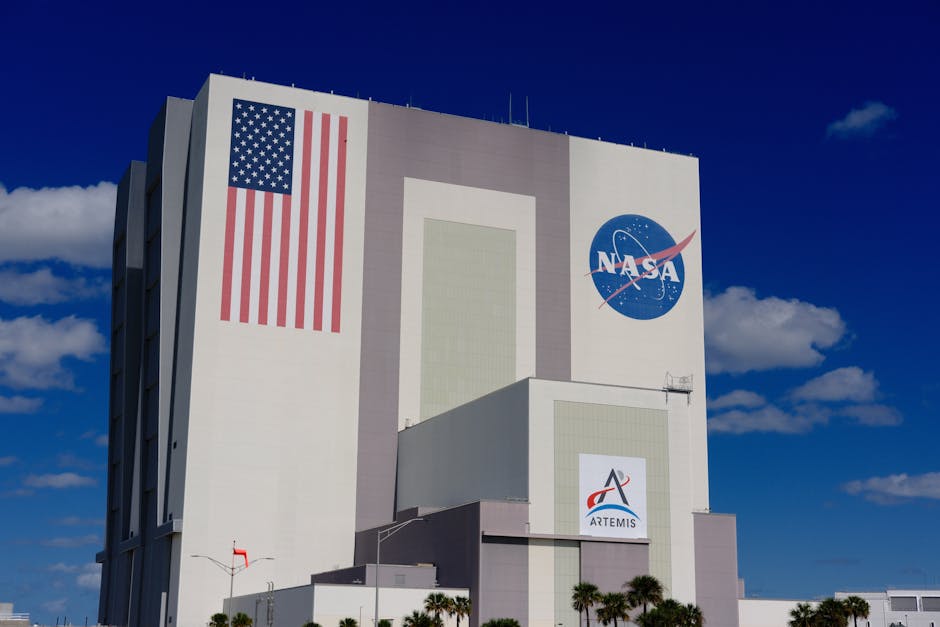
Record-Shattering Voyage Paves Way for Lunar Future (Image Credits: Pexels)
Off the California coast – The Artemis II astronauts prepare for a dramatic return to Earth today, capping a mission that pushed humanity farther into space than ever before. Their Orion spacecraft, launched just over a week ago, orbited the moon and validated key technologies for upcoming lunar landings. As the crew approaches splashdown in the Pacific Ocean near San Diego, millions tune in to witness this pivotal moment in NASA’s renewed push toward the moon.
Record-Shattering Voyage Paves Way for Lunar Future
The Artemis II mission etched its place in history by sending four astronauts 252,000 miles from Earth, eclipsing the Apollo 13 distance record from 1970. This crewed test flight orbited the moon without landing, focusing instead on proving the Space Launch System rocket and Orion capsule’s reliability with humans aboard.
Named after Apollo’s mythical twin sister in Greek lore, the program honors NASA’s Apollo era while charting new paths. The roughly 10-day outing launched on April 1 from Florida’s Kennedy Space Center. After 25 hours circling Earth, the spacecraft broke free for the moon, arriving six days later for a seven-hour close-up orbit of previously unseen lunar regions.
Return maneuvers began Tuesday, April 7, setting the stage for today’s finale. Engineers monitored every phase to ensure Artemis III can achieve a crewed moon landing next.
Profiles of the Four Who Orbited the Moon
Commander Reid Wiseman leads the team with seasoned expertise, having spent 165 days aboard the International Space Station on a prior flight. His steady hand guided the mission through its most demanding maneuvers.
Pilot Victor J. Glover Jr., a former U.S. Navy captain from Pomona, California, and father of four, joined NASA in 2013. He handled the spacecraft’s precise navigation during the lunar flyby.
Mission specialist Christina Koch, a Space Camp alumna now in its Hall of Fame, holds the record for the longest single spaceflight by a woman at 328 days. Her contributions advanced life-support testing vital for deep-space travel.
Rounding out the crew, Canadian Space Agency’s Jeremy Hansen made history as the first non-U.S. astronaut to orbit the moon. His international perspective strengthened global partnerships in exploration.
- Reid Wiseman: Mission commander, ISS veteran.
- Victor J. Glover Jr.: Pilot, Navy background.
- Christina Koch: Record-holding mission specialist.
- Jeremy Hansen: First Canadian moon orbiter.
High-Speed Reentry: The Riskiest Phase Unfolds
Splashdown occurs around 8:07 p.m. ET in Pacific waters off San Diego, one of the mission’s most perilous steps. Orion will pierce Earth’s atmosphere at speeds nearing 33 times the sound barrier, generating intense heat that the capsule’s shield must withstand.
The service module detaches beforehand, allowing parachutes to deploy and brake the descent. Recovery teams aboard the USS John P. Murtha stand ready to retrieve the crew post-splash for initial medical checks. From there, the astronauts head to NASA’s Johnson Space Center in Houston.
Real-time tracking via NASA’s tool lets observers follow Orion’s path until the final moments. Mission control reports all systems nominal as the craft closes in on home.
Live Viewing Options for the Historic Moment
NASA provides comprehensive coverage starting at 6:30 p.m. ET across multiple free platforms. The official NASA YouTube channel streams the full broadcast, including commentary from experts.
Alternatives include NASA+ and the NASA app, both accessible without subscription. For pre-splashdown updates, NASA’s Orion trajectory tracker offers precise location data.
Key Takeaways
- Artemis II crew traveled 252,000 miles, humanity’s farthest outing.
- Mission tested systems for future moon landings in Artemis III.
- Splashdown at 8:07 p.m. ET; watch live on NASA platforms.
This splashdown closes Artemis II’s chapter while igniting excitement for sustained lunar presence. It reaffirms NASA’s role in uniting nations for cosmic ambitions. What does this milestone mean for the future of space travel? Share your thoughts in the comments.