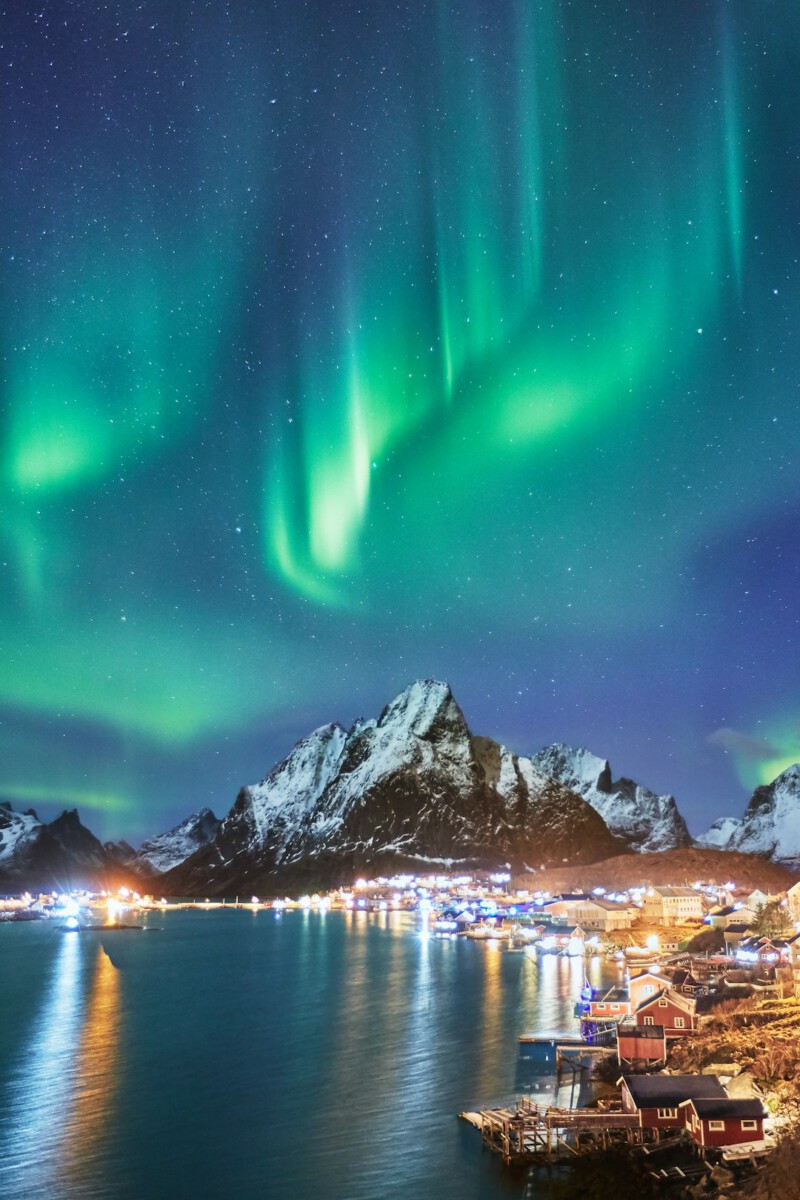
The Science Behind the Sky’s Glow (Image Credits: Unsplash)
Stargazers across much of the United States prepared for a rare celestial treat as the aurora borealis became visible in 19 states late Wednesday, March 18, extending into Thursday, March 19. The National Oceanic and Atmospheric Administration’s Space Weather Prediction Center issued alerts for a G2 moderate geomagnetic storm, promising vibrant displays of green, blue, and purple lights in the night sky. This event stemmed from heightened solar activity during the peak of an 11-year sun cycle, amplified by the approaching spring equinox.
The Science Behind the Sky’s Glow
A coronal mass ejection, or CME, propelled solar material toward Earth, triggering the geomagnetic storm responsible for the aurora. Particles from the sun interacted with the planet’s magnetic field, exciting atmospheric gases and producing the characteristic colors. NOAA noted that this particular storm aligned with the “equinox effect,” where Earth’s tilted axis enhanced the magnetic field’s receptivity to incoming solar particles.
Such conditions doubled the likelihood of auroral visibility during this period. The agency tracked the CME’s impact closely, confirming its moderate intensity. Viewers in affected regions reported optimal conditions under clear, dark skies.
States in the Aurora’s Path
NOAA’s experimental aurora dashboard pinpointed 19 states where the lights held potential for sighting. Northern and mid-latitude areas stood to benefit most from the storm’s reach. Residents from coast to coast scanned horizons for the phenomenon.
The full list of states included:
- Alaska
- Idaho
- Iowa
- Maine
- Michigan
- Minnesota
- Montana
- Nebraska
- New Hampshire
- North Dakota
- Oregon
- South Dakota
- Vermont
- Washington
- Wisconsin
- Wyoming
- Northern Indiana
- Northern Ohio
- Northern Pennsylvania
Prime Times and Viewing Strategies
NOAA advised the window between 10 p.m. and 2 a.m. local time for peak visibility. Observers needed to face north and seek locations far from city lights to minimize pollution interference. Clear weather further boosted chances in eligible zones.
Preparation proved key: binoculars enhanced faint displays, while apps and forecasts helped pinpoint active periods. Patience paid off, as auroras danced intermittently during the storm’s progression. Many captured the event with long-exposure photography under ideal conditions.
Real-Time Monitoring Resources
The Space Weather Prediction Center offered continuous updates through its website at NOAA’s Space Weather Prediction Center. Users accessed a 30-minute aurora forecast at this link, alongside the experimental dashboard at NOAA’s aurora dashboard.
Forecast discussions detailed the storm’s evolution, including CME arrivals and geomagnetic indices. Enthusiasts relied on these tools for last-minute adjustments to viewing plans. The center’s products, such as the aurora overview at NOAA’s forecast discussion, provided deeper context on solar phenomena.
As the lights faded into the early hours, the event underscored the dynamic interplay between sun and Earth. Skywatchers who witnessed the aurora gained a vivid reminder of cosmic forces at work.
- A G2 geomagnetic storm from a CME made auroras visible in 19 states overnight March 18-19.
- Best views occurred 10 p.m. to 2 a.m., facing north away from lights.
- NOAA tools offered real-time tracking for optimal sightings.
What was your experience with the northern lights? Share your sightings in the comments.