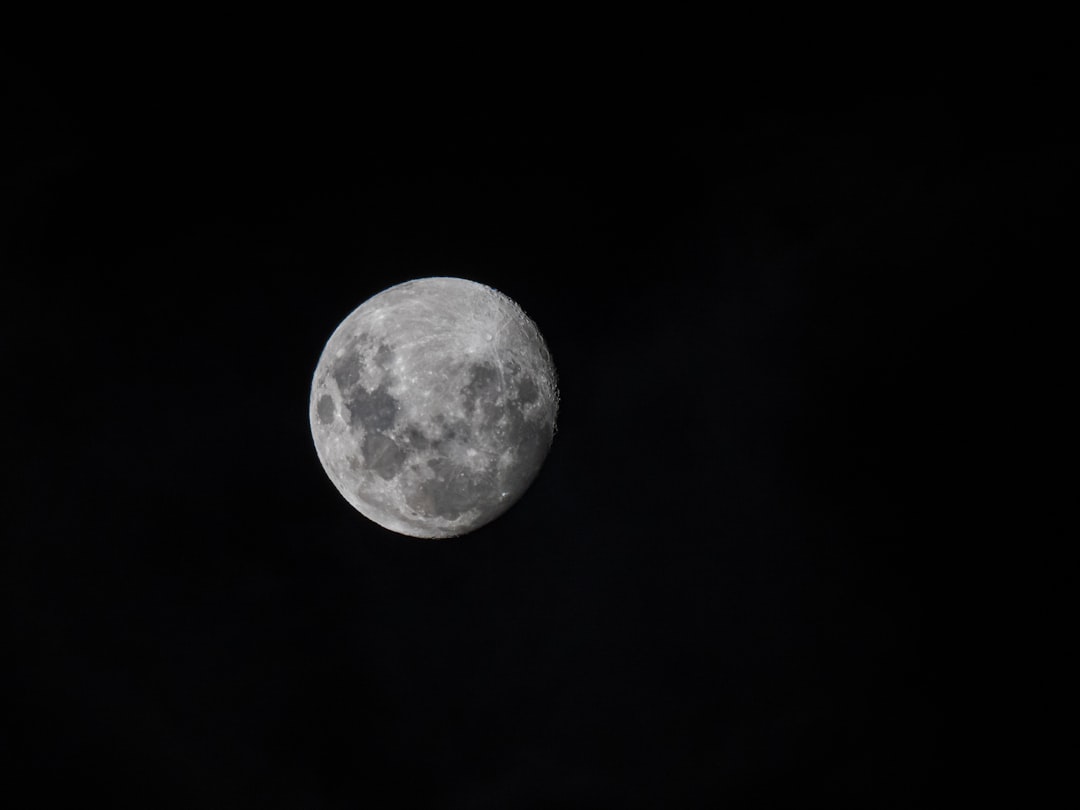
Full Moon Peaks Early in the Week (Image Credits: Unsplash)
Australia – From January 29 to February 5, clear nights promise striking views of a full moon, prominent planets, and a faint comet for observers across the continent.
Full Moon Peaks Early in the Week
The full moon arrives on Monday, February 2, casting a bright glow over the landscape. Just days earlier, on January 30, the moon reaches perigee, its closest point to Earth, enhancing its apparent size and brilliance. This supermoon-like effect draws attention skyward during the waxing phase leading up to fullness. Observers noted the nearly full moon pairing closely with Jupiter on January 31, creating a captivating celestial duo. Such alignments offer prime opportunities for photography and casual stargazing.
The moon’s position influences visibility of fainter objects throughout the period. Its light may challenge spotting dimmer targets until later in the week when it rises higher after dark.
Jupiter Commands the Northeastern Sky
Jupiter rises before astronomical twilight, dominating the northeastern horizon roughly 90 minutes after sunset. The gas giant reached opposition on January 10, appearing at its largest and brightest from Earth, a condition that persists for months. On January 31, it forms an eye-catching triangle with the bright stars Castor and Pollux, joined by the waxing moon nearby. Telescopes reveal its disk and moons clearly during this favorable window. Views remain similar nationwide at equivalent local times.
This prominence makes Jupiter accessible even from suburban locations with minimal equipment.
Saturn Sinks Low in the West
Saturn graces the northwestern sky as the week’s brightest object there, visible about 60 minutes after sunset. The ringed planet lowers steadily, prompting early evening checks before it dips too close to the horizon. Binoculars or small telescopes disclose its subtle rings and shape. By February 5, it sinks further, urging observers to catch it soon. Conditions mirror those in Adelaide across Australia at matching post-sunset intervals.
Its descent marks a transition as twilight claims other inner planets like Mercury, Venus, and Mars.
Uranus and a Comet Beckon Binocular Users
Uranus, at magnitude 5.7, hovers faintly above the Pleiades star cluster in the eastern sky evenings. Dark-sky sites allow naked-eye glimpses, though binoculars pinpoint it reliably against the cluster’s glow. The waxing moon complicates the hunt mid-week, but conditions improve by week’s end. On January 31 around 90 minutes after sunset, this setup shines from most Australian vantage points.
Comet C/2024 E1 Wierzchos lingers near Grus constellation in the west by February 5, potentially visible in binoculars as skies darken fully. Expectations for brightness fell short, yet higher altitude and later moonrise boost chances. Steady hands and averted vision aid detection near the crane’s wing stars.
Observing Tips for the Week
- Head out 60-90 minutes after sunset for optimal planet views.
- Use binoculars for Uranus above Pleiades and the comet near Grus.
- Seek dark sites to overcome moonlit skies mid-week.
- Check equivalent local times nationwide for consistent sights.
- Telescopes enhance Jupiter and Saturn details.
Broad Sky Canvas Unfolds
The whole sky panorama features Canopus and Sirius near the zenith, Orion climbing northwest, and the Southern Cross hugging the southern horizon. Nearly full moonlight dims fainter clusters and nebulae. Saturn lowers northwest while Jupiter ascends northeast. These elements combine for a dynamic evening tableau.
Similar scenes greet viewers continent-wide at 90 minutes post-sunset.
Key Takeaways
- Full moon on February 2 follows perigee on January 30.
- Jupiter pairs with moon and twins stars; Saturn fades west.
- Binoculars unlock Uranus and possibly Comet C/2024 E1.
This week’s skies blend easy highlights with rewarding challenges, reminding us of the universe’s quiet wonders. What catches your eye first under these stars? Share in the comments.