Automation’s Swift Rise in Corporate Operations (Image Credits: Unsplash)
Businesses worldwide have embraced automation to tackle repetitive tasks and boost efficiency. Tools powered by artificial intelligence now manage data entry, scheduling, and basic analytics with remarkable speed and accuracy. However, these advancements reveal a persistent reality: machines excel at the routine but falter in the nuanced realms that demand human insight.
Automation’s Swift Rise in Corporate Operations
Companies turned to automation years ago to address growing demands for speed and precision. Software robots and AI systems processed vast volumes of information, reducing errors in areas like invoice handling and inventory tracking. This shift freed employees from mundane duties, allowing initial focus on strategic priorities.[1]
Productivity soared as automation scaled operations without proportional staff increases. Firms reported faster turnaround times for customer queries and compliance checks. Still, full reliance on these tools proved impractical, as unexpected variables often required manual adjustments.
Why Machines Reach Only Partway: The 80/20 Divide
Automation typically handles about 80 percent of straightforward processes, leaving the remaining 20 percent to humans. This pattern, often called the 80/20 rule, emerges because AI thrives on predictable patterns but struggles with variability.[2][3] Businesses observed this in workflows where initial drafts or data sorts automated seamlessly, yet refinements demanded oversight.
Key limitations include AI’s inability to improvise or interpret context. Systems trained on historical data falter when conditions shift abruptly. Human flexibility bridges these gaps, ensuring outcomes align with real-world complexities.
- AI lacks physical dexterity for on-site adaptations, such as adjusting warehouse layouts.[3]
- Emotional intelligence remains absent, critical for team management and client negotiations.
- Creativity and ethical judgments evade algorithmic replication.
- Fact-checking and data quality control necessitate human verification.
- Inflexibility in novel scenarios requires adaptive human input.
Human Strengths That Complete the Picture
Workers brought irreplaceable qualities to automated environments. In legal teams, software reviewed contracts rapidly, but professionals negotiated terms and spotted subtle risks.[1] HR departments used applicant screening tools effectively, yet final hires hinged on cultural fit assessments.
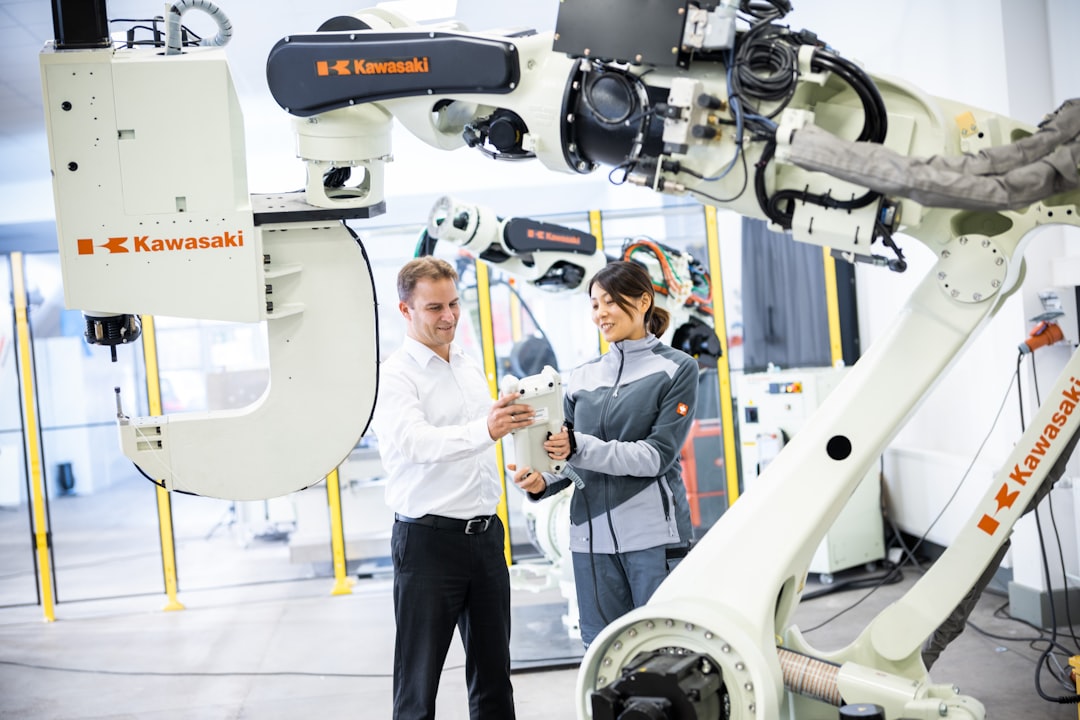
Manufacturing sites deployed robots for assembly lines, with staff overseeing maintenance and tweaks. This collaboration minimized downtime and maximized output. Medical diagnostics benefited from AI scans, complemented by physicians’ empathetic patient interactions.
| Task Type | Automation Handles | Humans Excel |
|---|---|---|
| Document Review | Initial scanning and flagging | Nuance interpretation and strategy |
| Customer Service | Basic queries and routing | Empathy and complex resolutions |
| Data Analysis | Pattern detection | Contextual insights and decisions |
Building Effective Human-AI Partnerships
Leaders integrated oversight into automated systems early on. Training programs equipped staff to monitor AI outputs and intervene as needed. Regular audits identified automation blind spots, refining processes iteratively.
Businesses prioritized hybrid models where machines amplified human capabilities. Employees shifted to high-value roles like innovation and relationship-building. This approach sustained growth while mitigating risks of over-automation.
Forward-thinking firms conducted quarterly reviews of workflows. They automated email sorting and report drafting, reserving personal responses for humans. Such balance preserved control and fostered sustainable efficiency.[2]
- Automate routine tasks to free humans for judgment-heavy work.
- Humans provide creativity, empathy, and adaptability that AI lacks.
- Hybrid teams outperform pure automation in dynamic business environments.
The enduring lesson from automation’s evolution stands clear: technology accelerates progress, but human ingenuity ensures success. Companies that harness this synergy position themselves for long-term resilience. What strategies has your organization adopted to blend automation with human expertise? Share in the comments.