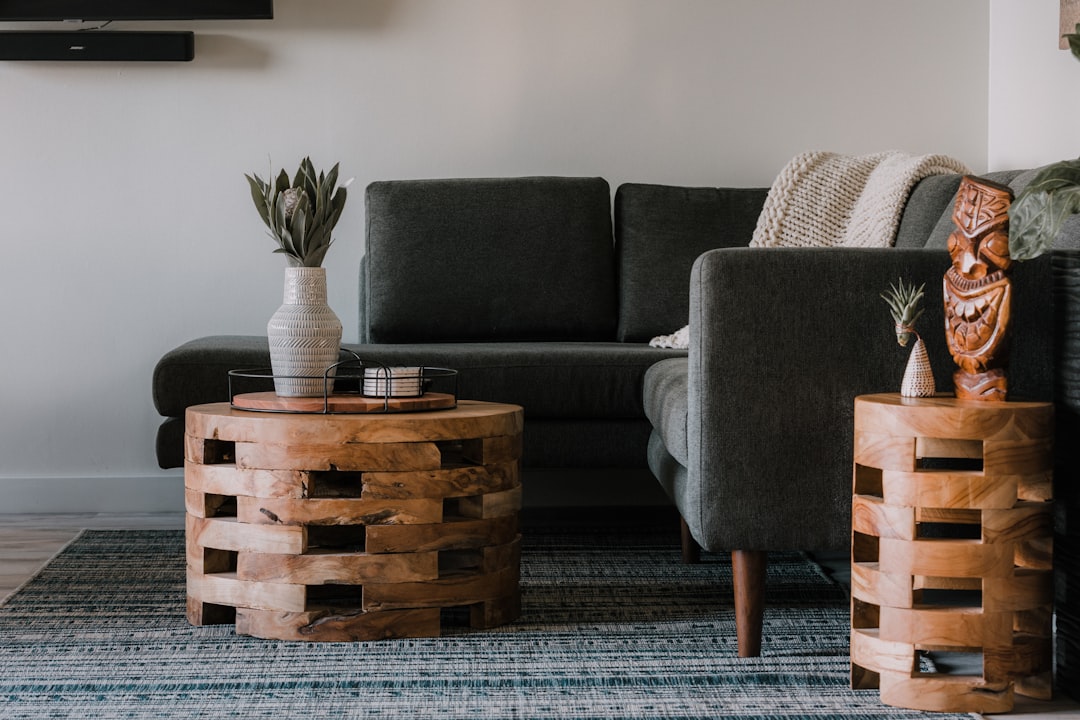
Tap into Community Networks for Cost-Free Treasures (Image Credits: Unsplash)
Furniture ranks among the toughest challenges during a relocation, where sturdy items like dressers and sofas prove both cumbersome and costly. Quick-delivery options from online retailers offer immediate relief amid the chaos of unpacking. Yet these mass-produced pieces, often assembled from plastics, fiberboard, and chipboard, rarely endure and contribute heavily to waste, with Americans discarding over 12 million tons in 2018 alone, 80% of which filled landfills, according to the Environmental Protection Agency.
Tap into Community Networks for Cost-Free Treasures
Local sharing groups emerged as a lifeline for individuals rebuilding their homes after major life changes. Heather Strong, who relocated to the Los Angeles area following a separation, turned to the Buy Nothing Project, a network of apps and Facebook groups facilitating free exchanges. Within a year and a half, she acquired dining chairs, wooden pieces, and bedding from neighbors, fostering new connections in the process.
Buy Nothing co-founder Liesl Clark urged checking neighborhood platforms before purchasing new items. Platforms like Facebook groups, Nextdoor, and Freecycle abound with giveaways, while curbsides often yield quality discards. Maddie Fischer outfitted her Brooklyn apartment with street-found chairs and a giveaway kitchen table, embracing the patina of pre-loved items for added character.
Thrift stores and resale sites such as eBay, Vinted, and Gumtree provide further options when exact matches elude community searches. Rental services exist for temporary needs, though costs vary.
Curate Quality Pieces Gradually for Longevity
High-caliber furniture crafted from natural woods and materials imparts uniqueness and durability, reducing replacement frequency. Furniture expert Deana McDonagh from the University of Illinois Urbana-Champaign described low-end alternatives as lacking emotional depth. She advised acquiring one substantial item annually to avoid overwhelming expenses from outfitting a space at once.
Modular designs, such as adjustable shelves and stackable storage, adapt to evolving needs. Temporary solutions like book stacks or boxes serve as placeholders until permanent arrivals. Even outdoor furnishings can transition indoors, their resilient fabrics resisting everyday wear.
Revive and Repurpose Budget Buys Effectively
Even inexpensive furniture holds potential for extended use through mindful maintenance. Katryn Furmston, a fast furniture specialist at Nottingham Trent University in England, asserted that longevity depends on consumer choices rather than inherent flaws. Simple protections, like tablecloths over scratches or strategic repositioning, preserve appearance.
Reputable sellers minimize issues such as missing parts or instability. When relocating, photographs aid in rehoming via community sales or gifts, granting pieces new chapters. This approach maximizes value while curbing waste.
Practical Pathways to Secondhand Success
- Scan local Facebook and Nextdoor groups daily for postings.
- Explore Freecycle and Buy Nothing for zero-cost acquisitions.
- Hunt curbsides during move-out seasons in urban areas.
- Visit thrift stores midweek for fresher inventory.
- Browse eBay or Vinted with specific filters for local pickups.
| Approach | Cost | Durability | Environmental Impact |
|---|---|---|---|
| Fast Furniture | Low initial | Short-term | High waste |
| Community Sourcing | Free/low | Variable/high | Low |
| Gradual Quality Buys | Moderate over time | High | Minimal |
Key Takeaways
- Prioritize community exchanges to furnish affordably and build local ties.
- Invest in one durable piece yearly for a collection that evolves with you.
- Maintain and rehome budget items to extend their lifecycle and reduce landfill contributions.
Shifting from disposable trends toward thoughtful acquisition transforms homes into sustainable sanctuaries without financial strain. This method not only conserves resources but also infuses spaces with stories and stability. What strategies have you tried for eco-friendly furnishing? Share in the comments.