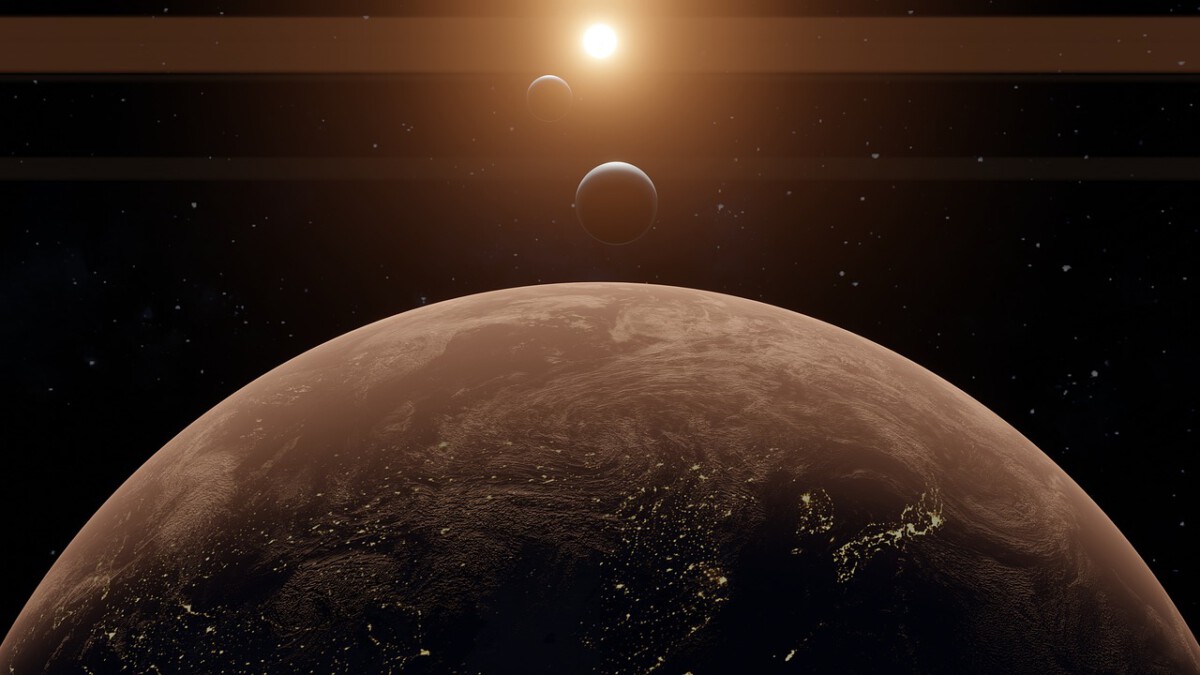
JWST Detections Upend Conventional Wisdom (Image Credits: Pixabay)
Astronomers challenge long-held assumptions about where extraterrestrial life might exist, proposing that liquid water and habitable conditions could persist far outside the classic stellar comfort zone.
JWST Detections Upend Conventional Wisdom
Recent observations from the James Webb Space Telescope revealed water vapor in the atmospheres of super-Earth exoplanets orbiting perilously close to their stars – positions once deemed uninhabitable.[1][2]
These findings prompted researchers to revisit climate models. A study published earlier this month in the Astrophysical Journal demonstrated that such worlds can retain atmospheres and volatiles despite intense stellar radiation. Traditional habitable zones focused solely on surface liquid water availability. Yet, the paper highlighted that other elements like chemical energy and stability also matter profoundly. This shift broadens potential targets dramatically.
Tidally Locked Planets Harbor Hidden Potential
Many exoplanets around cool M-dwarf and K-dwarf stars remain tidally locked, with one side perpetually facing their sun. Scientists once worried about extreme temperature swings leading to atmospheric collapse on the dark hemisphere. Advanced three-dimensional models now show otherwise.
Thick atmospheres or global oceans can redistribute heat effectively from the scorching dayside to the cooler nightside. Liquid water thus becomes feasible even nearer the star than previously thought. The research team noted initial concerns about gradients but affirmed stabilization under sufficient pressure. Such configurations explain JWST’s surprising detections of hydrated atmospheres on inner-orbit worlds. These planets represent a vast, overlooked population in exoplanet catalogs.
Subglacial Oceans on Frigid Worlds
Planets orbiting farther from their stars offer another frontier. Thick ice shells can insulate subsurface oceans kept liquid by internal heat from radioactive decay or tidal forces. Earth analogs abound, including microbial ecosystems in Antarctica’s subglacial lakes.
These environments prove life thrives without surface exposure to sunlight. The study extends habitable boundaries outward, encompassing icy bodies long dismissed as barren. Researchers emphasized that surface water fixation overlooks such resilient niches. Observations of similar setups on moons like Europa reinforce this view. Expanding definitions thus includes diverse planetary types.
Key Factors Shaping Habitability
Beyond distance from the host star, several intertwined conditions determine a world’s viability for life. The paper outlined critical elements beyond mere water presence.
- Atmospheric pressure sufficient for heat transport.
- Ocean coverage enabling global temperature balance.
- Internal energy sources sustaining subsurface liquids.
- Elemental abundance supporting biochemistry.
- Long-term climatic steadiness against stellar variability.
These criteria form a more holistic framework. Tidally locked systems around red dwarfs, which dominate our galaxy, benefit most from this reevaluation. Rapid rotators like Earth follow narrower zones, but the overall search space grows exponentially.
- Tidally locked exoplanets can host liquid water on night sides closer to stars.
- JWST data validates water retention in unexpectedly hot orbits.
- Cold worlds support subglacial habitats akin to Earth’s polar lakes.
This paradigm shift promises to invigorate exoplanet surveys, prioritizing a wider array of candidates for biosignature hunts. As telescopes like JWST continue probing distant atmospheres, the quest for cosmic neighbors gains fresh momentum – what hidden worlds await discovery?
What do you think about expanding the habitable zone? Tell us in the comments.