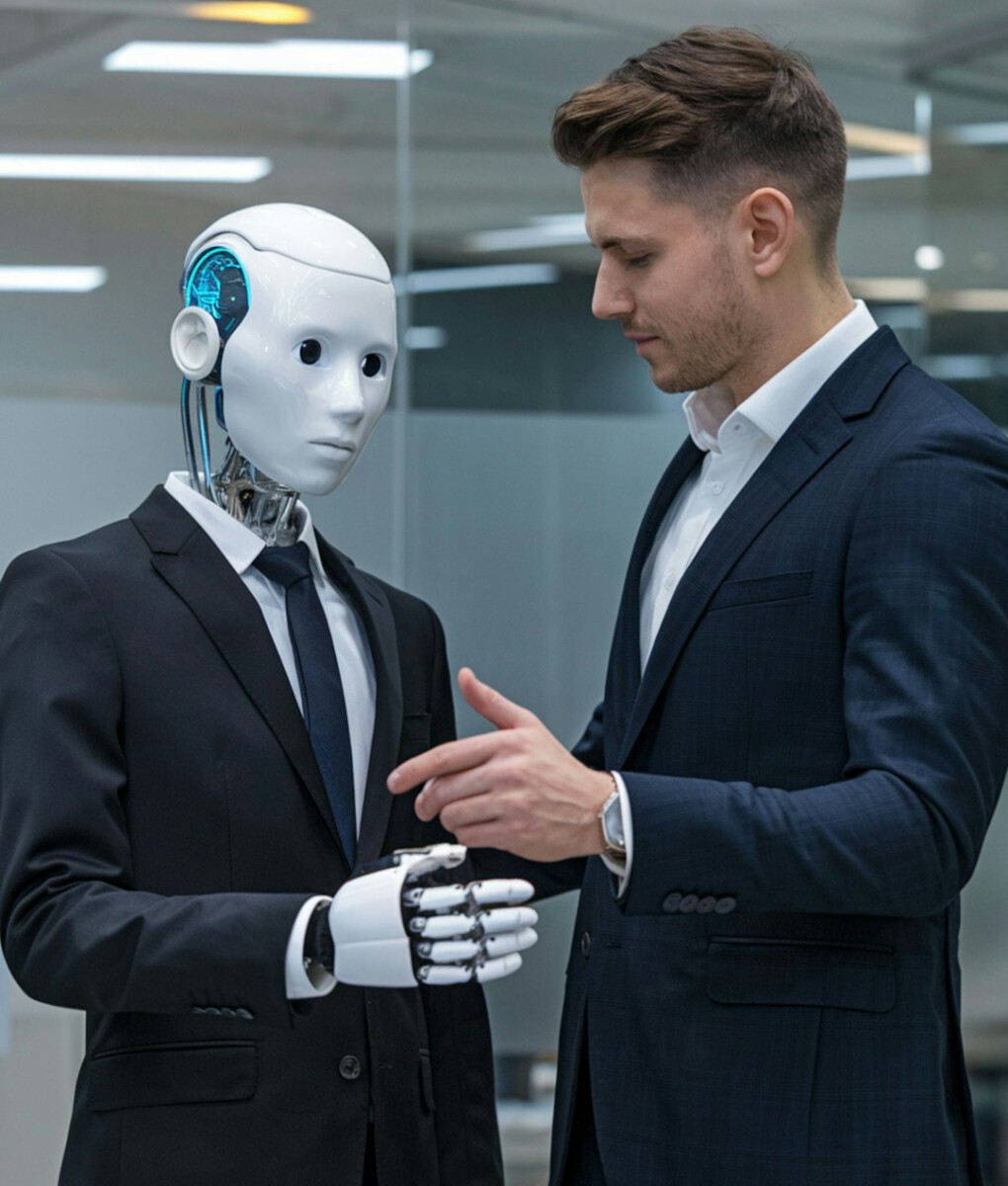
Sessions Reveal a Disturbing Pattern (Image Credits: Unsplash)
Executives at major corporations have begun delivering presentations laced with unnatural phrasing, a telltale sign of heavy AI reliance. Coaches working with leaders from tech giants observed this trend intensifying over the past year, as artificial intelligence tools permeated professional communication. What started as a convenience for drafting speeches now risks eroding the authenticity that fosters real connections in business settings.
Sessions Reveal a Disturbing Pattern
During a rehearsal for a major conference, a keynote speaker admitted that AI generated most of her script. Phrases such as “Here’s the thing,” “The truth is,” and exclamations like “Unlock!” peppered her delivery, stripping it of natural flow. The coach noted immediately that she resembled a machine output rather than a poised professional, a flaw certain to alienate listeners.
Similar incidents surfaced elsewhere. A speechwriter reported clients issuing curt directives – “Delete that,” “Move this,” “Replace the phrase” – mirroring prompts to language models. These leaders, early AI adopters, had internalized a command-style interaction that clashed with human collaboration. Public speaking experts who train senior figures at firms like Amazon AWS and Google identified this as “BotTalk,” where AI habits infiltrate person-to-person exchanges.
Research Confirms the Linguistic Shift
Studies documented a surge in AI-influenced vocabulary post-ChatGPT’s launch. Researchers at the Max Planck Institute for Human Development examined 360,000 YouTube videos and 771,000 podcast episodes, finding terms like “meticulous,” “delve,” “realm,” and “adept” appeared up to 51 percent more often in the 18 months afterward compared to prior years. A Florida State University team analyzed 22 million words from unscripted podcasts, coining the “seep-in effect” for this permeation into casual speech.
Sociolinguistic analysis extended beyond lexicon to style. Investigators noted that repeated AI interactions prompted short-term adaptations that solidified into lasting patterns, yielding more formal, organized, and “flatter” expression. Speech lost animation, adopting a processed tone. This evolution echoed past tech impacts, like texting introducing “lol” into spoken language, but AI’s scale and immediacy amplified the change.
Impatience and Dehumanization Follow
AI’s instant responses conditioned users to view human pauses as inefficiencies. Colleagues needing time to reflect or clients preferring deliberation began seeming sluggish, straining workplace dynamics. Leaders reported frustration with team members’ natural rhythms, a side effect of constant machine-speed exchanges.
Broader effects emerged in perception. A Journal of Consumer Psychology study described “assimilation-induced dehumanization,” where frequent emotionally adept AI use made real people appear less human. Treatment shifted subtly – more transactional, less empathetic – undermining trust. In leadership contexts, this fostered self-censorship among teams, stifling candor and innovation.
Strategies to Restore Authentic Interaction
Awareness forms the first defense. Coaches urged professionals to monitor habits, distinguishing prompts from dialogue. Genuine listening requires absorbing responses fully before replying, unlike AI’s input-output loop.
Practical adjustments proved effective. Leaders could replace commands with invitations, starting one-on-ones with personal queries like “What’s one highlight from your week?” to rebuild rapport. Incorporating physical presence – pauses, breaths, even pre-meeting centering exercises – countered AI’s bodiless efficiency. These steps preserved competence while reinjecting humanity.
Key Takeaways
- Monitor for BotTalk signs: overly formal phrases, abrupt commands, and impatience with pauses.
- Prioritize listening and questions to open conversations rather than close them.
- Reconnect with your body through deliberate pauses and preparation rituals.
As AI grows more human-like, the risk intensifies that humans will sound ever more robotic. Business success hinges on connection, not just content – reclaim your voice before audiences sense the disconnect. What changes have you noticed in your own conversations? Share in the comments.