Iran’s Precision Strikes Hit Vital Facilities (Image Credits: Unsplash)
Energy markets worldwide convulsed Thursday after Iran targeted critical oil and gas infrastructure in Kuwait and Qatar. The strikes on two refineries in Kuwait and Qatar’s Ras Laffan LNG terminal exacerbated concerns over prolonged disruptions from the Strait of Hormuz closure. Brent crude benchmarks climbed sharply, signaling deeper risks to global supplies and economic stability.
Iran’s Precision Strikes Hit Vital Facilities
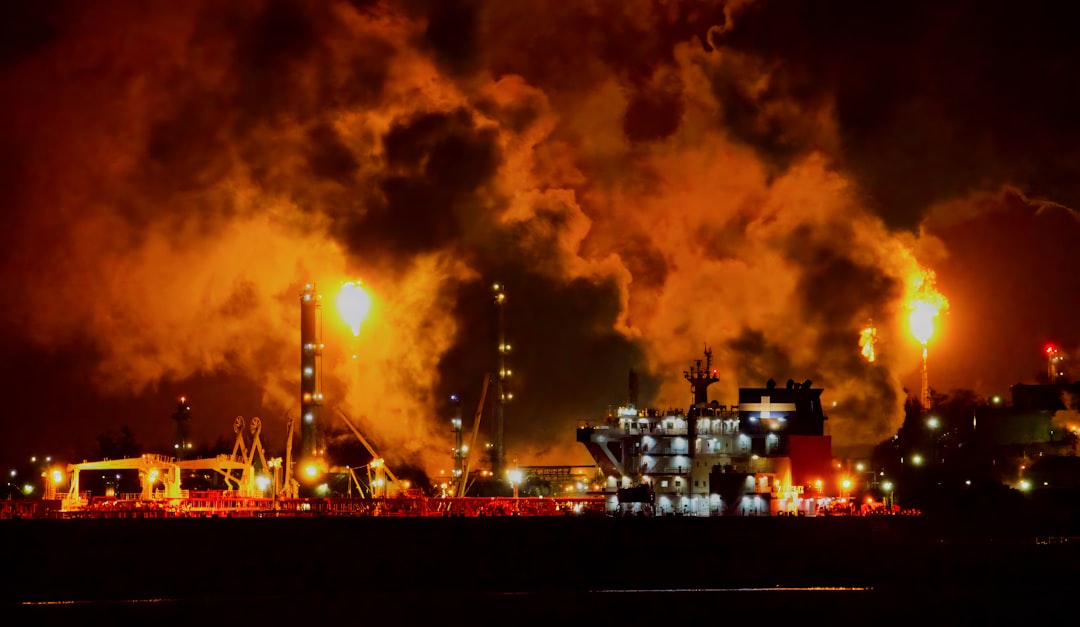
The Iranian drone assault struck with precision, shutting down the Ras Laffan terminal in Qatar, a hub responsible for about 20% of global liquefied natural gas shipments. Qatar’s facility halted operations immediately, stranding exports amid the tanker blockade in the Strait of Hormuz. Kuwait’s two oil refineries also sustained damage, compounding fears of extended production halts across the Gulf.
These attacks intensified an already tense energy standoff. The Strait’s closure had already severed key shipping routes, leaving cargoes with no outlet. Analysts warned that repairs could drag on, prolonging the supply crunch that began with the conflict’s escalation.
Oil and Gas Prices Reach Alarming Heights
Brent crude, the global pricing standard, jumped nearly 6% to $113.77 per barrel Thursday, a stark rise from under $73 before the war ignited. U.S. West Texas Intermediate crude followed with a more modest gain of less than 1%, settling at $96.26 per barrel. Natural gas benchmarks told an even starker story, with Europe’s TTF contract surging 17% and doubling over the past month.
Such spikes reflected immediate supply fears. The Ras Laffan shutdown alone threatened a fifth of world LNG flows, while refinery outages tightened oil availability. Prolonged high prices now loomed as a catalyst for widespread inflation, hitting consumers from groceries to manufacturing costs.
Central Banks Hold Steady Amid Uncertainty
The U.S. Federal Reserve maintained its benchmark interest rate Wednesday, forecasting only one additional quarter-point reduction this year. Officials cited persistent inflation and the Iran conflict’s unpredictable fallout on energy and growth. Across the Pacific, Japan’s Bank of Japan kept its rate at 0.75%, highlighting Middle East tensions in its statement.
“In the wake of increased tension in the Middle East, global financial and capital markets have been volatile and crude oil prices have risen significantly; future developments warrant attention,” the BOJ noted. Higher energy costs burdened import-dependent economies like Japan, South Korea, and Taiwan, where industries rely heavily on oil derivatives.
Stock Markets Tumble Worldwide
Wall Street futures edged lower before the open, with S&P 500 and Dow contracts down 0.1% and Nasdaq off 0.3%. Precious metals offered no refuge, as gold dropped 4% to $4,697 per ounce and silver plunged 8.7% to $70.80. Mining shares bore the brunt: Hecla and Newmont fell 7.8%, Freeport-McMoRan 4.6%.
European and Asian bourses suffered steeper losses. Germany’s DAX shed 2.4%, France’s CAC 40 lost 1.7%, and Britain’s FTSE 100 dropped 2.1%. In Asia, Tokyo’s Nikkei 225 tumbled 3.4% to 53,372.53, Seoul’s Kospi fell 2.7% to 5,763.22, and Hong Kong’s Hang Seng slipped 2% to 25,500.58.
- Shanghai Composite: down 1.4% to 4,006.55
- Australia’s S&P/ASX 200: down 1.7% to 8,497.80
- Taiwan Taiex: down 1.9%
- India Sensex: down 2.7%
Key Takeaways and Path Forward
The convergence of supply shocks and geopolitical strife has reshaped energy trading overnight. While U.S. markets showed relative resilience, import-reliant regions faced acute pressure. “The combination of higher oil, rising U.S. yields, and a stronger dollar is acting as a macro wrecking ball across Asian assets and currencies,” observed Stephen Innes of SPI Asset Management.
- Brent crude nears $114 per barrel after 6% surge; U.S. crude at $96.26.
- Qatar’s Ras Laffan LNG terminal offline, impacting 20% of global supply.
- Central banks pause rate cuts amid inflation risks from energy disruptions.
Investors now brace for extended volatility as damage assessments unfold. The true cost of these strikes may unfold in higher bills and slowed growth worldwide. What do you think the long-term impact will be? Tell us in the comments.