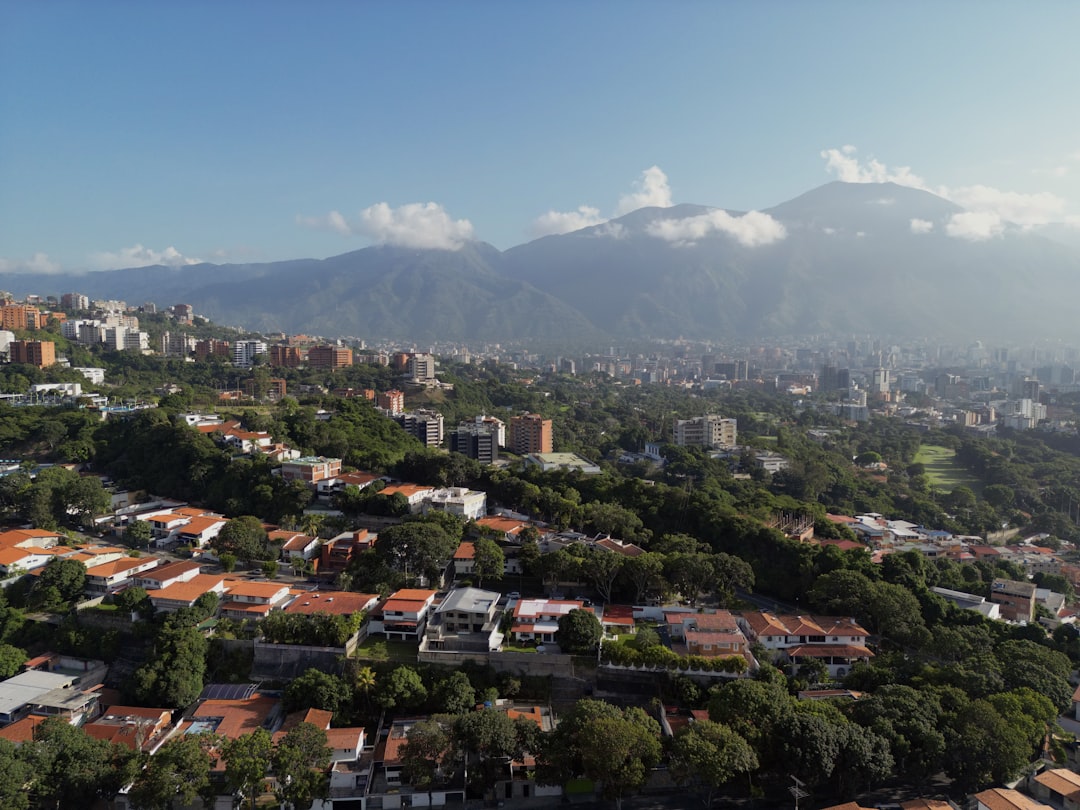


A Sudden Assault on the Capital (Image Credits: Unsplash)
Caracas, Venezuela – Early morning blasts reverberated through the capital, marking a dramatic escalation in U.S.-Venezuela tensions.
A Sudden Assault on the Capital
Residents awoke to a series of powerful explosions around 2 a.m. local time, with at least seven blasts reported across the city. Low-flying aircraft and helicopters filled the skies, adding to the chaos as power outages plunged entire neighborhoods into darkness. Witnesses described plumes of black smoke rising from multiple sites, including western districts and areas near the airport. The sounds of jets circling overhead intensified the fear among those huddled in their homes.
Venezuelan authorities quickly condemned the events as a foreign aggression, pointing fingers at the United States. No emergency sirens pierced the night, leaving many to rely on social media for updates. The strikes targeted both civilian and military installations, according to initial reports from the government. This operation came after months of mounting pressure from Washington against President Nicolás Maduro’s regime.
Trump’s Bold Declaration
U.S. President Donald Trump confirmed the strikes in a statement, revealing that Maduro had been captured during the raid and flown out of the country. He described the mission as a “brilliant operation” involving meticulous planning and elite forces. Trump highlighted the role of U.S. troops in executing what he called a necessary response to ongoing regional instability. The announcement followed reports of heightened U.S. anti-narcotics efforts in the area.
In a phone interview with The New York Times, Trump praised the operation’s success without detailing congressional involvement. He planned a full news conference later that day at Mar-a-Lago. Venezuelan Vice President Delcy Rodríguez demanded proof of Maduro’s status, labeling the actions a grave violation of sovereignty. The U.S. strikes extended beyond Caracas to states like Miranda, Aragua, and La Guaira.
Immediate Aftermath and Regional Ripples
Power failures affected key parts of the capital, complicating rescue efforts and communication. Journalists on the ground, including those from CNN, captured audio of the explosions and aircraft noise. Social media videos showed widespread panic, with families seeking shelter amid the uncertainty. No immediate casualty figures emerged, but the government accused the U.S. of endangering civilians.
The events unfolded against a backdrop of strained relations, including U.S. sanctions and support for Venezuelan opposition figures. Neighboring countries expressed concern over potential spillover effects. International observers called for restraint to avoid broader conflict in South America. The strikes represented a rare direct military intervention by the U.S. in the region.
Key Implications for Venezuela’s Future
With Maduro’s reported removal, questions swirled about the power vacuum in Caracas. Opposition leaders remained cautious, awaiting verification of the claims. The operation could reshape alliances in Latin America, drawing reactions from global powers. Economic fallout loomed large, given Venezuela’s already fragile state.
Analysts noted the strikes’ precision aimed at leadership targets, minimizing broader damage. Yet, the lack of sirens and delayed official responses fueled speculation. Regional bodies like the Organization of American States prepared to convene on the crisis.
- Multiple explosions targeted strategic sites in Caracas and surrounding areas.
- U.S. forces captured Maduro, according to Trump’s announcement.
- Power outages and aircraft activity disrupted the capital overnight.
- Venezuelan officials decried the strikes as an act of aggression.
- International calls for de-escalation grew amid fears of wider instability.
Key Takeaways
- The U.S. operation marked a significant shift in confronting Maduro’s rule.
- Caracas residents faced immediate disruptions from blasts and blackouts.
- Global attention now focuses on verifying Maduro’s capture and next steps.
As the dust settles in Caracas, the capture of a long-standing leader signals a potential turning point for Venezuela, though the path forward remains fraught with uncertainty. What implications do these events hold for regional stability? Share your thoughts in the comments below.