Bright Stars Defy the City Haze (Image Credits: Cdn.mos.cms.futurecdn.net)
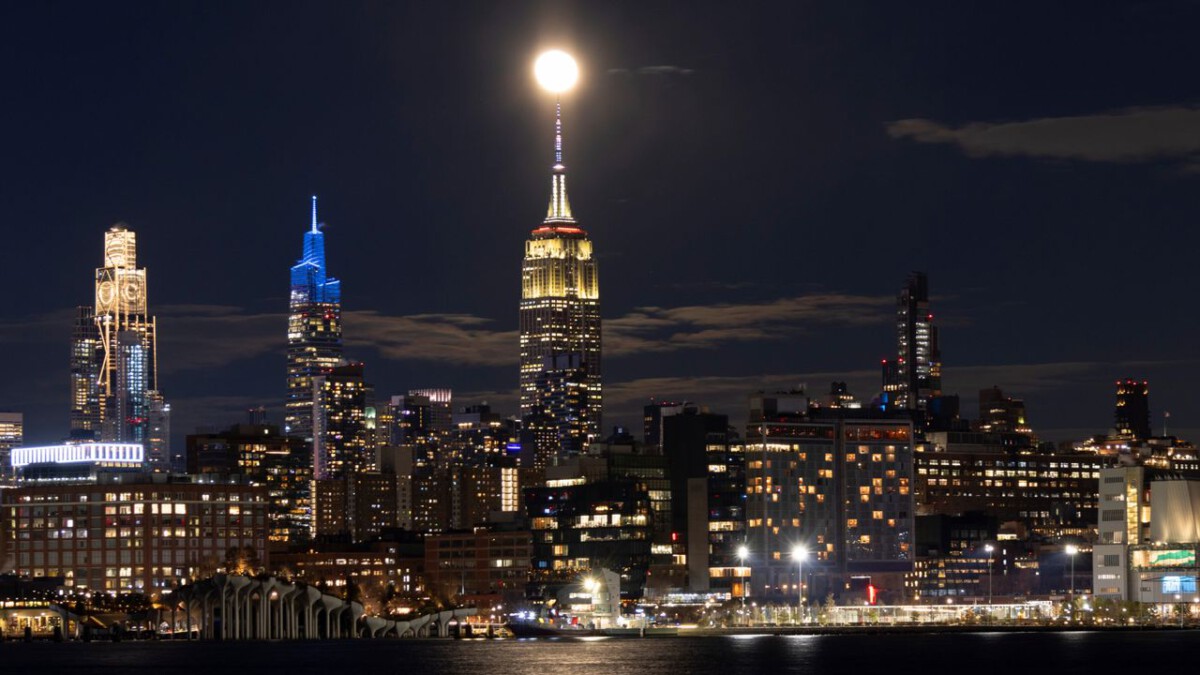
Urban dwellers often gaze upward only to confront a hazy veil cast by artificial lights, yet persistent wonders persist in the night sky above bustling metropolises.
Bright Stars Defy the City Haze
Even in the most light-polluted environments, the sky’s boldest luminaries refuse to fade. Orion’s distinctive belt, flanked by the reddish Betelgeuse and bluish Rigel, commands attention during winter evenings.[1][2]
These stars shine with apparent magnitudes bright enough to pierce skyglow, rated on the Bortle scale as classes 8 or 9 in inner cities, where fainter objects vanish.[1]
Look for the Summer Triangle in warmer months, formed by Vega, Deneb, and Altair, or the ever-present Big Dipper wheeling around Polaris, the North Star. Circumpolar constellations like these offer reliable anchors for city observers.
- Orion’s Belt: Three aligned stars easy to spot overhead.
- Polaris: Guides north, visible year-round in the northern hemisphere.
- Summer Triangle: High summer asterism linking three bright points.
Such patterns emerge first on clear nights, rewarding those who scan away from bright horizons.
Planets That Rival Streetlights
Jupiter emerges as a steady beacon, often the brightest point after the moon, showcasing its Galilean moons through basic binoculars. Saturn follows with its rings, while Venus dazzles at dawn or dusk.[1][2]
Mars occasionally tinges red during opposition, and Mercury hugs the sun’s glare, challenging sharp-eyed viewers. These wanderers outshine stars with their unwavering light, unaffected by pollution’s washout.
Visibility shifts with orbits; January 2026 highlights Jupiter rising opposite the sun, lingering through the night.[3]
The Moon’s Enduring Presence
No urban sky denies the moon, Earth’s companion dominating with phases from slender crescent to full orb. Dark maria, ancient lava plains, contrast against brighter highlands along the terminator line.[1]
Rise and set times vary daily, best tracked via calendars. Binoculars reveal craters and mountains, turning routine views into detailed explorations.
Full moons illuminate faint details otherwise lost, while new moons darken skies for star hunting.
Bonus Sights and Urban Challenges
The International Space Station streaks overhead as a rapid satellite, visible during twilight passes when sunlight glances off its panels. Track apps predict these brief shows, lasting minutes.[1]
In slightly darker suburbs, the Pleiades cluster sparkles more vividly, and the Orion Nebula hints as a sword-tip fuzz. Yet the Milky Way eludes city eyes, its billions drowned in glow, as do most galaxies and nebulae.[2]
| Bortle Class | Description | Naked-Eye Limit |
|---|---|---|
| 8-9 (City) | Skyglow dominates | Mag 4.5 or brighter |
| 7 (Suburban) | Fainter stars emerge | Mag 5.0+ |
- Prioritize planets and top stars for reliable city views.
- Use apps to navigate haze; binoculars boost details.
- Seek rooftops or parks to escape worst glow.
City stargazing reveals a selective cosmos, where the brightest endure as reminders of vastness beyond concrete. Step outside tonight – what catches your eye first? Share in the comments.