

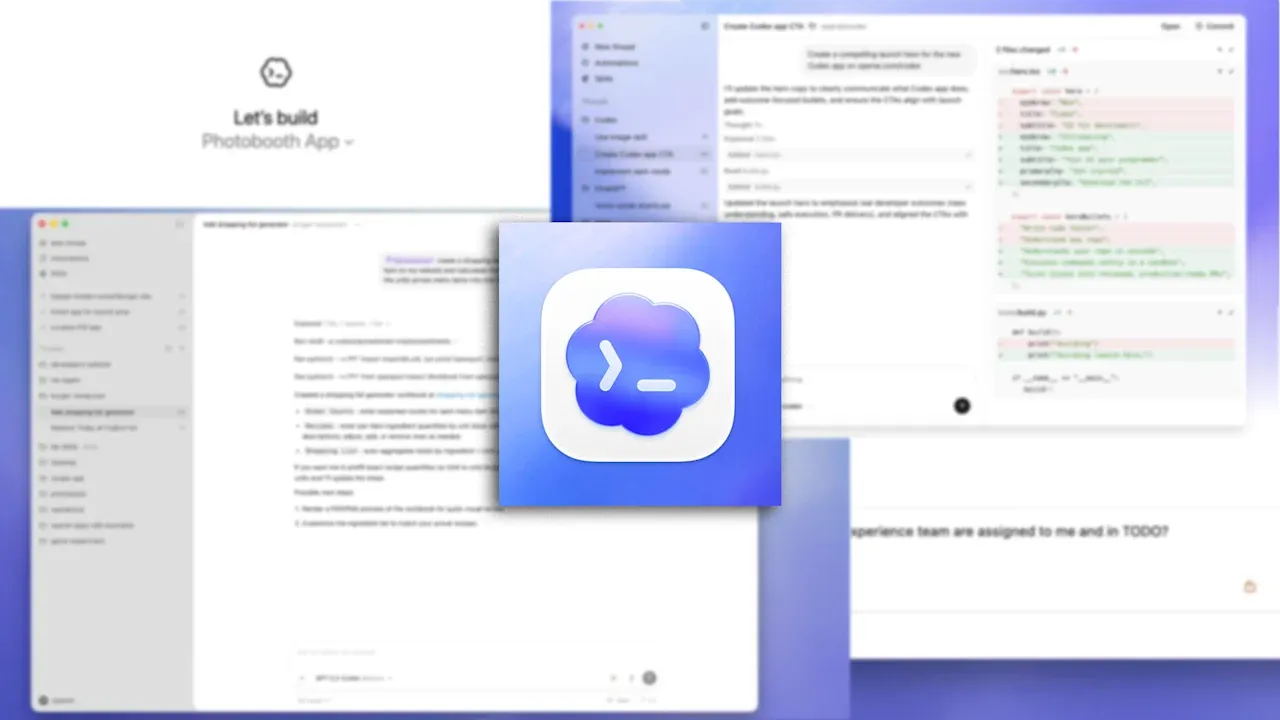
Tripled Users Fuel AI Coding Revolution (Image Credits: Images.fastcompany.com)
OpenAI’s Codex AI coding platform experienced remarkable expansion in early 2026, attracting more than a million weekly users across various access points.
Tripled Users Fuel AI Coding Revolution
Weekly active users for Codex tripled since January, while overall usage measured in tokens rose fivefold. The company attributed this surge to recent model releases, including GPT-5.2 in December 2025 and GPT-5.3-Codex in early February. OpenAI also launched a desktop app for Mac, described as a command center for managing multiple agents, which garnered over a million downloads shortly after its February 2 debut.
Thibault Sottiaux, who leads the Codex team, highlighted the GPT-5.2 model’s improvements in handling project data and autonomous performance. “The model was more reliable – working by itself autonomously and reaching really good results,” he stated. More than half a million users now access Codex via ChatGPT’s free and basic tiers, suggesting appeal to non-professional coders as well. Developers praised the GPT-5.3-Codex update on platforms like X and Reddit for its ability to produce functional code swiftly on complex tasks.
Agentic Shift Transforms Developer Workflows
Codex evolved from a basic code generator into an agentic platform where multiple AI agents collaborate on software projects. These agents analyze codebases, write and revise code, run tests, conduct research, and generate documentation – all while conversing in plain language. Users can assign subtasks simultaneously, allowing agents to hunt bugs independently as engineers multitask.
Elite coder Peter Steinberger coined the term “agentic engineering” for this paradigm. The platform debuted in May 2025, building on OpenAI’s earlier 2021 Codex model that powered GitHub Copilot. Recent enhancements enable agents to explain their reasoning post-task, fostering deeper human-AI collaboration. This shift positions Codex as a true engineering partner rather than a mere tool.
Codex Faces Off Against Claude Code
OpenAI’s Codex competes directly with Anthropic’s Claude Code and Google’s Gemini Code Assist, each leveraging proprietary frontier models. Both Codex and Claude Code handle large features or full apps from natural language prompts and support multi-agent subtasks. However, differences emerge in interaction styles.
| Feature | Codex | Claude Code |
|---|---|---|
| Planning Approach | Dives directly into code context | Dedicated planning phase first |
| Personality | Pragmatic and reliable | Conversational and iterative |
| User Focus | Professional engineers | Broad, empathetic interactions |
Codex product manager Alex Embiricos emphasized targeting professional software engineers for independent task execution. In response to user feedback, Codex introduced an “empathetic” mode alongside its default pragmatic personality with the GPT-5.3 update. Steinberger once likened Codex to a “weirdo in the corner that… gets shit done,” contrasting it with Claude’s more sociable vibe. Sottiaux affirmed the focus on reliability and flaw detection.
Why AI Excels at Code – and Its Limits
AI models thrive on coding because code consists of structured language data, abundant in training sets with verifiable outcomes. Programmers building these systems prioritize coding excellence, creating clear right-or-wrong examples for evaluation and improvement. Sottiaux noted the wealth of problem-solution pairs available for refining model performance.
Despite progress, challenges persist. Users reported GPT-5.3-Codex occasionally losing focus on long tasks, entering loops, or generating non-functional code – issues underscoring the need for human review before production use. Research scientist Amelia Glaese, who oversees underlying models, stressed recent fixes that boosted utility dramatically. Developers must adapt to guiding agents through trade-offs rather than micromanaging every line.
Expanding Horizons Beyond Pure Coding
Codex now incorporates “skills” bundles for workflows in research, documentation, and team tasks, mirroring Anthropic’s Claude Cowork plugins for sales, finance, and legal work. OpenAI featured Codex prominently in its 2026 Super Bowl ad, signaling its strategic importance. Glaese observed that engineers spend much time on non-coding activities like market research and meetings.
These tools promise to accelerate AI development itself by automating model building and evaluation. Sottiaux viewed agents as idea generators, especially for junior engineers exploring novel approaches unhindered by experience biases.
Key Takeaways
- Codex weekly users exceeded 1 million amid model upgrades and app launch.
- Agentic features enable multi-tasking AI collaboration on projects.
- Pragmatic personality differentiates it from conversational rivals like Claude Code.
As AI agents like Codex mature, they stand to amplify engineering creativity and efficiency across industries. What impact do you see these tools having on software development? Share your thoughts in the comments.