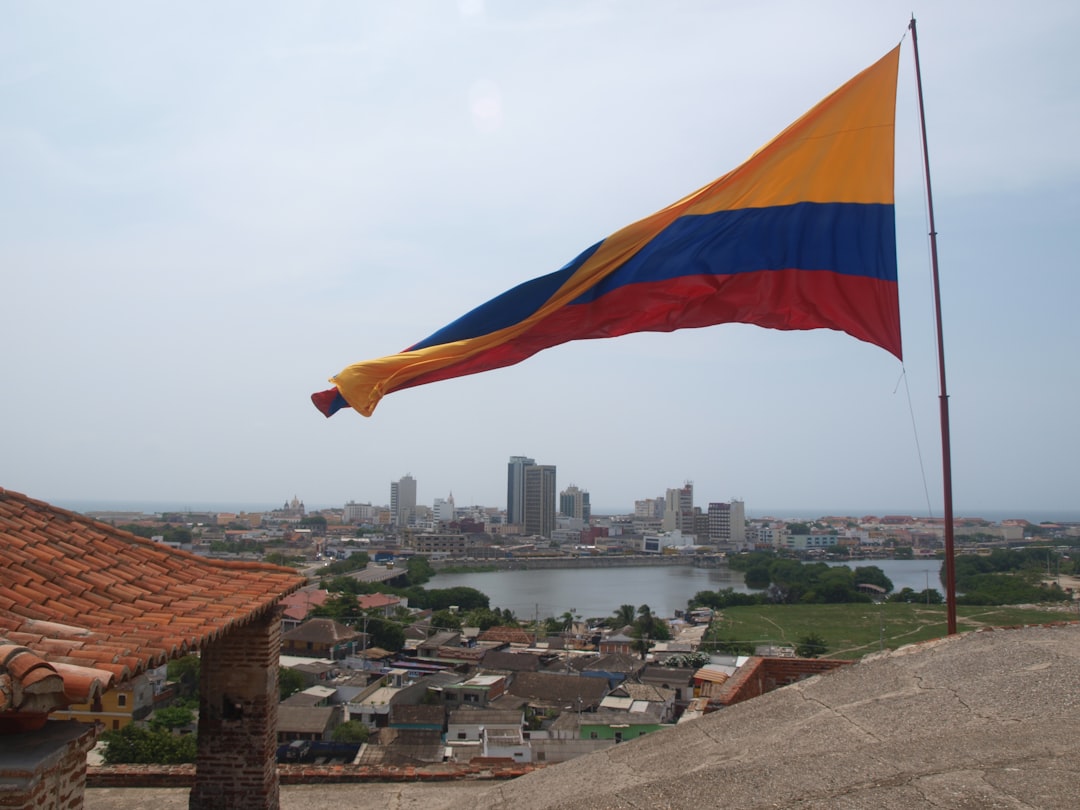


A Year of Escalating Conflicts (Image Credits: Unsplash)
Colombia – In 2025, the nation grappled with a surge in violence as criminal organizations expanded their grip on key territories, undermining President Gustavo Petro’s ambitious Total Peace initiative.
A Year of Escalating Conflicts
Armed groups across Colombia intensified their operations throughout 2025, leading to unprecedented clashes that reshaped the country’s security landscape. The Total Peace policy, launched to negotiate ceasefires and demobilizations with various factions, encountered significant setbacks as talks faltered and hostilities resumed. Criminal organizations, including dissident FARC units and the Clan del Golfo, capitalized on these gaps to bolster their ranks and influence. Reports indicated a 15% growth in membership for major groups, pushing their total numbers beyond 25,000 fighters. This expansion occurred primarily in rural areas vital to illicit trades like drug trafficking and illegal mining.
The violence peaked in regions such as Catatumbo and Arauca, where rival factions vied for control over lucrative routes. Homicides reached approximately 15,000 by year’s end, the highest in a decade, while massacres numbered 277 during the Petro administration. Coca cultivation also hit a record 250,000 hectares, fueling the economic incentives behind the unrest. Security forces struggled to contain the spread, with armed presence documented in 790 municipalities – a stark increase from prior years.
The Fragmentation of Criminal Networks
Over the past decade, Colombia’s criminal underworld fragmented into smaller, more agile groups, a trend that accelerated in 2025 and complicated peace efforts. What began as unified fronts splintered into competing bands, each seeking dominance in fragmented territories. The ELN extended its reach to 232 municipalities, while FARC dissidents grew by 141% across 299 locations. The Clan del Golfo, with around 14,000 members operating in 21 departments, emerged as a dominant force in coordinating attacks and extortion rackets.
This splintering led to intra-group rivalries that spilled over into civilian areas, exacerbating displacement and fear. Kidnappings rose sharply, with 53% more incidents in the first half of the year alone. Terrorist attacks totaled 652 by September, targeting infrastructure and communities alike. Analysts pointed to the policy’s broad approach – encompassing both insurgent armies and high-impact criminal structures – as a factor in allowing these groups to regroup rather than surrender.
Civilian Toll and Humanitarian Crisis
Civilians bore the brunt of the 2025 violence, with thousands displaced and communities caught in the crossfire of territorial disputes. In many regions, 71% of municipalities faced threats from armed actors, turning everyday life into a struggle for survival. The Inter-American Commission on Human Rights highlighted the profound human rights impacts, including coerced recruitment and restrictions on movement. Women and children suffered disproportionately, with reports of increased gender-based violence amid the chaos.
Government responses included localized peace dialogues, but these often failed to address the root causes of criminal entrenchment. International observers, such as the International Crisis Group, urged a shift toward protecting vulnerable populations through enhanced security reforms. Still, the persistence of illicit economies ensured that armed groups retained their appeal for local recruits desperate for income.
Implications for the 2026 Elections
As Colombia approaches its May 2026 presidential elections, the violence of 2025 positioned criminal groups to influence political outcomes more directly. Factions have already attempted to sway local leaders through intimidation, aiming to embed their interests in the electoral process. The Total Peace initiative’s partial successes, like some bilateral ceasefires, offered glimmers of hope, yet the overall failure to curb expansion raised concerns about escalating unrest during the campaign.
Critics attributed the year’s chaos partly to the policy’s implementation, arguing it emboldened groups by reducing military pressure. With armed actors present in over 500 municipalities, their potential to disrupt voting or back sympathetic candidates loomed large. The incoming administration will face the challenge of rebuilding trust in peace processes while confronting these entrenched powers.
Key Takeaways
- Criminal groups expanded to over 25,000 members in 2025, dominating illegal economies.
- Violence metrics hit decade highs: 15,000 homicides, 250,000 hectares of coca.
- Policy shifts toward local protections could mitigate future risks ahead of elections.
Colombia’s 2025 experience underscored the fragility of peace in a nation long scarred by conflict, reminding leaders that sustainable security demands more than dialogue – it requires decisive action against criminal strongholds. What steps should the next government take to restore stability? Share your thoughts in the comments.