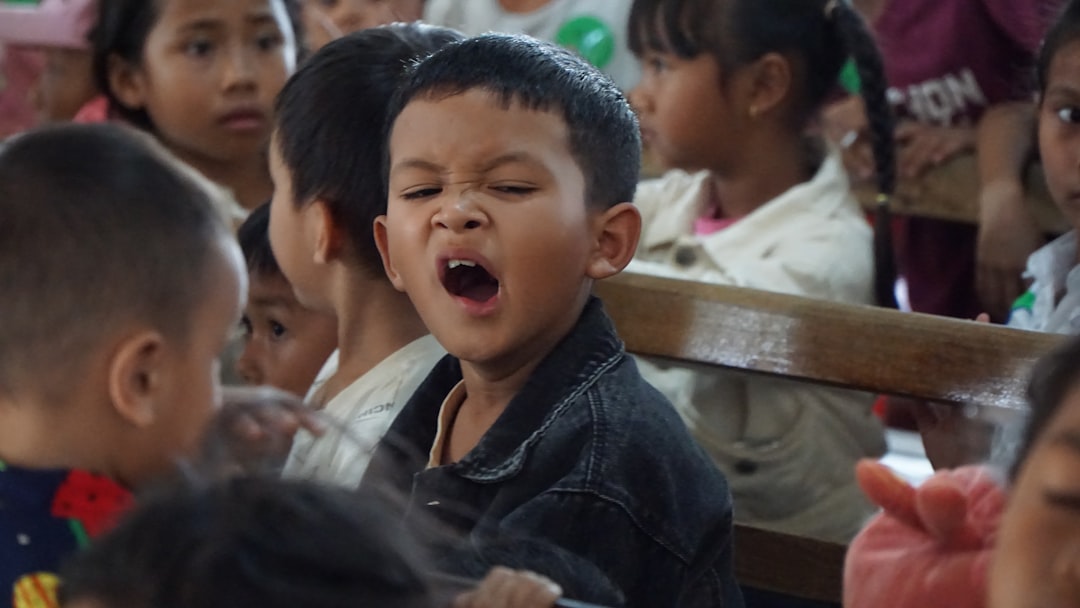
Deportation During Routine Visit Raises Due Process Alarms (Image Credits: Unsplash)
Hayward, California — A deaf kindergartener’s routine immigration check-in turned into a nightmare deportation, leaving him isolated and medically vulnerable in Colombia. Joseph Andrey Londono Rodriguez, who attended the California School for the Deaf in Fremont, lost access to his cochlear implants and American Sign Language community when federal agents detained him, his mother, and younger brother on March 3.[1][2] His attorney now warns that the boy risks infection or worse without prompt intervention. State leaders have mobilized, amplifying calls for his return amid growing outrage over the handling of the case.
Deportation During Routine Visit Raises Due Process Alarms
Lesly Rodriguez Gutierrez brought her sons to a U.S. Immigration and Customs Enforcement office in San Francisco for what officials described as a simple photo update. The 28-year-old asylum seeker, who fled Colombia in 2022 to escape domestic violence, expected a quick appointment.[1] Instead, agents took fingerprints, pressed her to sign unexplained documents, and rushed the family into vehicles bound for distant facilities.
Nikolas De Bremaeker, the family’s attorney with Centro Legal de la Raza in Oakland, detailed how pleas for Joseph’s assistive devices went unheeded. A relative waited outside with the equipment, but ICE denied access and misled the legal team on the family’s location.[2] The group flew through San Francisco International Airport to Louisiana before deportation to Colombia on March 5.[3]
Critical Medical Needs Ignored in Hasty Removal
Joseph relies on cochlear implants that demand regular cleaning and maintenance to prevent severe complications. De Bremaeker emphasized the stakes during a recent virtual news conference: “Joseph is at immense risk for his life if he does not continue the treatment that he was receiving in the United States.”[1] Without it, infections, meningitis, or death loom as possibilities.
The boy arrived in Colombia without his devices, compounding his isolation. He communicates solely in American Sign Language, learned over three years at school, while his mother had only begun mastering it herself. Colombian Sign Language differs significantly, leaving Joseph withdrawn and indoors most days.[4]
- Cochlear implant maintenance unavailable locally.
- Risk of bacterial buildup leading to meningitis.
- Language deprivation halting developmental progress.
- Lack of immersion programs like those in California.
Officials and Advocates Demand Immediate Action
California State Superintendent of Public Instruction Tony Thurmond hosted press conferences at the Fremont school, screening videos of Joseph drawing airplanes and signing his desire to return. “Joseph is telling us what he needs, and it is our job to listen,” Thurmond stated.[4] He met virtually with the boy, who lit up upon seeing his teacher and signed, “I want to go back to school.”
U.S. Rep. Eric Swalwell dispatched staff to Colombia with replacement hearing aids, questioning the deportation’s rationale. Senators Alex Padilla and Adam Schiff joined representatives Nanette Barragán, Zoe Lofgren, Kevin Mullin, and Lateefah Simon in letters to Homeland Security and the State Department.[1] De Bremaeker filed for humanitarian parole, seeking Joseph’s re-enrollment and care.
Family’s Isolation Deepens in New Environment
In a video shared by his mother, Joseph gestured urgently toward a whiteboard sketch of a plane, conveying his wish to fly home. Director Nancy Hlibok Amann interpreted: “He is trying to tell his mom that he wants to go home. He made himself very clear.”[4] De Bremaeker relayed: “Joseph is struggling… ripped away from his community at school in Fremont and in Hayward.”
Nonprofit Hands United connects the family to local deaf services and interpreters, but experts like founder Celena Ponce note persistent hurdles. Residential schools for full language immersion do not exist there as they do in California, threatening Joseph’s gains in reading, writing, and social skills.[1]
Key Takeaways
- Joseph’s cochlear implants require U.S.-level care to avert life-threatening infections.
- He knows only ASL, isolating him from Spanish-speaking relatives in Colombia.
- Bipartisan calls urge humanitarian parole for family reunification and school return.
This case underscores the human cost when immigration enforcement collides with a child’s medical and educational needs. Joseph’s story has united educators, lawmakers, and advocates in a push for compassion over haste. Will federal authorities grant parole before risks escalate? Share your thoughts in the comments.