Desert Life Ignites After Perfect Conditions (Image Credits: Ca-times.brightspotcdn.com)
Death Valley National Park – A rare convergence of rainfall and mild temperatures has sparked the park’s finest wildflower bloom since 2016, turning barren hillsides into vibrant tapestries of color.[1][2]
Desert Life Ignites After Perfect Conditions
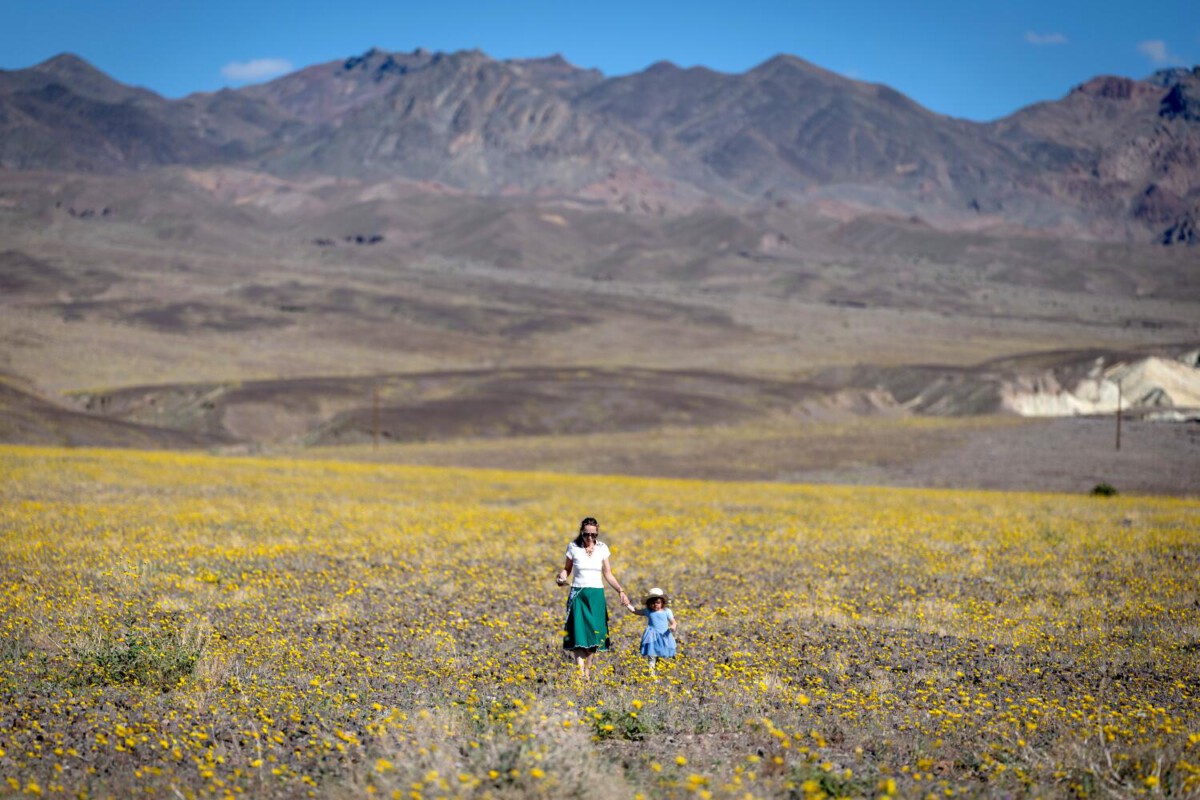
Rainfall totaling more than two inches fell between November 2025 and early January 2026, exceeding the park’s annual average and including a record-wet November with 1.76 inches.[2] This deluge, combined with warm spring conditions, awakened seeds dormant for years in the soil. Park officials described the result as the best bloom year since 2016, with low-elevation areas showing good displays on several hillsides.[1]
These annual wildflowers, known as ephemerals, evolved to survive extremes by lying inactive until moisture and mild weather align. Unlike cacti that store water, they sprint through growth, bloom, and reseeding in brief windows. Many areas now approach or pass peak, yet the spectacle persists into mid-to-late March at lower elevations.[3]
Highlight Flowers Painting the Landscape
Bright yellow desert gold dominates hillsides, creating golden blankets across the valley floor. Purple phacelia adds striking contrast, while pink desert five-spot and brown-eyed primrose sprinkle delicate accents. Other notables include sand verbena, gravel ghost, and Mojave desert star, each thriving in the soaked sands.[4]
Visitors report an intoxicating floral scent mingling with the colors. Park ranger Matthew Lamar captured the shift: “This landscape that sometimes people think of as desolate or devoid of life is coming alive right now with this really beautiful palette of colors.”[2] Higher elevations promise continued shows from April through June.
Top Spots for the Best Views
Seek out North Badwater Road between CA-190 and Badwater Basin for desert gold and brown-eyed primrose fields. South Badwater Road near Ashford Mill reveals sand verbena and five-spot amid rugged terrain. Highway 190 from Stovepipe Wells to Furnace Creek offers gravel ghost and phacelia along accessible stretches.[1]
- Beatty Cutoff Road: Phacelia and desert gold in quieter settings.
- Mud Canyon: Less crowded hikes to immersive displays.
- Fields north of Furnace Creek Visitor Center: Easy access to southern blooms.
Check the National Park Service website for real-time updates, as conditions evolve quickly.
Essential Advice Amid the Crowds
Spring draws heavy visitation from mid-February through early April, straining parking and roads. Rangers urge staying on designated paths to protect fragile plants and seeds. Picking flowers is prohibited, and some like phacelia can irritate skin – wash hands after contact and avoid handling.[2]
Off-road driving damages blooms and habitats; pull over only on firm shoulders. Drones remain banned, and feeding wildlife disrupts the ecosystem. With low-elevation peaks fading soon, plan visits promptly to catch the ephemeral magic.[3]
Key Takeaways
- Best bloom since 2016, driven by over two inches of rain and mild temperatures.[1]
- Desert gold leads the show; low sites bloom through late March, highs into June.
- Stick to trails, skip picking – preserve for future years.
This once-in-a-decade revival reminds us of nature’s resilience in extremes. Death Valley proves life persists, waiting for the right moment to flourish. What do you think about it? Tell us in the comments.