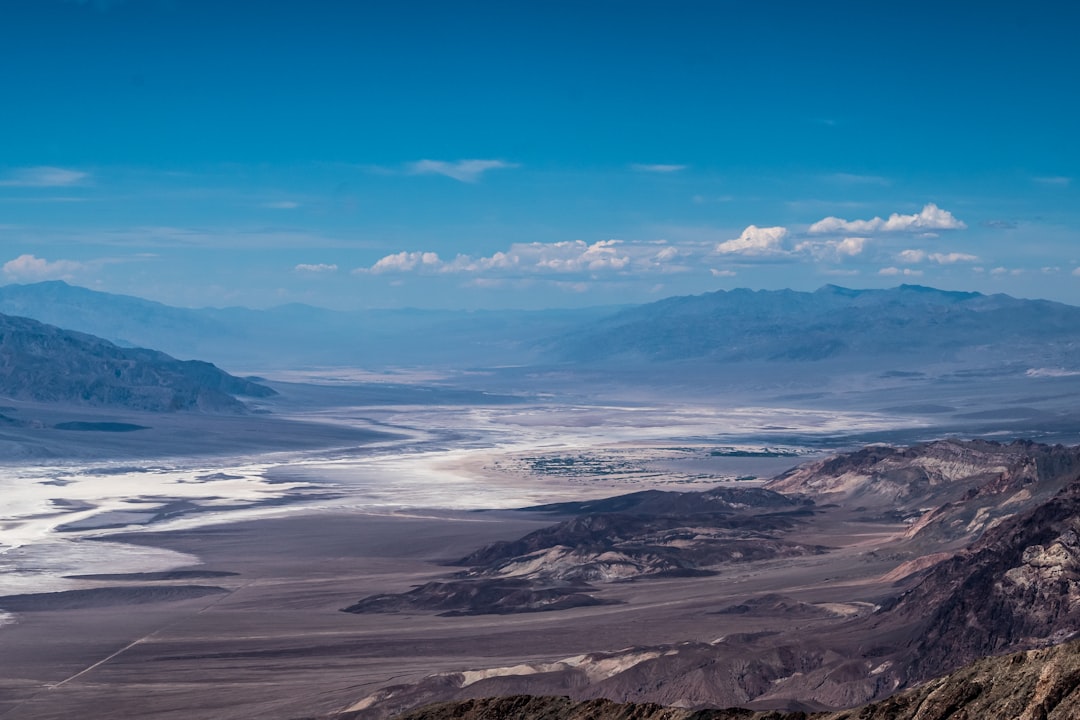


A Surprising Turn in the Driest Spot on Earth (Image Credits: Unsplash)
Death Valley – Picture the cracked earth of Badwater Basin suddenly mirroring the sky, a shimmering expanse where salt flats once baked under relentless sun.
A Surprising Turn in the Driest Spot on Earth
Who would have thought that Death Valley, infamous for its scorching heat and bone-dry conditions, could host a lake again? Yet here we are, with Lake Manly making a dramatic comeback. This prehistoric body of water, which once dominated the landscape during the Ice Age, has reemerged thanks to an extraordinary series of storms.
The transformation feels almost unreal. Normally, this national park sees just a fraction of an inch of rain each year. But recent downpours have turned the impossible into reality, drawing crowds eager to witness the change.
Experts say it’s the most significant water event in decades. The lake’s return isn’t just a spectacle; it offers a glimpse into the valley’s ancient past.
What Sparked This Ancient Revival?
From September through November, Death Valley recorded 2.41 inches of rain – that’s over twice the typical annual amount for this arid wonder. Storms rolled in one after another, fueled by unusual weather patterns that dumped water into the basin’s vast catchment area.
November alone marked the wettest on record since 1911, according to park officials. These rains, possibly influenced by distant hurricane remnants and atmospheric rivers, filled the low-lying Badwater Basin, the lowest point in North America at 282 feet below sea level.
The result? A shallow lake spanning miles, echoing the massive Lake Manly that stretched up to 100 miles long and 600 feet deep during wetter prehistoric times. It’s a reminder of how dynamic even deserts can be.
Lake Manly: A Window to Prehistory
Back in the Ice Age, Lake Manly was a lifeline for early life in the region. It supported fish, birds, and even human ancestors who left behind tools and petroglyphs. Today, its brief return stirs that history to life.
Geologists point out that the lake’s chemistry – salty and mineral-rich – creates unique patterns on the basin floor. As the water evaporates, it leaves behind intricate salt polygons, a natural artwork visible from afar.
This event also highlights climate shifts. While thrilling, it underscores how extreme weather can reshape fragile ecosystems overnight.
Impacts on Wildlife and Visitors
The sudden water has sparked a frenzy of activity among local creatures. Birds flock to the shores, and small fish might even appear if conditions hold. It’s a temporary boom for biodiversity in an otherwise harsh environment.
For park visitors, the lake means new adventures. Kayaking on what was once solid ground? Absolutely possible now. Rangers report increased foot traffic, with trails around the basin buzzing with photographers and hikers.
- Spot rare migratory birds drawn to the water.
- Walk the edges for stunning reflections of surrounding mountains.
- Learn about the area’s geology through guided tours.
- Watch salt crystals form as the lake recedes.
- Contemplate the contrast between wet and dry extremes.
Challenges Ahead for This Fleeting Oasis
Though beautiful, the lake won’t last forever. Evaporation rates in Death Valley are among the highest globally, so experts predict it could vanish within weeks or months. Park services urge caution to protect the sensitive area.
Heavy rains also brought flash floods earlier, closing roads and reshaping terrain. Visitors should check updates before heading out, as conditions change fast.
Still, this revival serves as a call to appreciate these rare moments. It shows nature’s resilience, even in the toughest spots.
Lessons from the Desert’s Dramatic Shift
In a world of changing weather, Death Valley’s story reminds us that water can rewrite the rules anywhere. From ancient floods to modern storms, the valley keeps surprising us.
What makes this event stand out is its scale – the second such lake appearance in just two years. It prompts questions about our planet’s water cycles and how we adapt to them.
| Aspect | Typical Death Valley | With Lake Manly |
|---|---|---|
| Rainfall | Less than 2 inches/year | 2.41 inches in 3 months |
| Landscape | Salt flats, cracked earth | Shallow lake, reflective waters |
| Wildlife | Adapted to aridity | Temporary influx of aquatic species |
Key Takeaways
- Record rains have revived Lake Manly, offering a rare peek at Ice Age conditions.
- The event boosts local ecology but poses short-term challenges like flooding.
- It’s a vivid example of how extreme weather can transform even the driest places.
As the waters sparkle in Death Valley, they invite us to reflect on nature’s power. What do you think this means for our changing climate? Share your thoughts in the comments below.