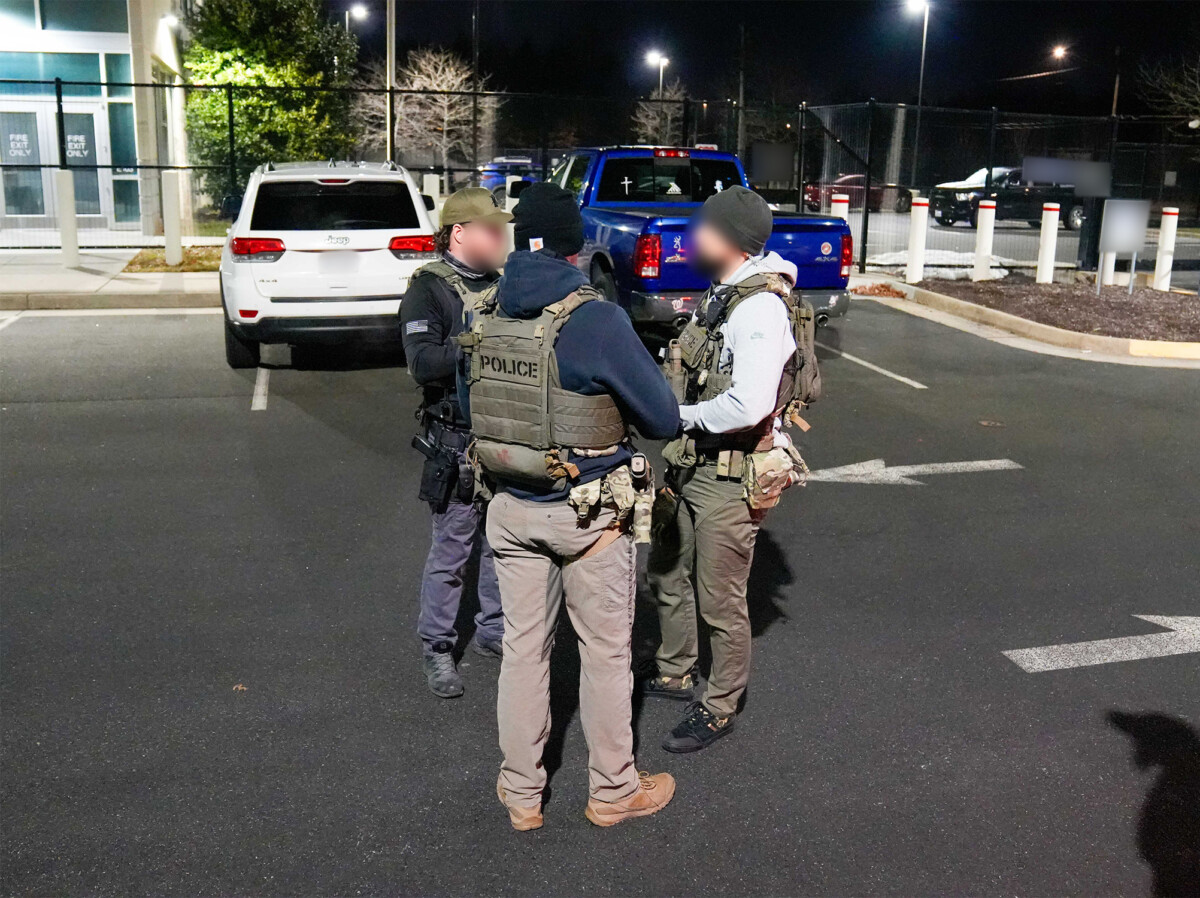
Nearly 30,000 Agents Triple ICE’s Reach Without New Hires (Image Credits: Upload.wikimedia.org)
Congressional Democrats ramped up pressure on Immigration and Customs Enforcement this week, seeking tighter controls amid public outrage over deadly clashes in cities like Minneapolis.
Nearly 30,000 Agents Triple ICE’s Reach Without New Hires
Federal data revealed a staggering expansion in ICE’s Enforcement and Removal Operations, where 28,390 law enforcement officers from across government agencies now assist deportation efforts.[1]
More than 10,000 of these came from non-immigration entities, including the IRS, DEA, and FBI. This “blob,” as observers call it, allowed ICE to vastly increase its footprint rapidly. Operations in places like New York City’s Chinatown featured agents from the IRS Criminal Investigation division patrolling alongside ICE personnel. Such deployments diverted specialists from core duties, like tax fraud probes or drug interdiction.[1]
The Cato Institute published these figures last September, highlighting how 84 percent of the IRS’s special agents and 70 percent of the DEA’s workforce shifted to ICE tasks.[1]
Democrats’ Targeted Fixes Fall Short of the Bigger Picture
Negotiations centered on practical measures like mandatory body cameras and restrictions on masks for ICE and Customs and Border Protection officers. Lawmakers also urged the DHS inspector general to investigate use-of-force incidents, including the killings of Renee Good and Alex Pretti in Minneapolis.
House leaders tied these demands to DHS funding debates, though last year’s massive appropriations package limited the freeze’s bite. Critics noted the proposals focused narrowly on ICE and CBP, potentially bypassing detailed agents from other departments. Attorney General Pam Bondi referred only to “federal agents” in announcements about arrests, including those of journalists Don Lemon and Georgia Fort.[1]
| Agency | Agents Detailed | % of Workforce |
|---|---|---|
| IRS Criminal Investigation | 1,771 | 84% |
| DEA | 3,417 | 70% |
| FBI, ATF, Others | Thousands | N/A |
Unmasking the ‘Blob’s’ Accountability Black Hole
The influx created an opaque force where agents often lacked clear identification, complicating oversight. Videos showed DEA-vested officers at private residences, while raid participants blended agency affiliations. Traditional inter-agency task forces differed from this near-total absorption of personnel.[1]
ICE pursued aggressive hiring, but detailing achieved instant scale-up for broader priorities beyond immigration. A 3,000-agent deployment to the Twin Cities raised questions about true compositions, as official tallies remained undisclosed.
Political Risks Loom Large in an Election Year
Analysts warned this structure enabled deployments for speech suppression or urban occupations, echoing Stephen Miller’s tactical style. Figures like Steve Bannon suggested using the force for midterm polling oversight, potentially intimidating voters. Core missions suffered, from child exploitation cases to narcotics enforcement.[1]
State officials and lawmakers called for mandated disclosures on agent origins, locations, and activities to restore transparency.
Key Takeaways
- Democratic reforms target ICE but exclude thousands of detailed agents from agencies like IRS and DEA.
- The “blob” triples ICE capacity, enabling unchecked expansion for political aims.
- Without full disclosure, accountability efforts risk failure amid rising federal operations.
Addressing the federal agent network demands bolder transparency measures to prevent authoritarian overreach. What steps should Congress take next? Share your views in the comments.