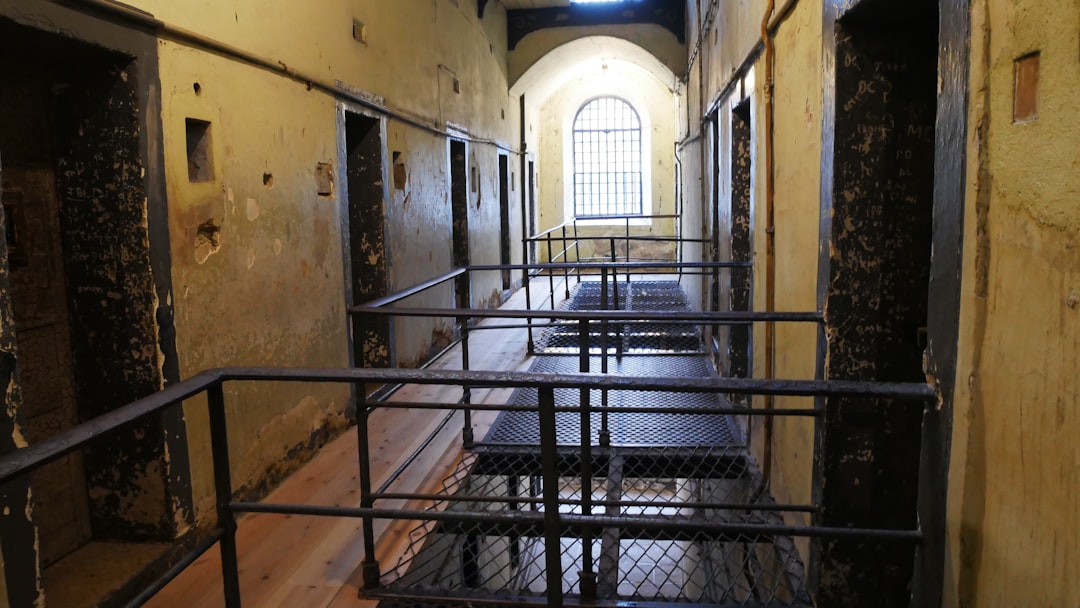


A Chilling Legacy Unraveled (Image Credits: Unsplash)
In the quiet tension of a maximum-security prison, a man faced the end of his long road, his voice carrying a weight of years under dim institutional lights.
A Chilling Legacy Unraveled
Imagine living a double life, polite by day and terrorizing by night – that was Harold Wayne Nichols. For years, he stalked the streets of Chattanooga, leaving a trail of fear among women in the late 1980s. Authorities later dubbed him the “red-headed stranger” for his eerie, calculated approaches under cover of darkness.
His crimes peaked with the brutal rape and murder of 20-year-old Karen Pulley, a promising college student at Chattanooga State Community College. Pulley vanished after leaving her job at a fast-food restaurant in 1988, her body discovered days later in a remote wooded area. Nichols confessed to the killing, along with assaults on several other women, shattering the facade of the family man he pretended to be.
This wasn’t just one act of violence; it exposed a pattern that haunted the community. Sentenced to death in 1990, Nichols spent over three decades on death row, his case a stark reminder of unchecked predation.
The Road to the Chamber
Thursday morning brought the moment long awaited by victims’ families and justice advocates alike. At Riverbend Maximum Security Institution in Nashville, Tennessee, the state carried out its third execution of 2025. Nichols, now 64, walked into the lethal injection chamber without fanfare, his red hair a faint echo of his younger, menacing days.
Preparations had been meticulous, with legal appeals exhausted years earlier. Tennessee’s use of the death penalty remains controversial, but in this case, the confession sealed his fate. Witnesses, including Pulley’s relatives, gathered to see closure after nearly four decades.
The procedure unfolded swiftly, the chemicals administered around 10 a.m. local time. By 10:39 a.m., medical personnel confirmed his passing, marking another chapter in the state’s ongoing debate over capital punishment.
Words That Lingered in the Air
In those final seconds, Nichols turned to remorse, a rare glimpse into whatever conscience remained. “To the people I’ve harmed, I’m sorry,” he stated clearly, his voice steady despite the straps holding him down. He followed with words of love for his family, a poignant contrast to the monster they once knew.
Those eight words – “To the people I’ve harmed, I’m sorry” – cut through the room’s heavy silence. They offered no excuses, just acknowledgment of the pain he inflicted. For some observers, it felt genuine; for others, too little, too late after years of denial in court.
Final statements like these often humanize the condemned, sparking reflection on redemption’s limits. Nichols’ apology echoed past executions, where pleas for forgiveness sometimes softened the edges of irreversible acts.
Victims and the Shadow of Justice
Karen Pulley’s story stands as the heartbreaking core of this saga. A bright student with dreams ahead, her life ended violently on a routine night. Friends and family described her as vibrant, the kind who lit up a room – now forever a symbol of lost potential.
Other survivors of Nichols’ attacks carried invisible scars, their testimonies painting a picture of terror in everyday places like parking lots and quiet neighborhoods. The Chattanooga area breathed easier after his 1989 arrest, but healing proved slow.
Justice arrived not with cheers, but a solemn nod to accountability. Pulley’s loved ones attended the execution, finding some measure of peace in the finality, though no words could erase the void left behind.
A Broader Look at Tennessee’s Death Row
Tennessee has executed six inmates in recent years, with Nichols joining a list that includes high-profile cases of murder and rape. The state’s method – lethal injection – has faced scrutiny over drug sourcing and humanity claims, yet it persists amid public divides.
Here’s a quick snapshot of recent executions:
- 2024: Two men put to death for aggravated murders, both confessing on record.
- Early 2025: One for a 1990s killing spree.
- Mid-2025: Another for child-related crimes.
- December 2025: Nichols, the third this year.
- Pending: Several appeals in the pipeline for 2026.
Advocates on both sides weigh in – proponents see deterrence, opponents highlight flaws in the system. Nichols’ case underscores how confessions can streamline justice, but also the human cost on all fronts.
Reflecting on Remorse and Reckoning
As the chamber doors closed, Nichols’ words hung like a final thread in a tangled story of crime and consequence. They prompt us to ponder if true change ever blooms in the darkest paths, or if apologies merely whisper against the roar of harm done.
Key Takeaways
- Nichols’ execution marks Tennessee’s third in 2025, tied to a 1988 murder that shocked Chattanooga.
- His brief apology highlighted remorse, but couldn’t undo decades of trauma for victims.
- The case reignites debates on capital punishment’s role in modern justice.
In the end, this tale reminds us that while laws can end a life, they can’t mend broken ones – leaving society to grapple with forgiveness’s fragile boundaries. What are your thoughts on final words in such moments? Share in the comments below.