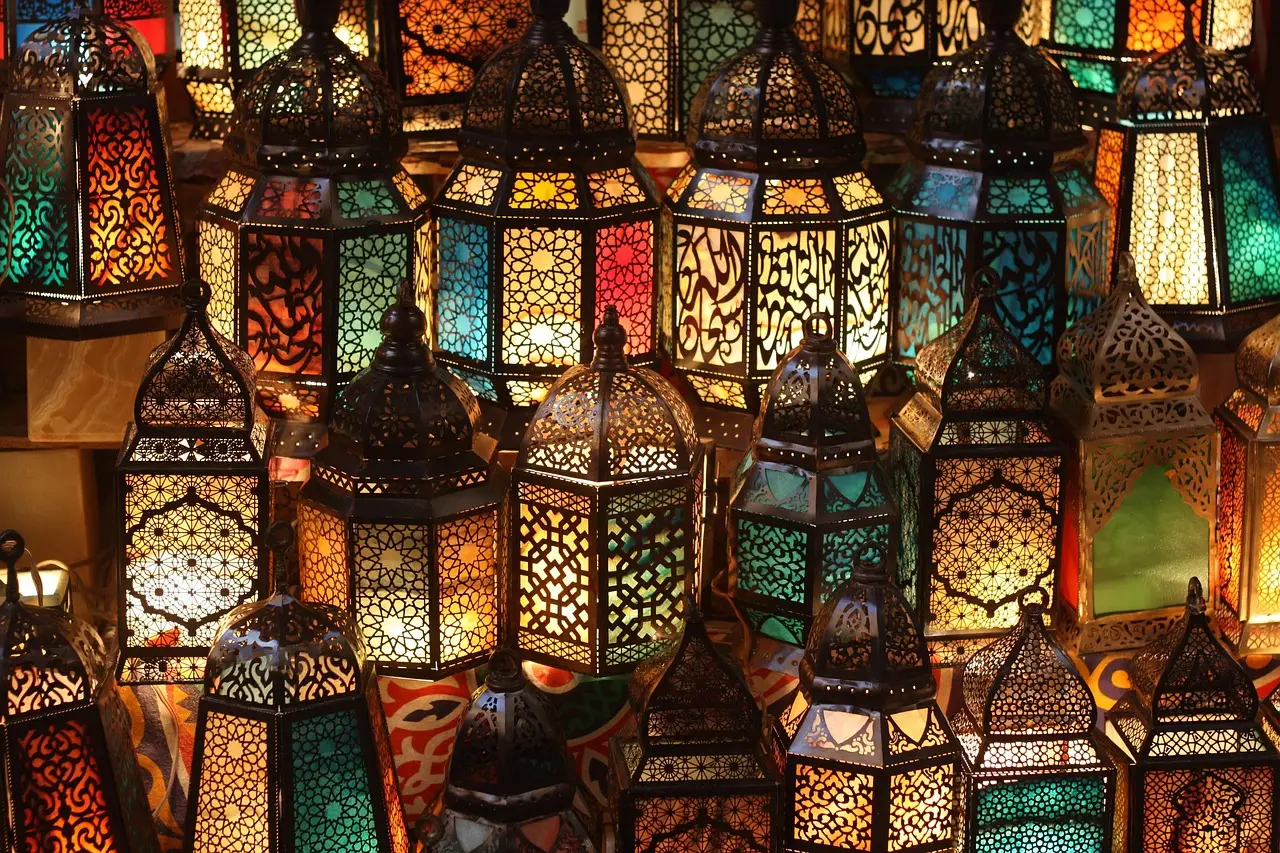
Origins Rooted in Fatimid Legacy (Image Credits: Pixabay)
Cairo – Traditional lanterns called fawanees illuminate homes and streets across the Egyptian capital as Ramadan commenced on February 19, 2026.[1][2]
Origins Rooted in Fatimid Legacy
More than a millennium ago, during the Fatimid era, fawanees first lit up Cairo’s nights, marking the start of a cherished custom.[3] Historians trace the tradition to events like the arrival of Caliph Al-Mu’izz li-Din Allah in 969 AD, when torches and lanterns guided his path from Giza to the city.[3]
Another account credits Caliph Al Hakim Bi-Amr Illah with ordering mosque leaders to hang candle-lit fawanees, brightening pathways for evening Taraweeh prayers.[4] Legends also speak of boys carrying lanterns ahead of women venturing out during the holy month, a practice that evolved into children parading with them today.[4] These stories highlight how fawanees symbolize spiritual light and communal joy, enduring beyond their practical origins.
- Fatimid Caliph’s procession: Torches welcomed the ruler on a Ramadan night.
- Street illumination: Lanterns guided worshippers through dark alleys.
- Women’s outings: Boys announced arrivals to preserve modesty.
Craftsmen Preserve an Ancient Art
Skilled artisans in Cairo’s historic quarters hammer out fawanees months in advance, transforming scrap tin into intricate designs.[4] Workshops cluster in areas like Bab Zuwayla’s Ahmed Maher Street, Berket el Fil in Sayeda Zainab, and El-Darb el Ahmar.[5][3]
Traditional models feature geometric patterns punched into metal sheets, once fitted with candles and crafted from copper or brass. Modern versions incorporate LED lights, plastic bodies, and even musical features playing children’s tunes.[4] Craftsman Morsy Abdel Dayem, who learned the trade as a teenager, noted the shift: “In the past, the Fanoos was made of copper and brass, but now they are made of recycled tins.”[4] Yet, he emphasized their irreplaceable status as cultural icons.
Children Bring Streets to Life
During Ramadan evenings, youngsters swing fawanees while chanting songs like “Wahawi ya Wahawi,” evoking the month’s festive spirit.[4] They roam neighborhoods, visiting homes for treats and coins, much as generations before them did.
This playful ritual fosters community bonds, with lanterns bobbing like fireflies amid the calls to prayer. Homes, balconies, and shops drape in crescents, stars, and chains of lights, amplifying the glow. In 2026, drone displays over sites like the historic Hussein Mosque added contemporary flair to the timeless scene.[6]
Prime Spots for Ramadan Splendor
Visitors flock to Al-Muizz Street in Islamic Cairo, where medieval facades shimmer under lantern clusters.[7][8] Khan El-Khalili bazaar buzzes with vendors hawking handmade fawanees alongside sweets and ornaments.
Old Cairo’s Sayeda Zainab and Al-Hussain districts offer immersive experiences, from workshop peeks to street parades. These locales capture Ramadan’s essence, blending faith, craft, and revelry.
Key Takeaways
- Fawanees originated in the Fatimid era, symbolizing light and joy.
- Craftsmen in historic Cairo neighborhoods sustain the tradition with tin and modern LEDs.
- Children’s songs and parades keep the custom alive in streets aglow.
Fawanees remind Egyptians of Ramadan’s enduring warmth amid changing times. What are your favorite ways to celebrate the holy month? Tell us in the comments.