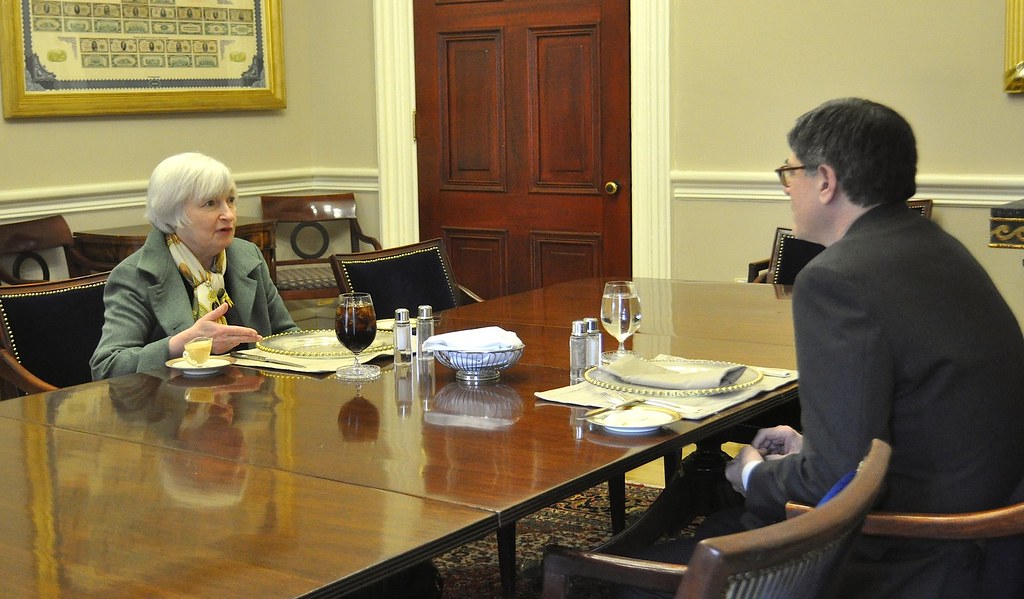
One Vote Among Equals? The Official Structure (Image Credits: Flickr)
As President Trump nominated Kevin Warsh to lead the Federal Reserve, questions resurfaced about the true extent of the chair’s influence amid ongoing tensions over interest rates and independence.
One Vote Among Equals? The Official Structure
The Federal Reserve Act deliberately curbed any single individual’s dominance. The chair holds just one of 12 votes on the Federal Open Market Committee, the body that determines interest rates.[1]
Presidents nominate the chair from among the Board of Governors’ seven members, with Senate confirmation required for a four-year term, while governors serve staggered 14-year terms to promote stability.[1]
The Board oversees banking supervision, regulation, and operations, yet decisions emerge collectively. Tradition positions the chair as FOMC leader, though members elect that role annually.[1]
Consensus Over Conflict: The Chair’s Track Record
No Fed chair has ever lost an FOMC vote, a streak spanning the institution’s history.[1] Board dissents proved rare, with the last under Paul Volcker in 1986.
Economists Cooper Howes and colleagues examined transcripts and found FOMC outcomes matched the chair’s preferences almost perfectly, despite internal debates.[1] Princeton’s Alan Blinder, a former vice chair, observed that chairs like Alan Greenspan commanded deference: “He was the boss.”[1]
Lael Brainard, who served under Janet Yellen and Jerome Powell, described pre-meeting lobbying where chairs arrived with “clear preferences” to build support.[1]
Executive Tools: Shaping Decisions from Within
The Act designates the chair as the Fed’s “active executive officer,” akin to a CEO with sway over staff, hires, and reports like the influential Tealbook.[1] This control subtly guides interpretations at economic turning points.
Chairs set agendas, steering discussions toward favored policies. Ben Bernanke exemplified this by introducing quantitative easing after 2008, drawing on his expertise to rally support when rates hit zero.[1]
- Press conferences and congressional testimony amplify the chair’s voice as the Fed’s public face.
- Norms prioritize institutional unity, prompting members to align even amid disagreements.
- Longer tenure builds expertise and respect among rotating regional presidents.
- Subtle incentives, like committee assignments, reinforce alignment.
Navigating Politics: Powell’s Challenges and Warsh’s Prospect
Jerome Powell faced scrutiny, including a Justice Department subpoena tied to rate decisions and calls from Trump for cuts.[1] Efforts to oust Board member Lisa Cook highlighted external pressures.
Warsh, a former governor and QE supporter turned critic, brings hawkish views that could minimize dissent. Blinder noted such picks often streamline FOMC dynamics.[1]
The Fed chair’s authority thrives on soft power – persuasion, norms, and stewardship – safeguarding decisions from whims while steering the economy. Incoming leaders like Warsh will test these dynamics amid political headwinds.
Key Takeaways
- Formal equality masks informal dominance through agenda control and consensus norms.
- CEO-like oversight of staff and communications bolsters the chair’s edge.
- Historical unity persists, but independence hinges on respect and restraint.
What role should political pressures play in Fed decisions? Share your views in the comments.